
This romantic rose milk bath recipe is a lovely addition to your self-care routine or for sharing with a special someone. Naturally fragranced with essential oils, the intoxicating fragrance of rose oil combined with vanilla oleoresin creates a relaxing, fragrant bath soak that will delight your senses.
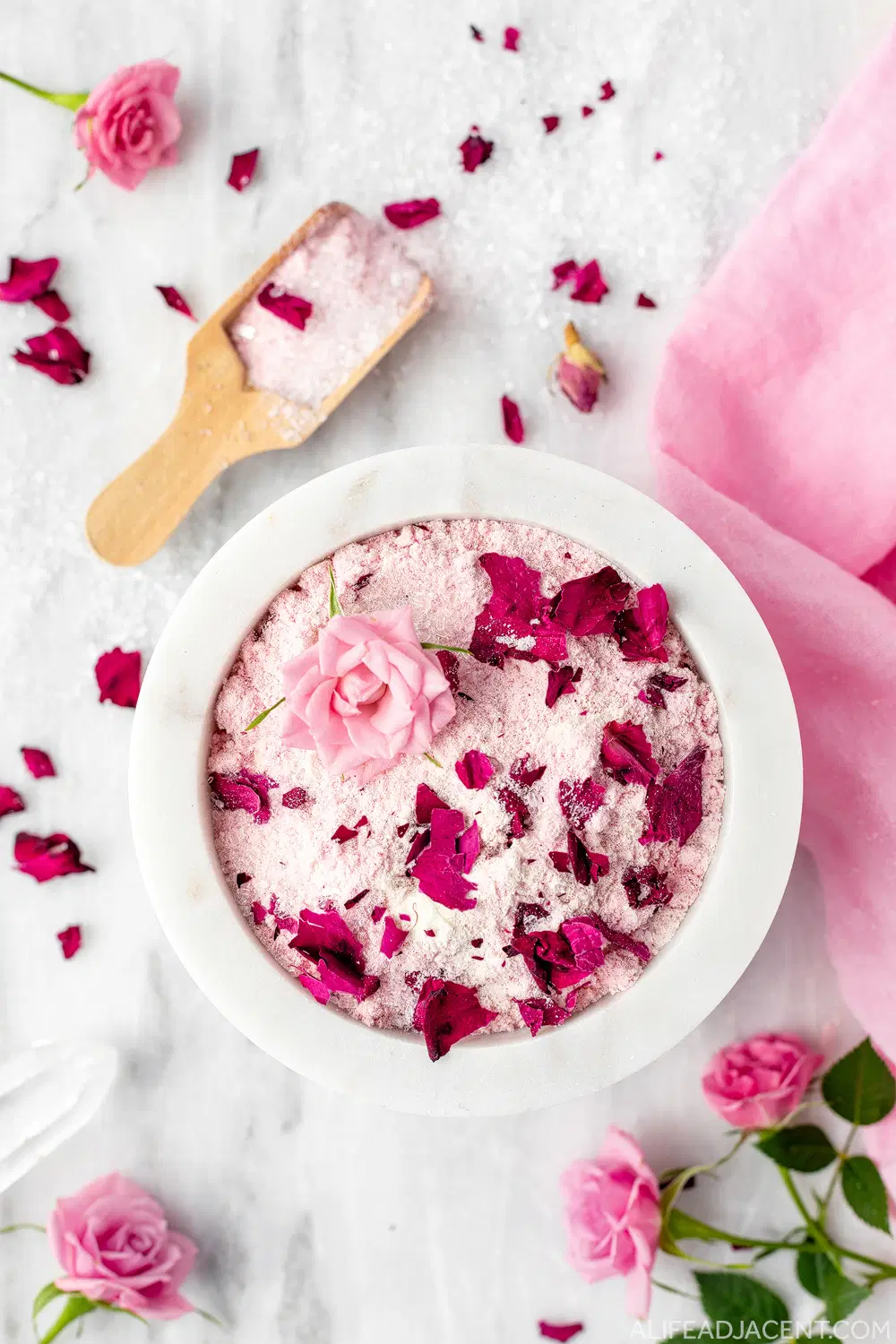
Roses have been synonymous with beauty, well-being and romance since ancient times1. Known for their intoxicating and relaxing scent, incorporating the fragrance of roses into your self-care routine has a multitude of benefits for mind and body.
Some of the benefits of bathing in roses include calming frazzled nerves, promoting well being, and lowering cortisol levels. (More on this topic below.)
You’ve also likely seen the gorgeous photos of bathtubs filled to the brim with fresh rose petals, creating the most beautiful shots for social media. This DIY rose bath soak, while simpler and more cost effective, (fresh roses are expensive!) still adds beauty and luxury to your bath routine, while being a lot easier to clean up.
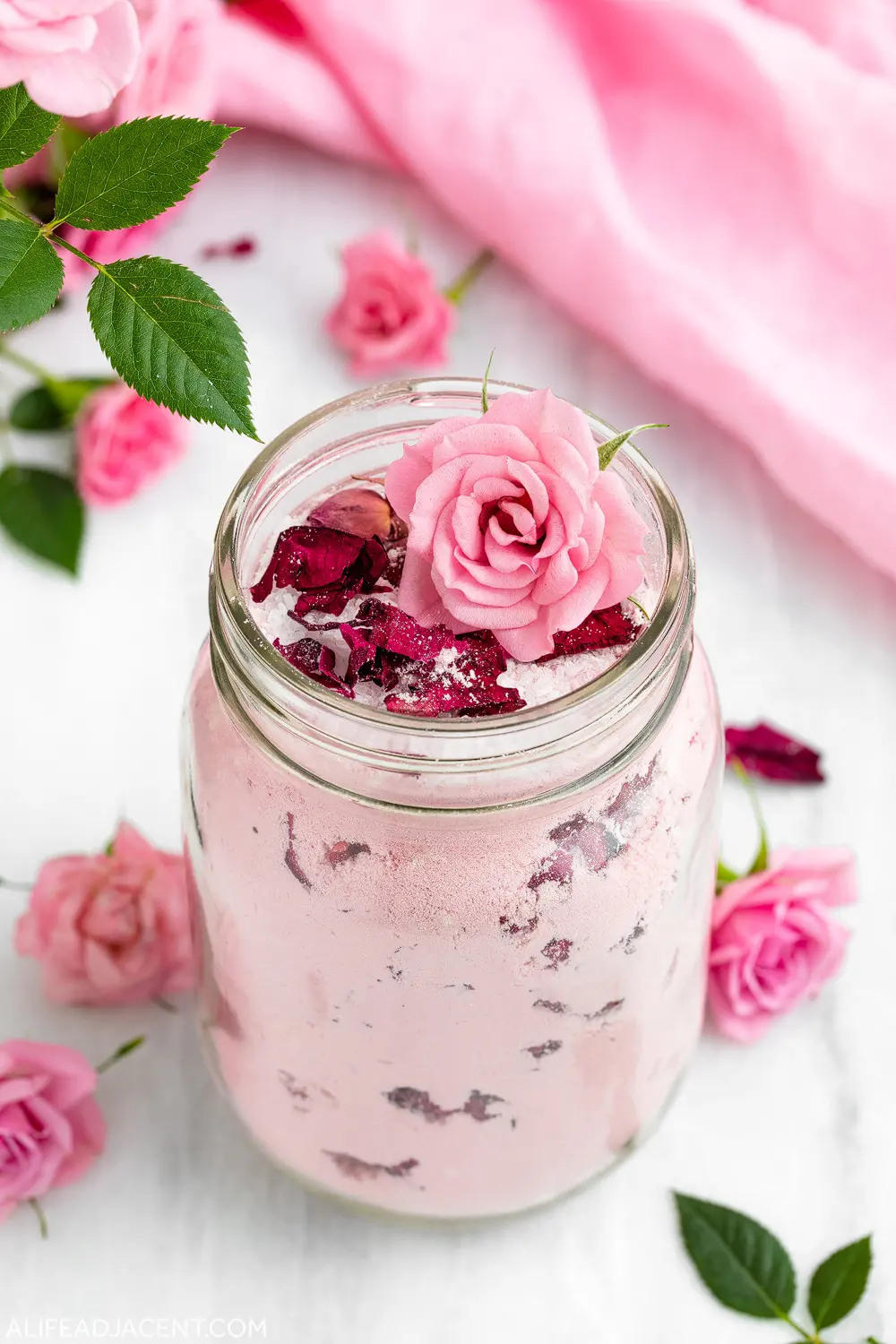
Aside from roses, this homemade bath recipe also contains Epsom salts for a boost of calming magnesium, full-fat milk powder for extra hydration and skin softening, and colloidal oatmeal which adds a silky feel and even more moisture to your bathwater.
For color, a light sprinkle of natural beet root powder lends a soft pink tone. And of course, since this is a rose petal bath, a handful of dried organic rose petals is the finishing touch.
Simply follow the simple steps below to learn how to make a rose milk bath at home to promote relaxation and calm at the end of a long day.
But first, let’s dive into the ingredients and how they can benefit your skin. If you want to skip to the DIY, please feel free to use the jump to recipe button at the top of the page or the table of contents below.
Rose Bath Soak Ingredients
Rather than simply adding roses to your bathwater, you’ll also need a handful of natural, easy-to-find ingredients that take this bath soak recipe to the next level of luxury.
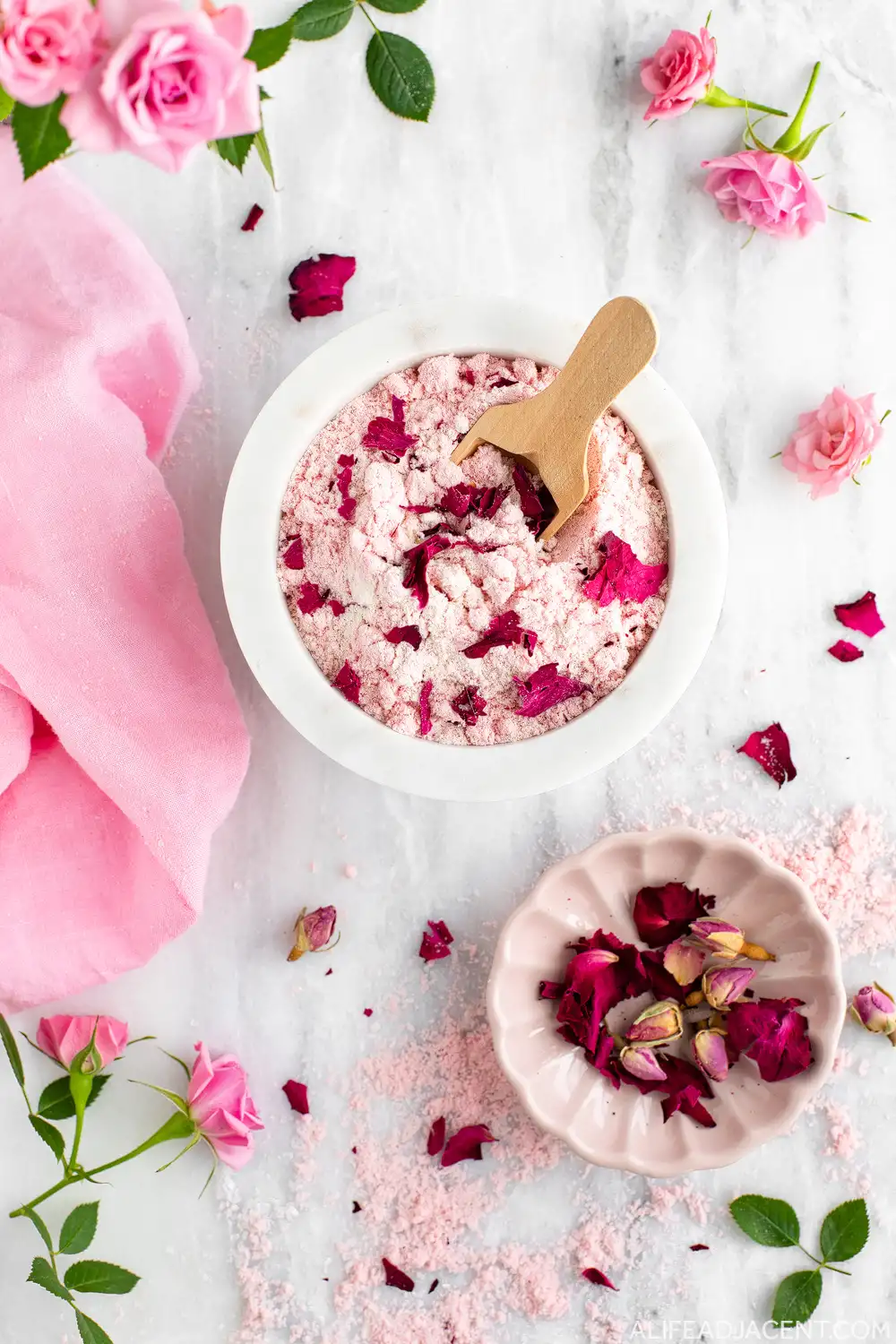
Rose Essential Oil
This rose petal bath is naturally fragranced with rose oil and dried rose petals, imparting a soothing, rosy aroma which helps contribute to an overall sense of well-being.
I find the smell of roses very relaxing, and interestingly enough, there are studies demonstrating rose oil’s therapeutic efficacy. The smell of roses has been found to help promote relaxation, and it also has anti-anxiety and anti-depressant effects2.
This makes rose essential oil a wonderful ingredient to add to bathwater to help wind down for bedtime. And it certainly gives new meaning to the expression “take the time to stop and smell the roses,” as perhaps there are some benefits to taking a little time out of your day to enjoy their lovely fragrance.
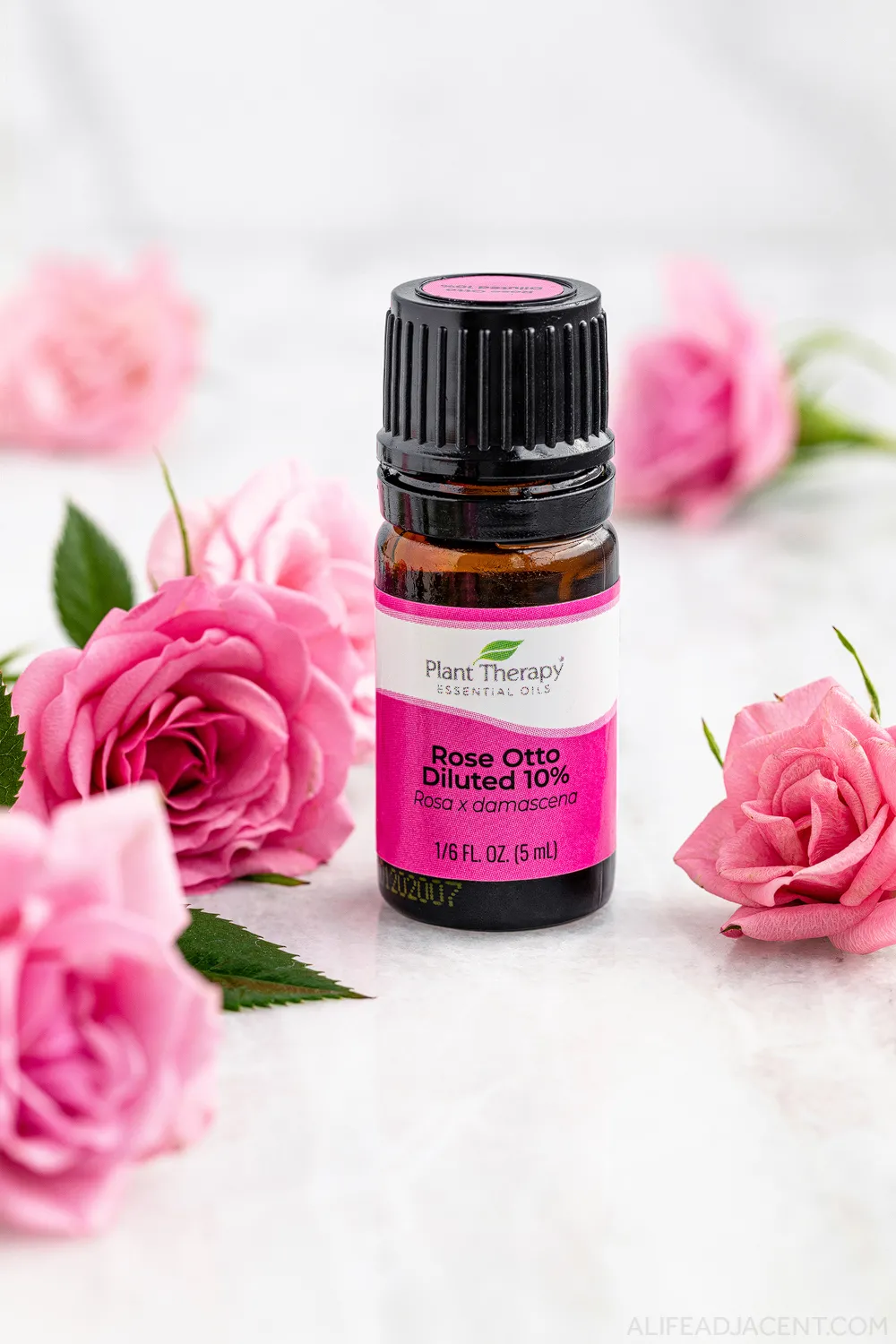
Since pure rose essential oil is quite expensive, you can save it for your homemade perfume recipes. Instead, I’d recommend a less expensive rose scented oil such as diluted rose otto in jojoba oil, rose absolute, or rose geranium oil for use in a bath soak.
While Plant Therapy has discontinued the diluted rose oil pictured, they still make a lovely rose absolute, and Simply Earth makes a beautiful rose geranium essential oil. For the ultimate indulgence, you can also use pure rose otto if it’s within your budget.
Vanilla Essential Oil
The main essential oil in this rose petal bath recipe is of course rose otto. But you can also add other essential oils as well, so you’ll find some of the best blends for a rose bath in the recipe below.
My basic recipe also includes one of my favourite oils, vanilla oleoresin. Its sweet and dessert-like scent is both delicious and soothing to the senses, and pairs beautifully with floral scents like rose.
However, pure vanilla oleoresin is not always easily available or affordable. Simply Earth Vanilla Woods or Plant Therapy Vanilla Botanical Extract are both wonderful, cost-effective substitutes for real vanilla oil.
Rose Petals
The beauty of this recipe comes from the petals floating on the top of your bathwater. I find watching them float to be very meditative and relaxing, and hopefully you have the same experience.
There are many varieties of rose petals, all of them lovely for using in the bath. Options include pink rose petals, red rose petals, rosebuds, or even whole dried rose heads.
If possible, using organic dried rose petals helps keep your homemade milk bath free from pesticides. I often buy rose petals in bulk because not only do they last for years, they’re also perfect for using in a variety of bath and body recipes such as bath bombs or tub teas.
Full Fat Milk Powder
Bathing in milk has connotations of luxury and decadence, but there are also well-documented benefits to putting milk in your bath water.
The saturated fatty acids in whole milk powder (or goats milk powder) are incredibly nourishing to dry skin, and its high fat content is extra moisturizing.
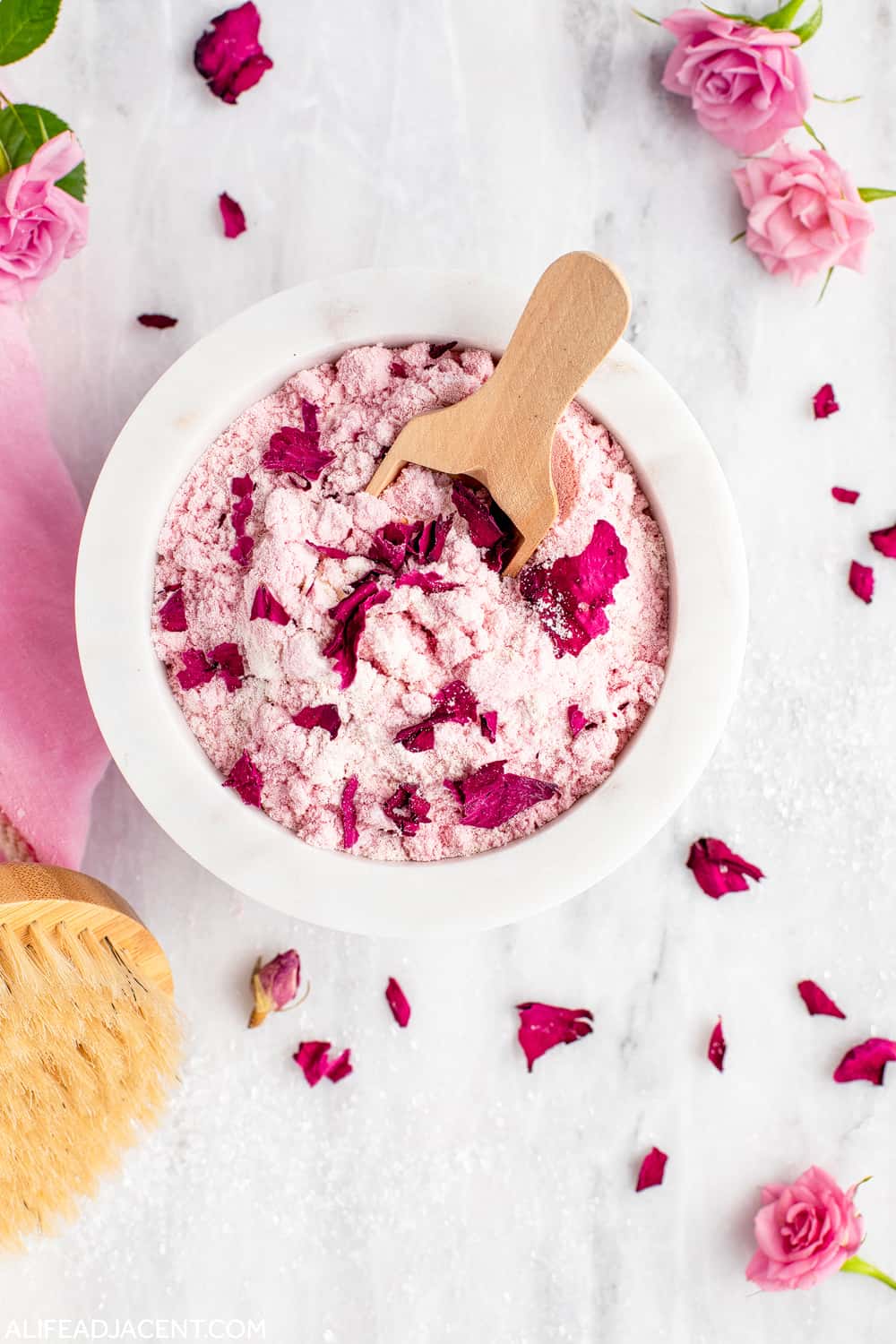
As well, the lactic acid in milk powder is a natural humectant that helps attract and bind moisture to skin, offering even more hydrating benefits.
Skimmed milk powder won’t have all the same benefits in comparison, but it’s still rich in skin-softening amino acids and milk proteins, so nonfat milk powder still works if it’s all you have on hand.
If you’re allergic to dairy or vegan, you can also substitute coconut milk powder. Coconut fat is also comprised of saturated fats to help nourish and moisturize the skin.
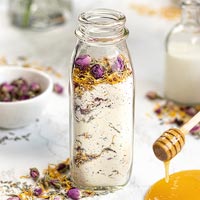
Epsom Salts
Taking a warm bath with Epsom salts (magnesium sulfate) can help alleviate achy muscles, and it may also help contribute to your daily magnesium requirements.
Magnesium deficiency is known to exacerbate conditions such as migraines, anxiety, and muscle cramps, so it can’t hurt to add an extra dose to your rose-infused bathwater.
While studies aren’t definitive when it comes to absorbing magnesium through the skin, it’s likely there may be some benefits since your skin does absorb whatever is applied topically3,4.
But I do know that a warm bath in Epsom salts helps me feel more relaxed, and it’s something I like to do at least weekly.
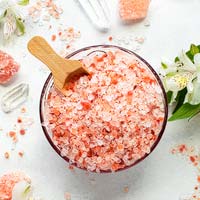
Colloidal Oatmeal
Colloidal oatmeal is another ingredient that I like to add to my homemade bath recipes. It possesses antioxidant and anti-inflammatory properties, and it also helps bind moisture to the skin, perfectly complementing a moisturizing homemade milk bath.
Numerous studies have shown that colloidal oatmeal can calm dry, itchy skin, which is why it’s also commonly used as a natural remedy for atopic dermatitis5.
However, even if you don’t have a skin condition, colloidal oatmeal has also been shown to provide extra skin hydration, making it a great addition to a moisturizing milk bath6.
If you don’t have colloidal oatmeal on hand, you can make your own by using a food processor to blend organic whole oats into a fine powder.
Natrasorb Bath (natural bath soak emulsifier)
Comprised of modified natural tapioca starch, Natrasorb Bath starch helps absorb and disperse essential oils in bath recipes.
Because undiluted essential oils can pool on the surface of your bath, which can cause skin rashes or even minor burns when they contact your skin, it’s important to include an emulsifier when using essential oils in the bath.
Natural Pink Bath Colorant
If you’d like to add a natural rose pink color to your bath soak, you have a couple options: ethically sourced pink mica or beetroot powder.
Ethical mica, while not an entirely natural product, is completely cruelty-free, so I prefer it over natural mica.
Alternatively, you can also use natural beetroot powder, but keep in mind that the resulting pink tone might be slightly more reddish-brown rather than a milky pink.
Finally, another option is to use pink beetroot extract powder for cosmetics, which has been specially processed to be pink. You can also use natural pink food coloring powder, which we also used in our chocolate rose bath bomb recipe.
Rose Bath Benefits
We’ve definitely touted the benefits of taking a warm bath in many of our bath and body recipes, including our recent milk bath article.
To summarize, bathing in roses can also include benefits such as:
Promoting Relaxation
A warm bath contributes to feelings of ease, calmness, peacefulness and encourages a more restful sleep.
Plus, intentionally creating a beautiful space by adding roses to your bath, and taking some extra time out of your day to enjoy self-care, is a form of self-love.
Bathing can also be a lovely way to unwind after a stressful day, and I find taking a warm bath definitely helps me sleep better.
Aromatherapy Benefits
By taking a bath with flowers and essential oils, you can experience spa-like aromatherapeutic benefits from the comfort of your bathroom7. The steam from the bath releases and circulates the vapour of both the essential oils and rose petals into the air. (Shower steamers offer similar benefits.)
Using essential oils for fragrance is also preferable over chemically scented bath recipes, especially if you’re sensitive to synthetic fragrances. I know I am, as they trigger a migraine.
Using an essential blend with rose and lavender may also you sleep more soundly, as lavender is also well-known for promoting relaxation. For this reason, I also included an essential oil blend with lavender below.
Moisturizing Dry Skin
Aside from soothing the senses, this rose bath soak contains many natural ingredients that help calm dry, sensitive skin while providing an extra boost of moisture and hydration.
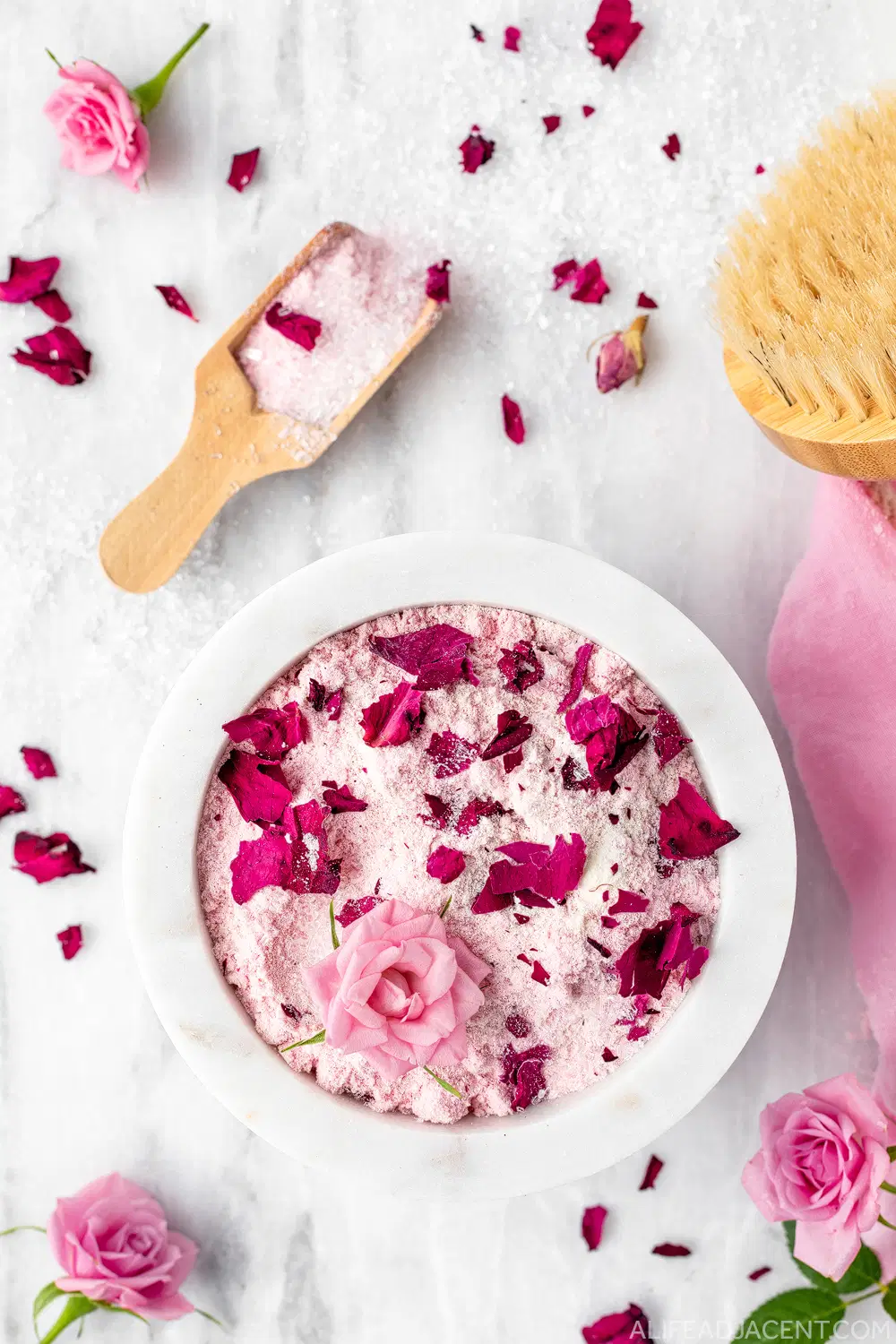
Rose Milk Bath Recipe
- 3 1/4 cups full-fat milk powder, goat’s milk powder, or coconut milk powder (vegan option)
- 1 cup Epsom salts
- 3/4 cup colloidal oatmeal
- 1/2 cup Natrasorb Bath powder
- 1/2 cup dried rose petals or rose buds (more as desired)
- 1/2 teaspoon beetroot powder, ethical pink mica, or natural pink food coloring powder
Rose Bath Essential Oil Blends
Rose Vanilla
30 drops rose absolute, rose otto, or rose geranium essential oil*
45 drops vanilla oleoresin, Vanilla Woods, or vanilla botanical extract
*If using pure rose otto, use only 15 drops, as it’s highly concentrated.
Lavender Rose
45 drops rose essential oil or rose geranium essential oil
30 drops lavender 40/42 or Bulgarian lavender essential oil
Citrus Rose
45 drops sweet orange essential oil, blood orange essential oil, or orange essence
30 drops rose absolute, rose oil, or rose geranium essential oil
Supplies + Equipment
- Large mixing bowl
- Small mixing bowl
- Wooden spoon or spatula
- Sieve for a smooth texture
- Storage containers, such as mason jars, milk bottles or bath salt jars
How to make rose petal bath
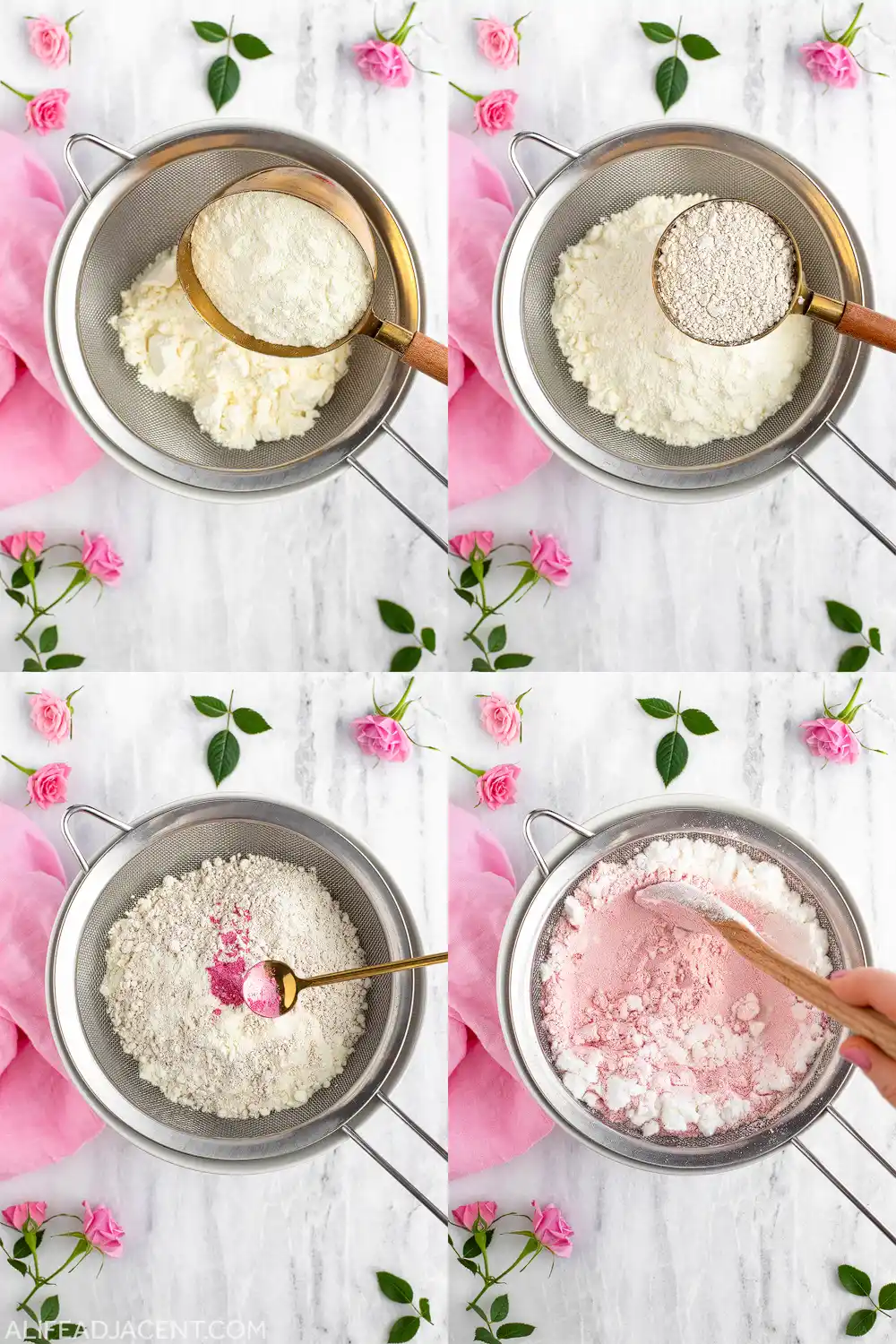
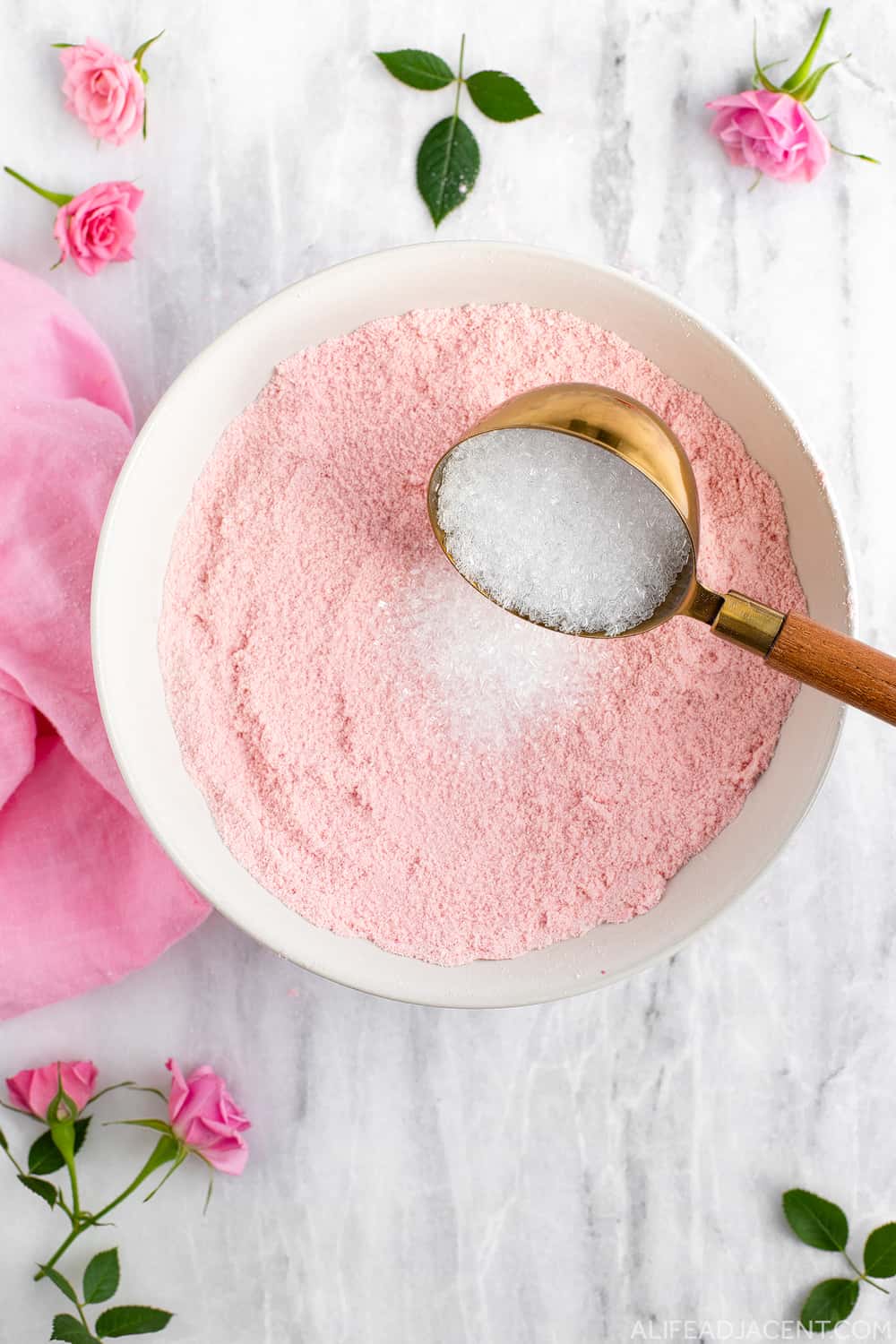
- Sift dry ingredients. Using a sieve, sift milk powder, colloidal oatmeal, and your natural bath soak colorant of choice (pink mica or pink beet powder) into a large bowl. Mix well with a wooden spoon to combine.
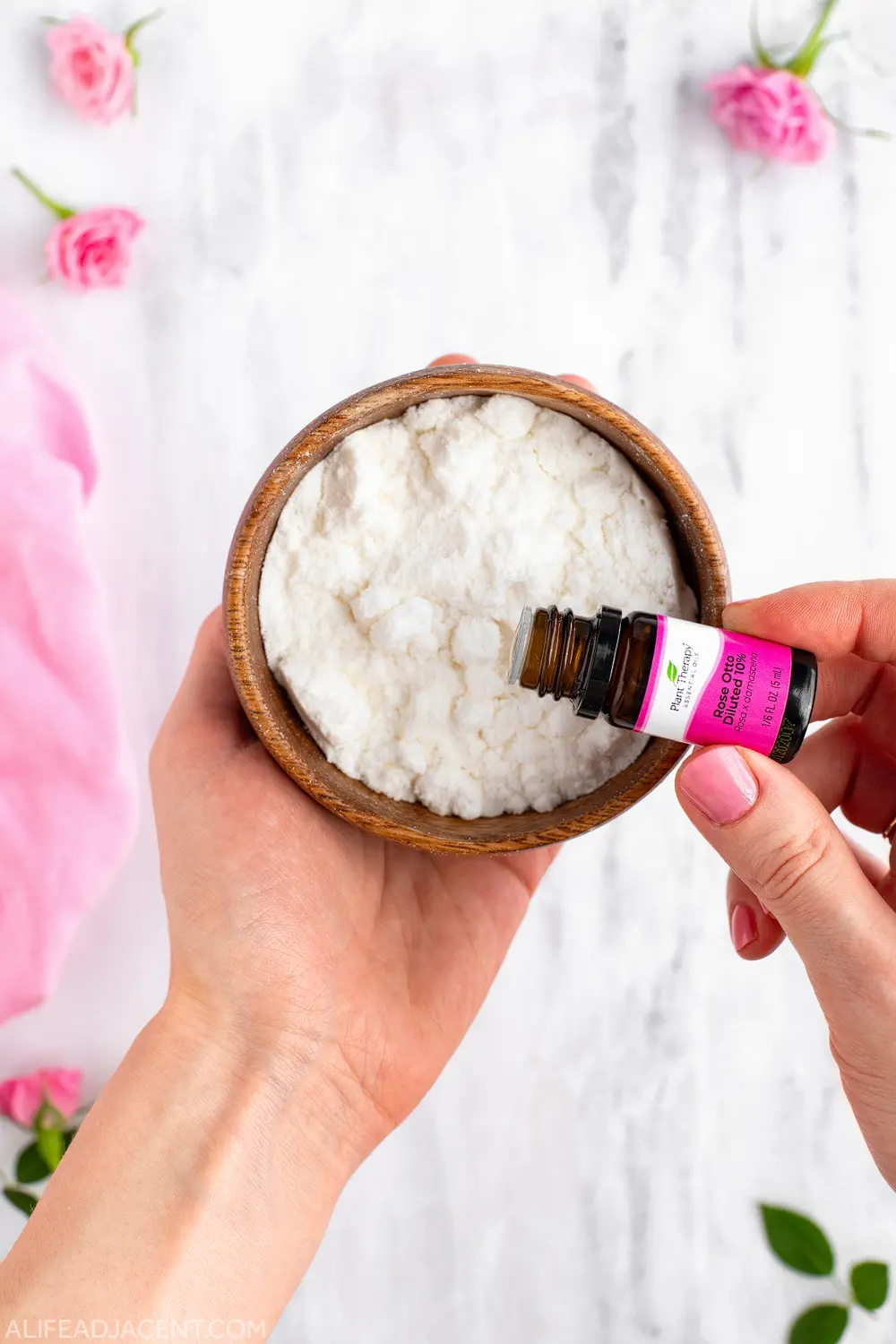
- Mix essential oils. Place Natrasorb Bath starch into a separate, smaller bowl. Sprinkle the rose essential oil blend over the starch, then mix well until the oils are completely absorbed.
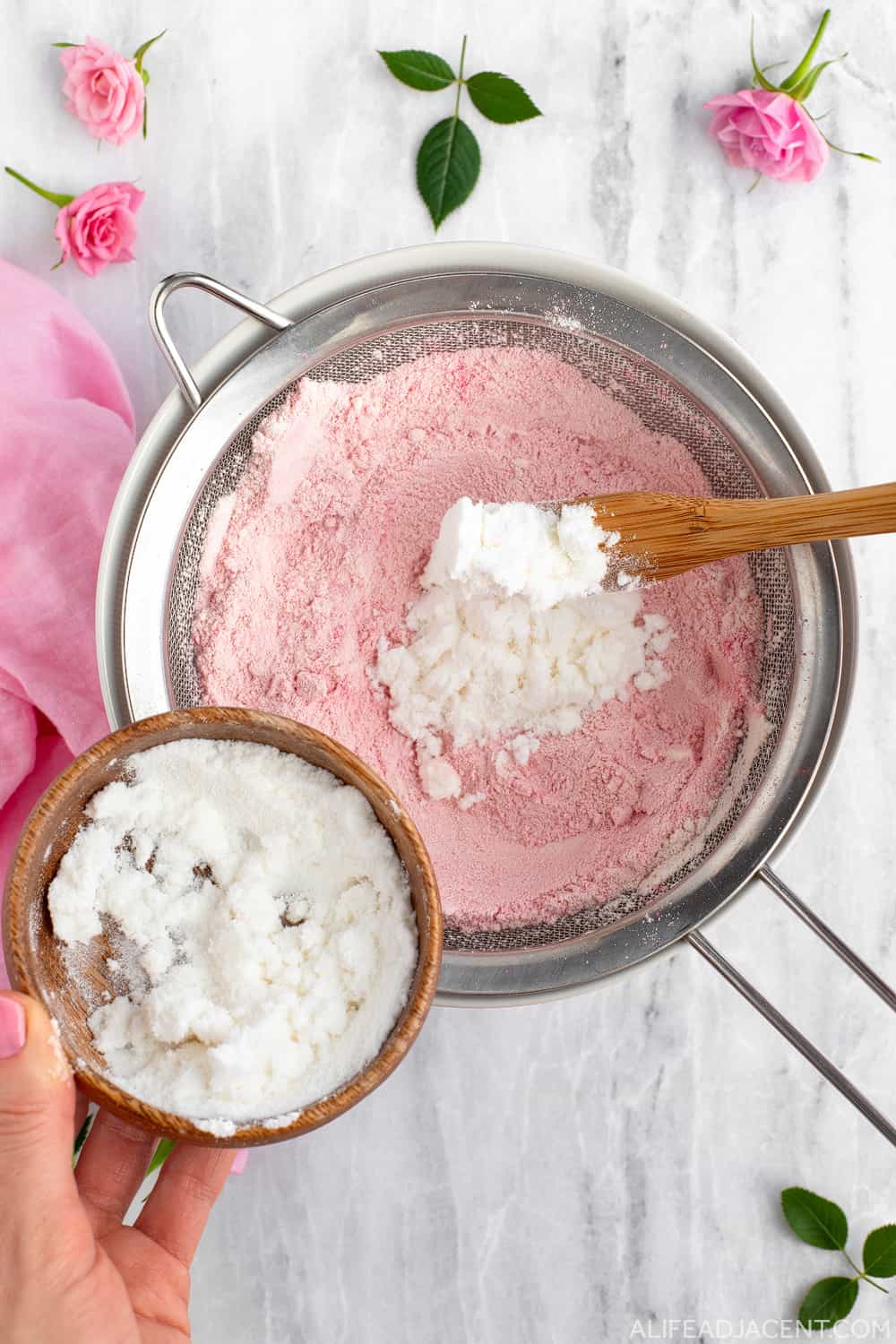
- Add essential oils. Pour the emulsified essential oils and starch blend into the rest of your rose milk bath ingredients, then mix well to incorporate.
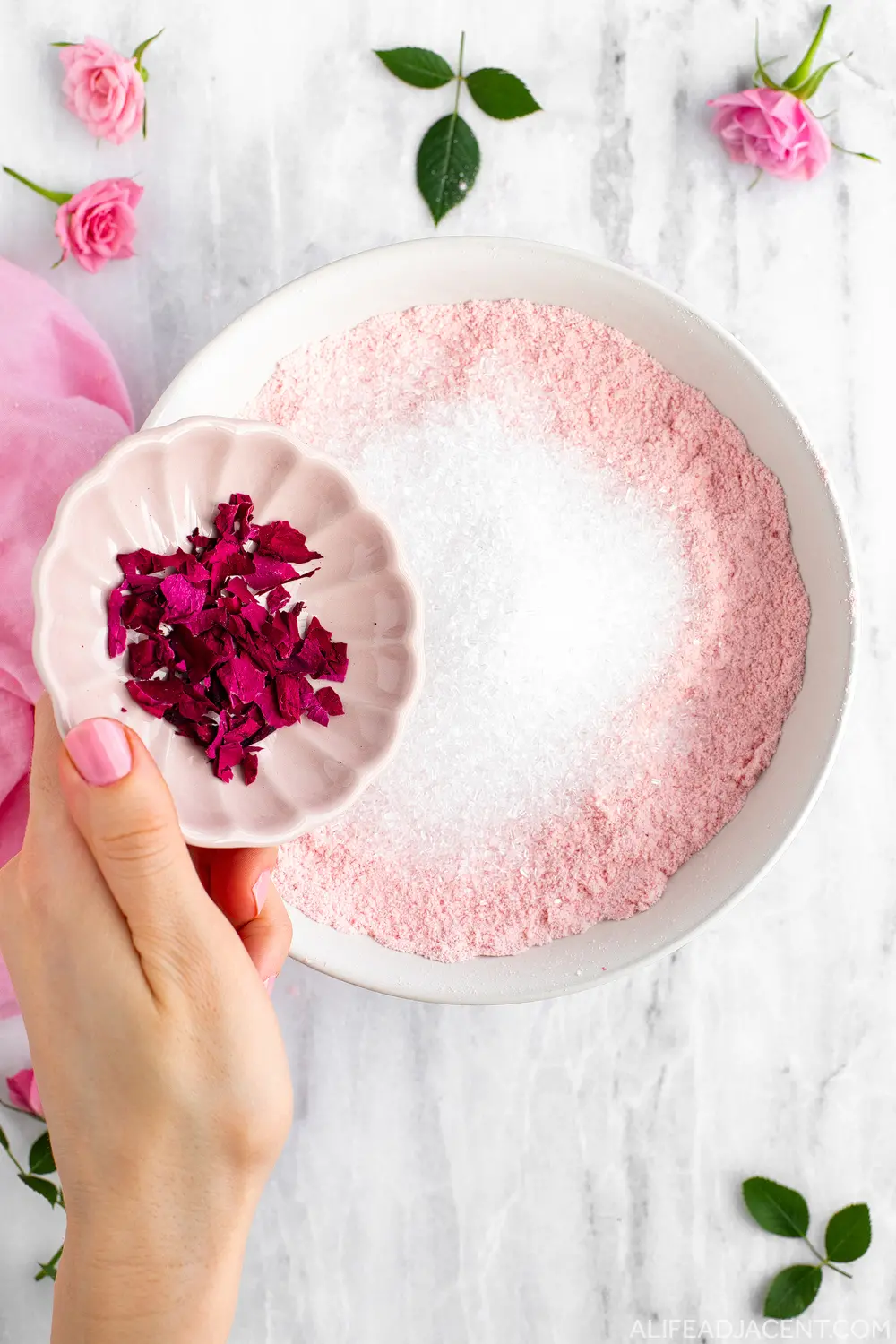
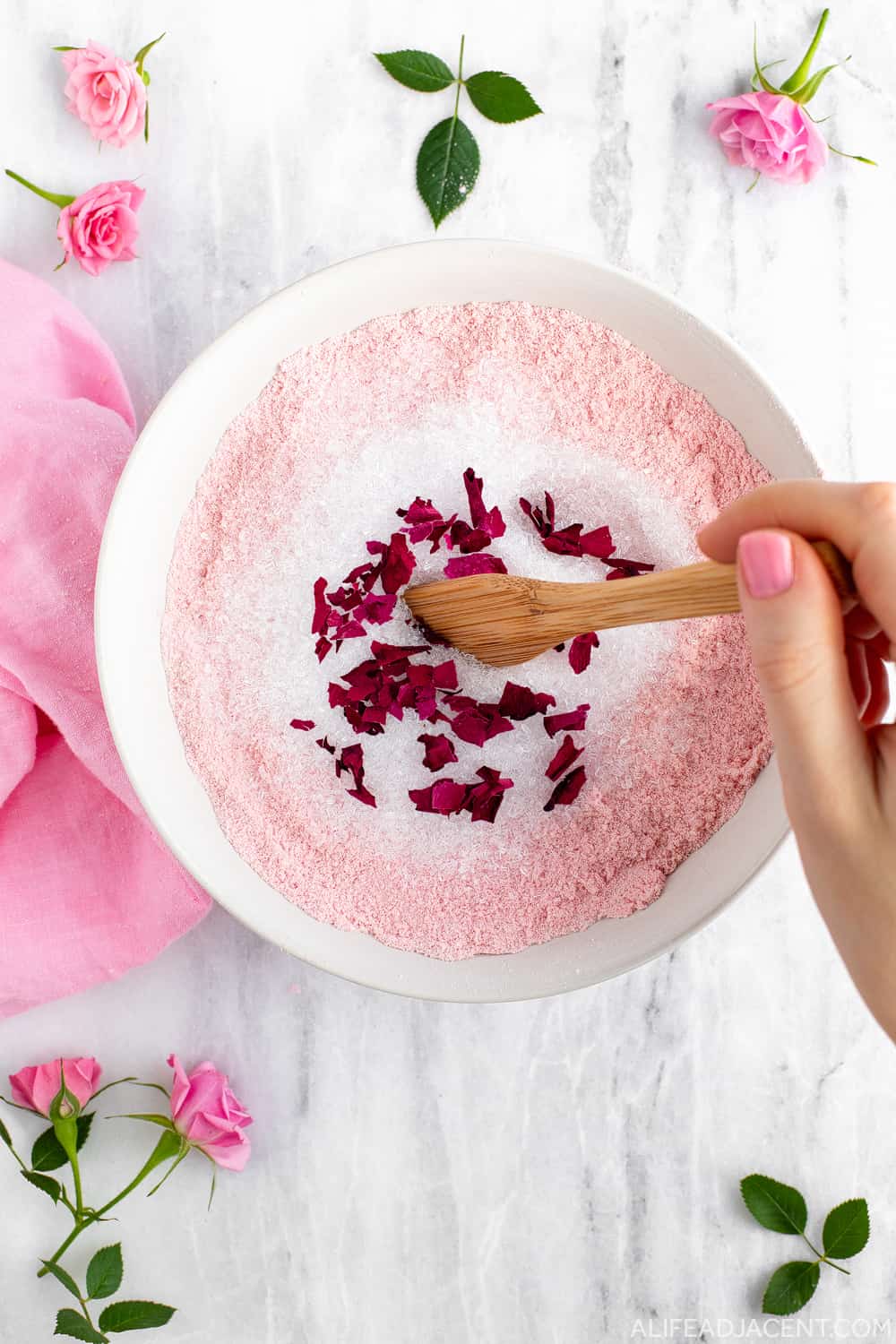
- Add Epsom salts + roses. Lastly, add Epsom salt, rose petals, or other decorative flower petals of your choice.
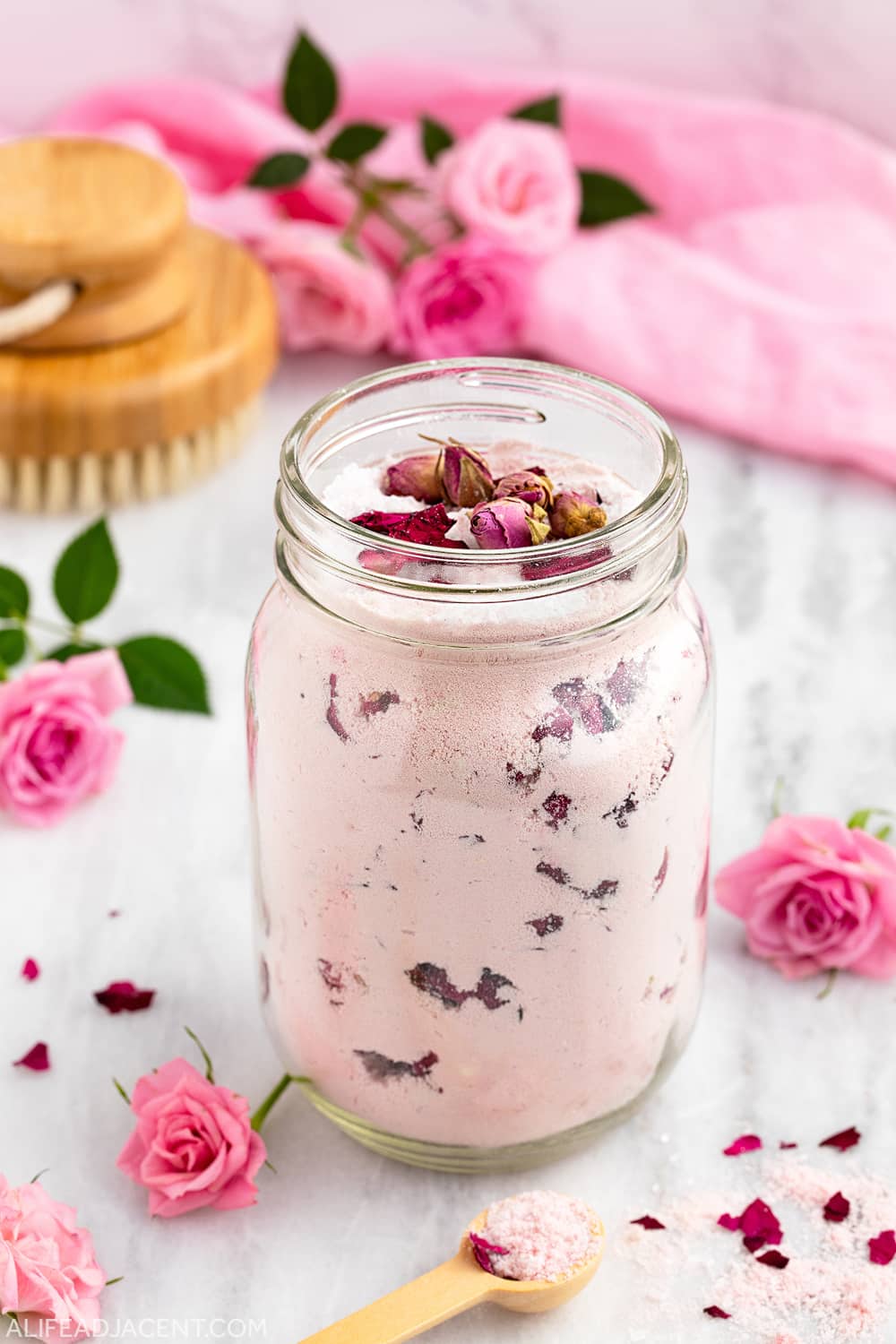
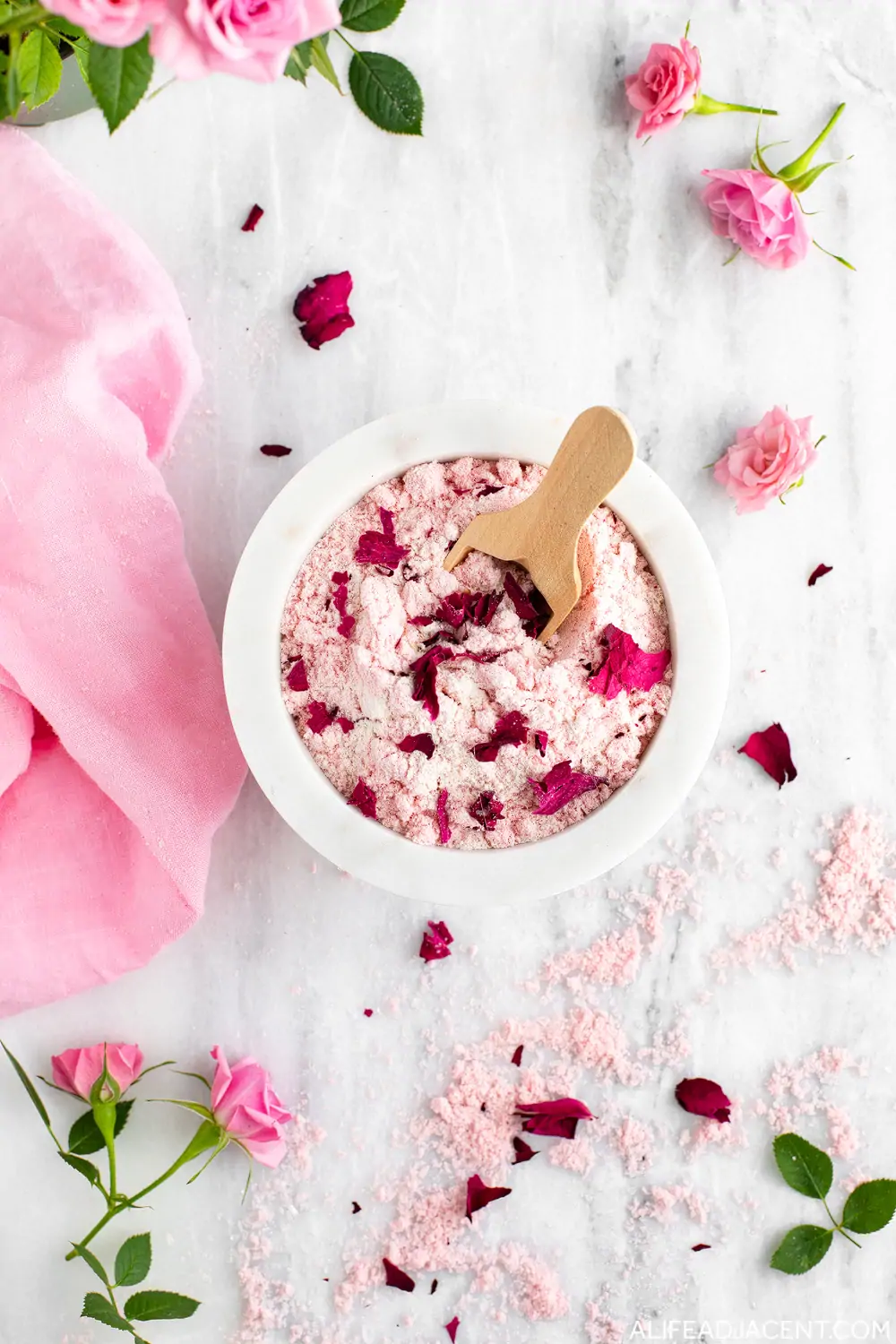
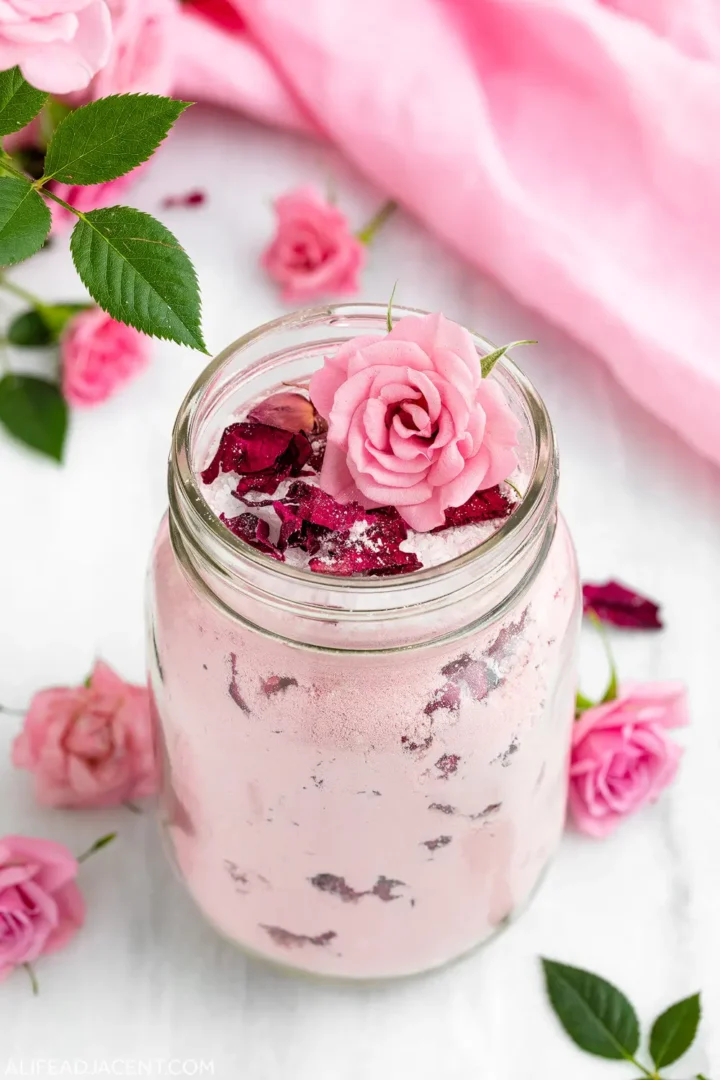
- Package rose bath. Transfer all ingredients into airtight containers with lids, such as a few mason jars, bath soak jars, or small milk bottles. This recipe makes 6 cups, or enough for 3-6 baths.
How to use homemade rose milk bath
Pour 1-2 cups of your rose bath mixture into warm bath water and swirl with your hands to dissolve.
Now, sit back and take time to smell the roses, allowing the fragrant natural ingredients to soften your skin and calm your senses. Bathe for approximately 20-30 mins or however long you desire.
After exiting the tub, gently pat your skin dry, and then apply a moisturizing body butter or rich lotion to lock in all the milk bath’s moisture.
Note on cleanup: while rose petals look beautiful floating in the tub and make this recipe more luxurious, remember to scoop the flowers out after your bath to prevent clogging the drain.
A simple strainer works well. If you want to skip the cleanup, you can also enjoy this bath soak by placing it in a small cotton muslin bag such as the one used in our chocolate and roses tub tea.
But personally, I think this defeats the purpose of taking a bath with roses and enjoying their natural beauty, so the few minutes it takes to scoop up the petals is well worth the time.
Rose Petal Bath as a Foot Soak
If you’re not a bath person, try using this recipe as a homemade foot soak to help soften feet and minimize foot odor.
To make a rose petal bath for feet, dissolve half a cup of the mixture in a small basin of warm water. Relax for about 15-20 minutes and let the ingredients soften your feet.
Pat your feet dry and then immediately apply a nourishing lotion or body butter. Bonus: put on a cozy pair of merino wool socks or 100% organic cotton socks to lock in moisture.
DIY Rose Bath Soak Packaging
Mason jars are ideal for packaging homemade bath soaks because they are cheap, reusable and easy to find. You can also repurpose small milk bottles, which perfectly complement a milk bath.
For even more storage ideas, we also have an article on packaging for homemade bath and body products that you might find helpful.
And if you want to gift this recipe to a special someone, simply add a bow and a homemade gift tag such as the ones we used to label our rose petal bath bombs.
Finally, be sure to store your DIY rose milk bath away from heat, moisture, and humidity, such as in a dark, cool and dry cupboard or drawer.
How long will this bath recipe last?
As with all homemade bath recipes, the shelf-life will depend on the expiry date of your perishable ingredients, so it’s a good idea to check your ingredients labels for the date.
If the ingredients are fairly fresh and if you store your rose bath under proper conditions, you can expect it to last approximately 4-6 months. Just keep in mind that milk powder easily absorbs moisture which will cause it to spoil.
You may also want to label homemade products using a sticker with the creation date so that you remember when they were made.
Homemade Bath Soak Safety
This rose milk bath recipe is crafted with natural ingredients which are likely safe for most people. However, it’s always recommended that you consult with your health care provider if you have any allergies or health conditions, as using essential oils in the bath may not be suitable for those with very sensitive skin.
When in doubt, do a patch test. You can fill a small basin with 1/2 cup bath mixture and submerge a part of your hand or foot. If you experience any irritation, do not use this recipe.
Equipment
- Large mixing bowl
- Small mixing bowl
- Wooden spoon or spatula
- Sieve for a smooth texture
- Storage containers, such as mason jars, milk bottles or bath salt jars
Ingredients
- 3 1/4 cups full-fat milk powder or goat's milk powder or coconut milk powder (vegan option)
- 1 cup Epsom salts
- 3/4 cup colloidal oatmeal
- 1/2 cup Natrasorb Bath powder
- 1/2 cup dried rose petals or rose buds more as desired
- 1/2 teaspoon beetroot powder or ethical pink mica or natural pink food coloring powder
Rose Bath Essential Oil Blends
Rose Vanilla
- 30 drops rose absolute rose otto, or rose geranium essential oil
- 45 drops vanilla oleoresin Vanilla Woods, or vanilla botanical extract
Lavender Rose
- 45 drops rose essential oil or rose geranium essential oil
- 30 drops Bulgarian lavender essential oil or lavender 40/42
Citrus Rose
- 45 drops sweet orange essential oil blood orange essential oil, or orange essence
- 30 drops rose absolute rose oil, or rose geranium essential oil
Instructions
- Sift dry ingredients. Using a sieve, sift milk powder, colloidal oatmeal, and your natural bath soak colorant of choice (pink mica or pink beet powder) into a large bowl. Mix well with a wooden spoon to combine.
- Mix essential oils. Place Natrasorb Bath starch into a separate, smaller bowl. Sprinkle the rose essential oil blend over the starch, then mix well until the oils are completely absorbed.
- Add essential oils. Pour the emulsified essential oils and starch blend into the rest of your rose milk bath ingredients, then mix well to incorporate.
- Add Epsom salts + roses. Lastly, add Epsom salt, rose petals, or other decorative flower petals of your choice.
- Package rose bath. Transfer all ingredients into airtight containers with lids, such as a few mason jars, bath soak jars, or small milk bottles. This recipe makes 6 cups, or enough for 3-6 baths.
Notes
-
- This recipe makes 6 cups, or enough for 3-6 baths.
- Store your DIY rose milk bath away from heat, moisture, and humidity, such as in a dark, dry cupboard or drawer. Use it within 4-6 months, as the milk powder will spoil.

More bath and body recipes
If you liked this bath soak, you may also enjoy our other bath recipes:
- Milk and Honey Bath Soak Recipe
- 4 Milk Bath Recipes for Soft Skin
- Orange Creamsicle Bath Recipe
- Chocolate and Roses Bath Soak
- Himalayan Salt Bath Recipe
- DIY Green Tea Bath + Benefits
- DIY Pink Lemonade Tub Tea
- Homemade Floral Bath Salts
📌 Pin it for later
- Mileva, Milka et al. “Rose Flowers-A Delicate Perfume or a Natural Healer?.” Biomolecules vol. 11,1 127. 19 Jan. 2021, doi:10.3390/biom11010127
- Mohebitabar, Safieh et al. “Therapeutic efficacy of rose oil: A comprehensive review of clinical evidence.” Avicenna journal of phytomedicine vol. 7,3 (2017): 206-213.
- Gröber, Uwe et al. “Myth or Reality-Transdermal Magnesium?.” Nutrients vol. 9,8 813. 28 Jul. 2017, doi:10.3390/nu9080813
- Chandrasekaran, Navin Chandrakanth et al. “Permeation of topically applied Magnesium ions through human skin is facilitated by hair follicles.” Magnesium research vol. 29,2 (2016): 35-42. doi:10.1684/mrh.2016.0402
- Criquet, Maryline et al. “Safety and efficacy of personal care products containing colloidal oatmeal.” Clinical, cosmetic and investigational dermatology vol. 5 (2012): 183-93. doi:10.2147/CCID.S31375
- Reynertson, Kurt A et al. “Anti-inflammatory activities of colloidal oatmeal (Avena sativa) contribute to the effectiveness of oats in treatment of itch associated with dry, irritated skin.” Journal of drugs in dermatology : JDD vol. 14,1 (2015): 43-8.
- Lakhan, Shaheen E., et al. “The effectiveness of aromatherapy in reducing pain: A systematic review and meta-analysis.” Pain Research and Treatment, vol. 2016, 14 Dec. 2016, pp. 1–13, https://doi.org/10.1155/2016/8158693.