
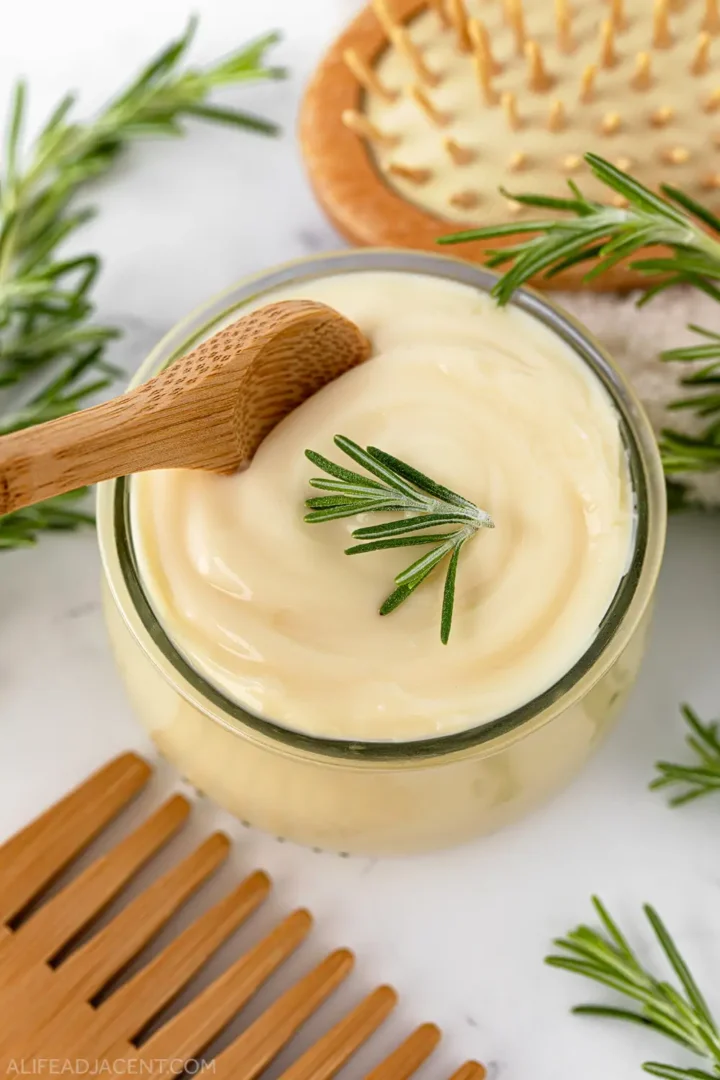
This homemade hair mask with rosemary oil is a quick and easy way to wake up hair follicles, boost hair growth and thickness, and gently exfoliate your scalp in 1 hour – and it only takes minutes to make. Crafted with all natural ingredients like aloe and exfoliating willow bark, this multi-tasking hair growth treatment also helps remove buildup and soothe a dry, sensitive scalp.
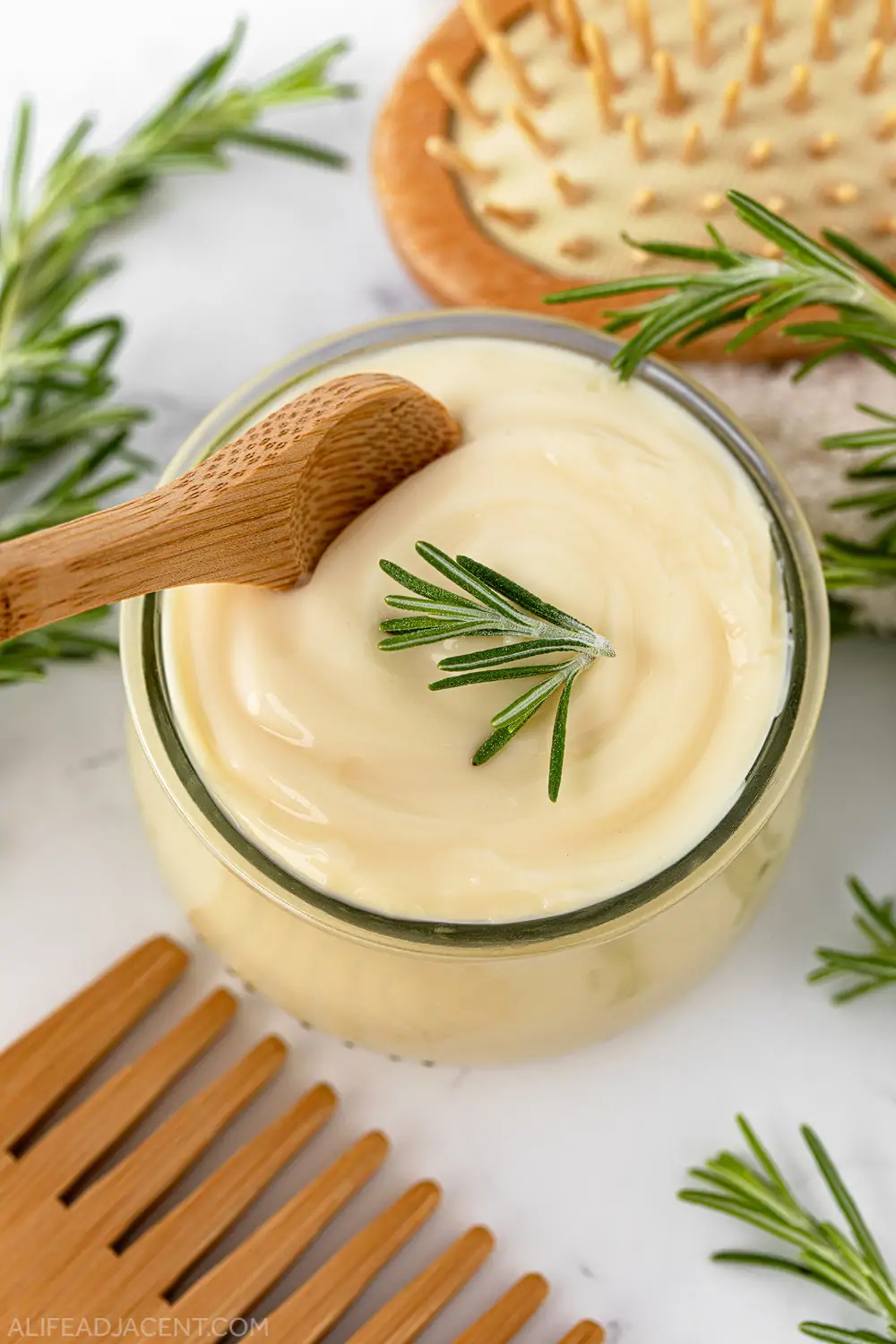
When it comes to boosting hair growth naturally, I don’t like to buy expensive, overhyped products when rosemary has been proven to work time and time again.
That’s why I incorporate it into my routine wherever I can, whether that’s by using rosemary water, rosemary oil, or making my own hair growth serum.
But my line-up of DIY hair care recipes was missing a simple hair mask. I wanted something quick and easy that I could apply before washing my hair, especially since I don’t always have time for a leisurely oil treatment.
That’s how this homemade hair growth mask was born.
Not just for boosting growth and thickening, this recipe also contains a natural oil-buster that cuts through grease, allowing the active ingredients to reach the hair follicles no matter how clean (or dirty) your hair. Yes, it works even if your hair isn’t freshly washed!
To be clear, I don’t mean this mask helps grow and thicken hair in 1 hour – no treatment works that quickly. I simply mean you can apply it to your scalp for a minimum of 1 hour to reap the benefits over time.
This recipe was inspired by my rosemary serum, but made into a hair mask for growth with added benefits. Before we get into the full recipe, I’ll briefly talk about those.
Benefits of this DIY hair growth mask
This hair mask’s main active ingredient is emulsified rosemary essential oil, which offers growth-boosting and thickening benefits1.
It also contains a few other natural ingredients to improve the health of your scalp. (This is another important part of hair growth, since hair can only grow if your scalp is healthy in the first place.)
But aside from its effects on growth, this recipe is also a scalp moisture treatment, soothing mask, gentle scalp exfoliator, and mild clarifying treatment.
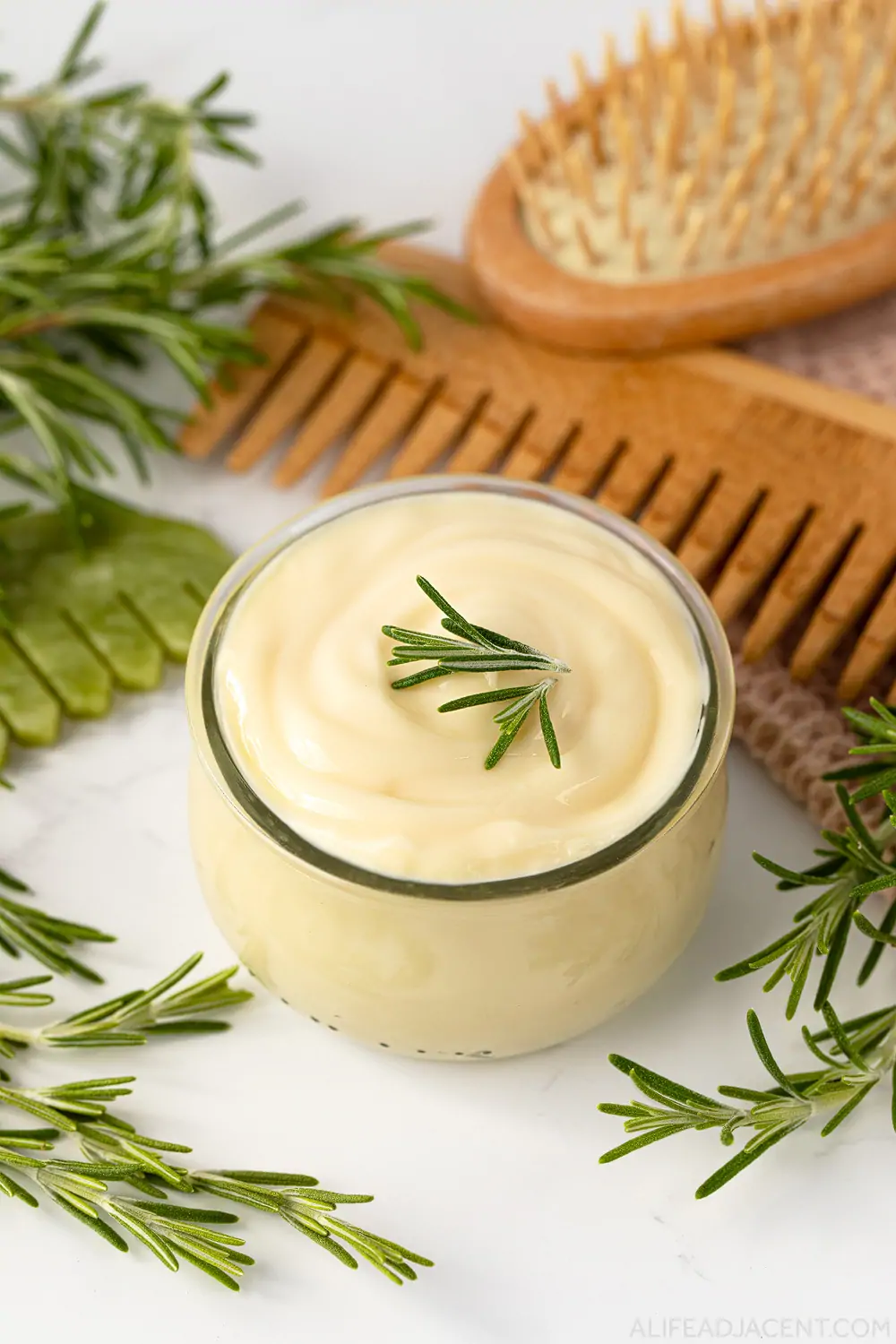
Do you ever find that your scalp still feels greasy or oily even after washing? If so, this mask can help clarify, remove scalp build-up, and leave your hair cleaner after you wash it. (Also try my DIY micellar water hair rinse hack.)
Plus, if your scalp feels dry, itchy, or irritated in any way, this homemade hair mask can help soothe while it helps your hair grow. That’s because it contains willow bark, which possesses anti-inflammatory benefits and an incredible cooling sensation that helps soothe a sensitive scalp.
Now, let’s get into the recipe and how to make it at home. You’ll find the DIY immediately below, and if you’re interested in more information about the ingredients and why they help your hair grow, you can read more after the recipe.
Rosemary Hair Growth Mask Recipe
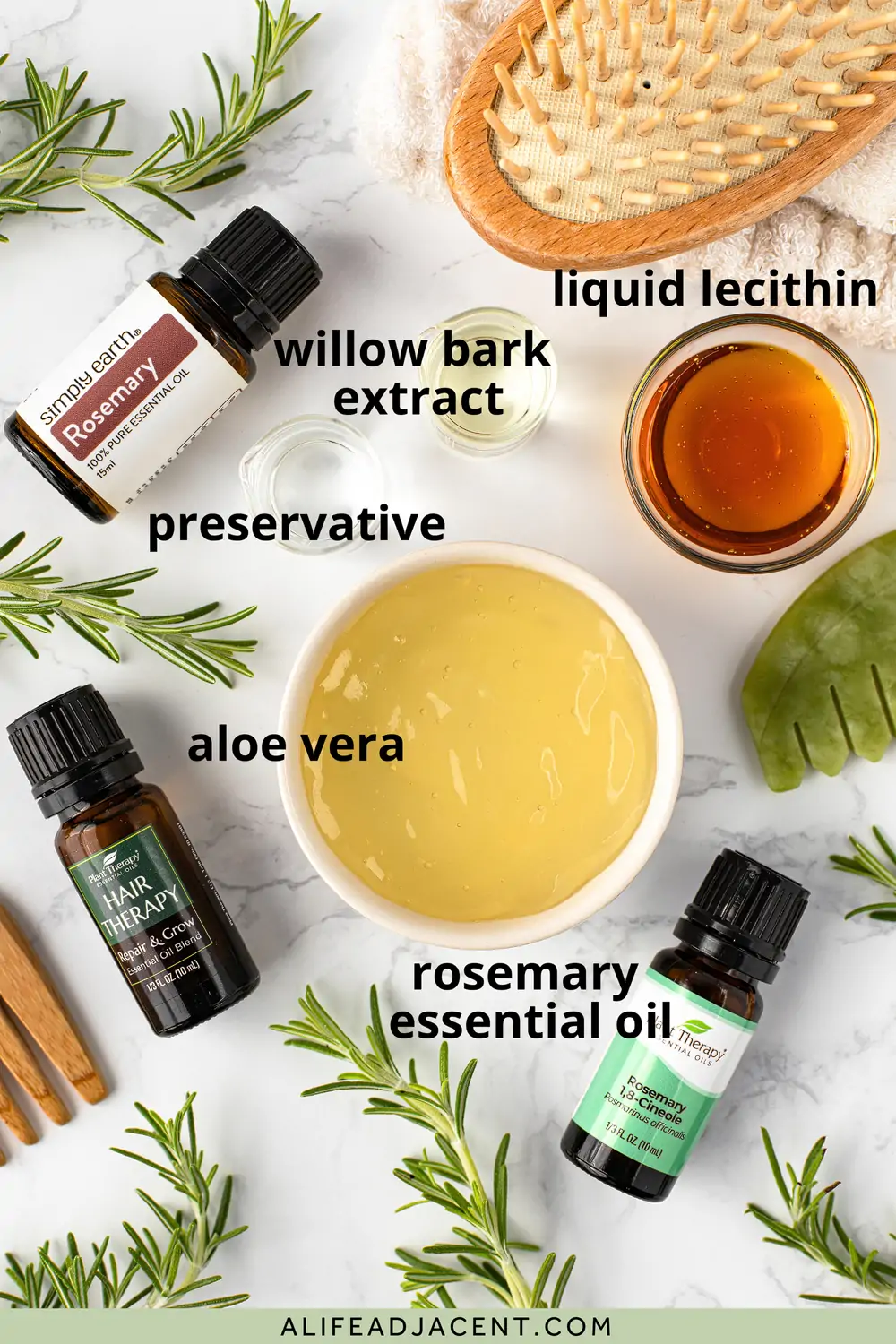
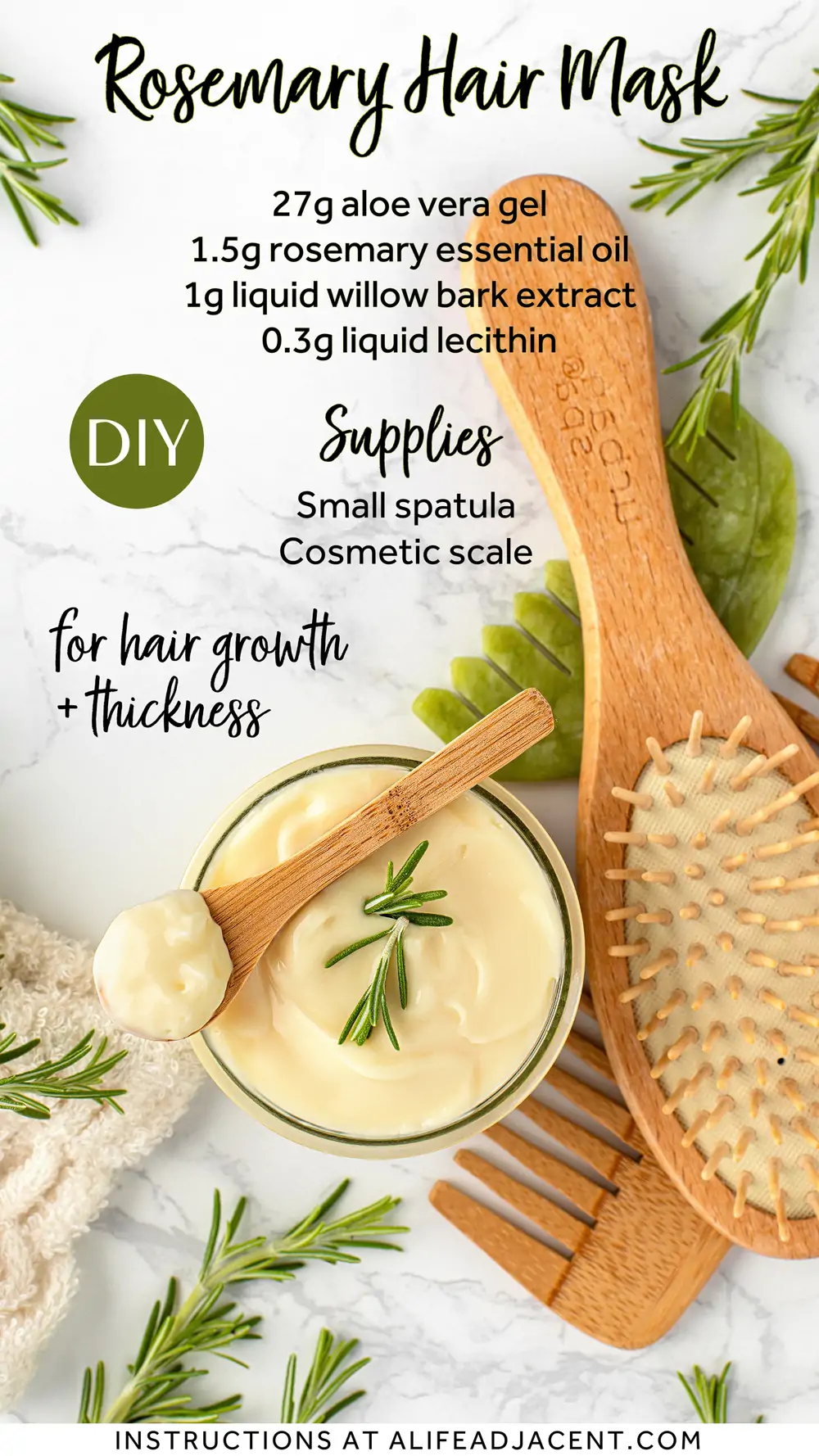
27g aloe vera gel
1.5g rosemary essential oil
1g liquid willow bark extract
0.3g liquid sunflower lecithin
Supplies + Equipment
Small bowl
Small mixing utensil
Cosmetic scale to weigh ingredients
Small jar for storage
How to make rosemary hair mask for growth and thickness
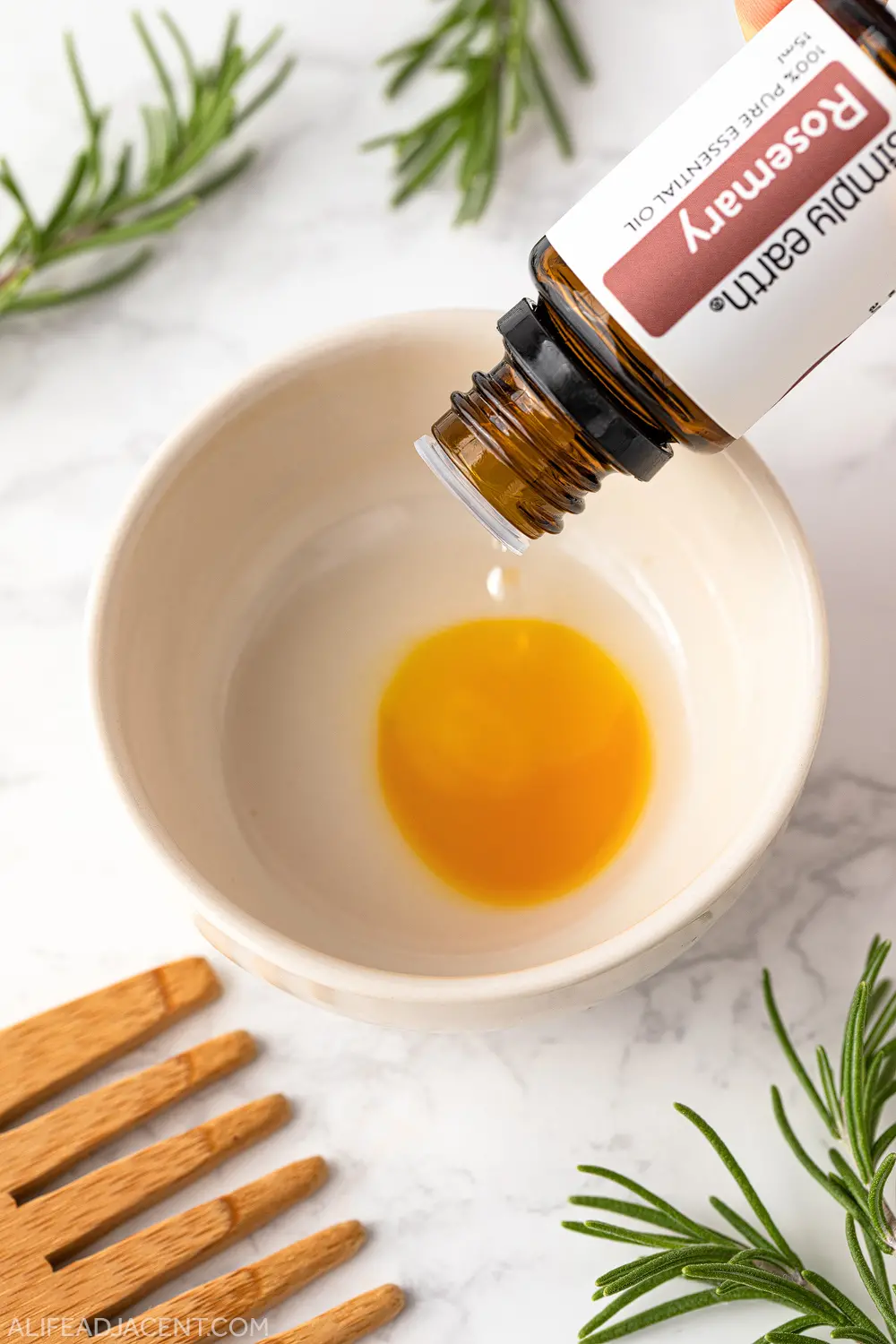
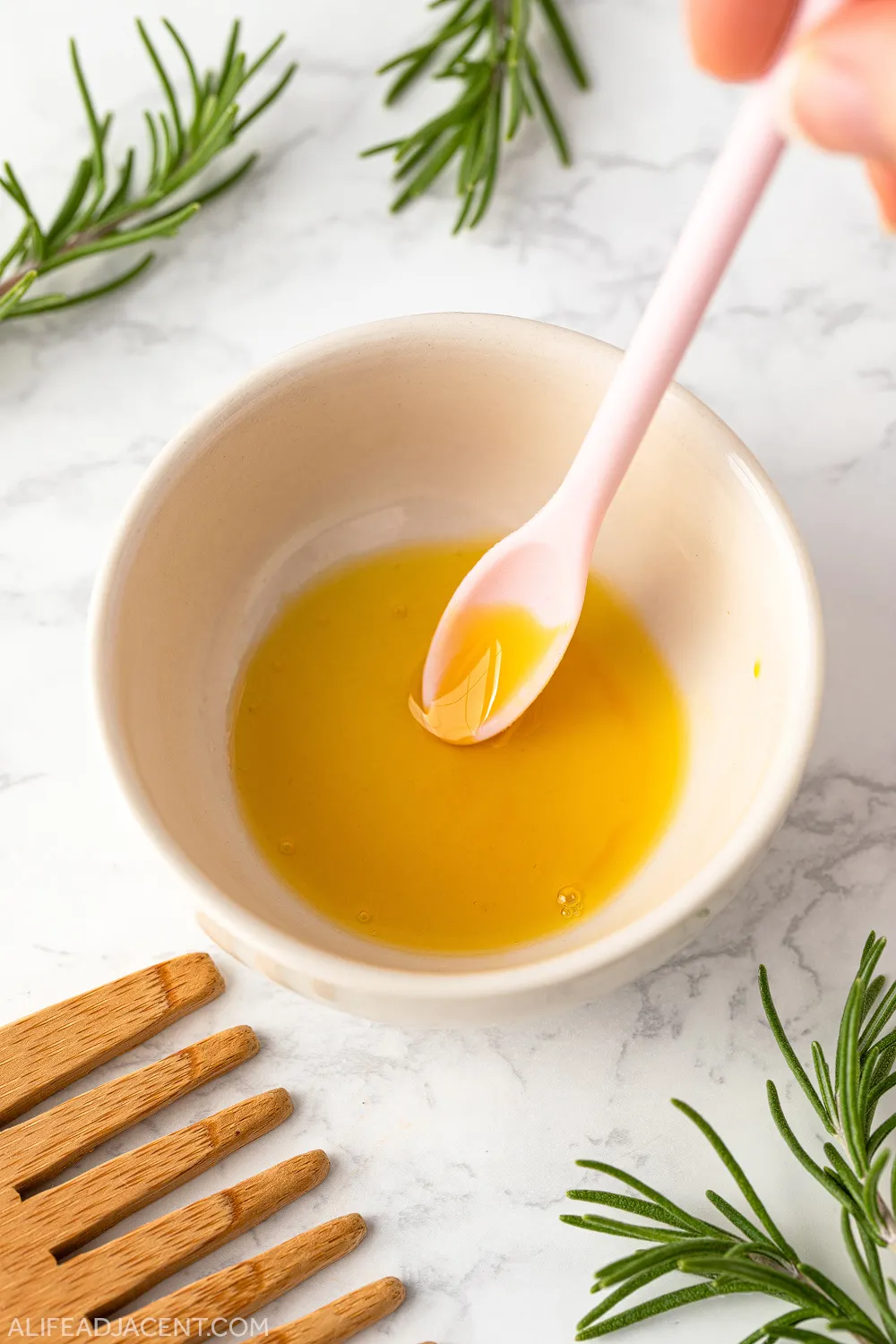
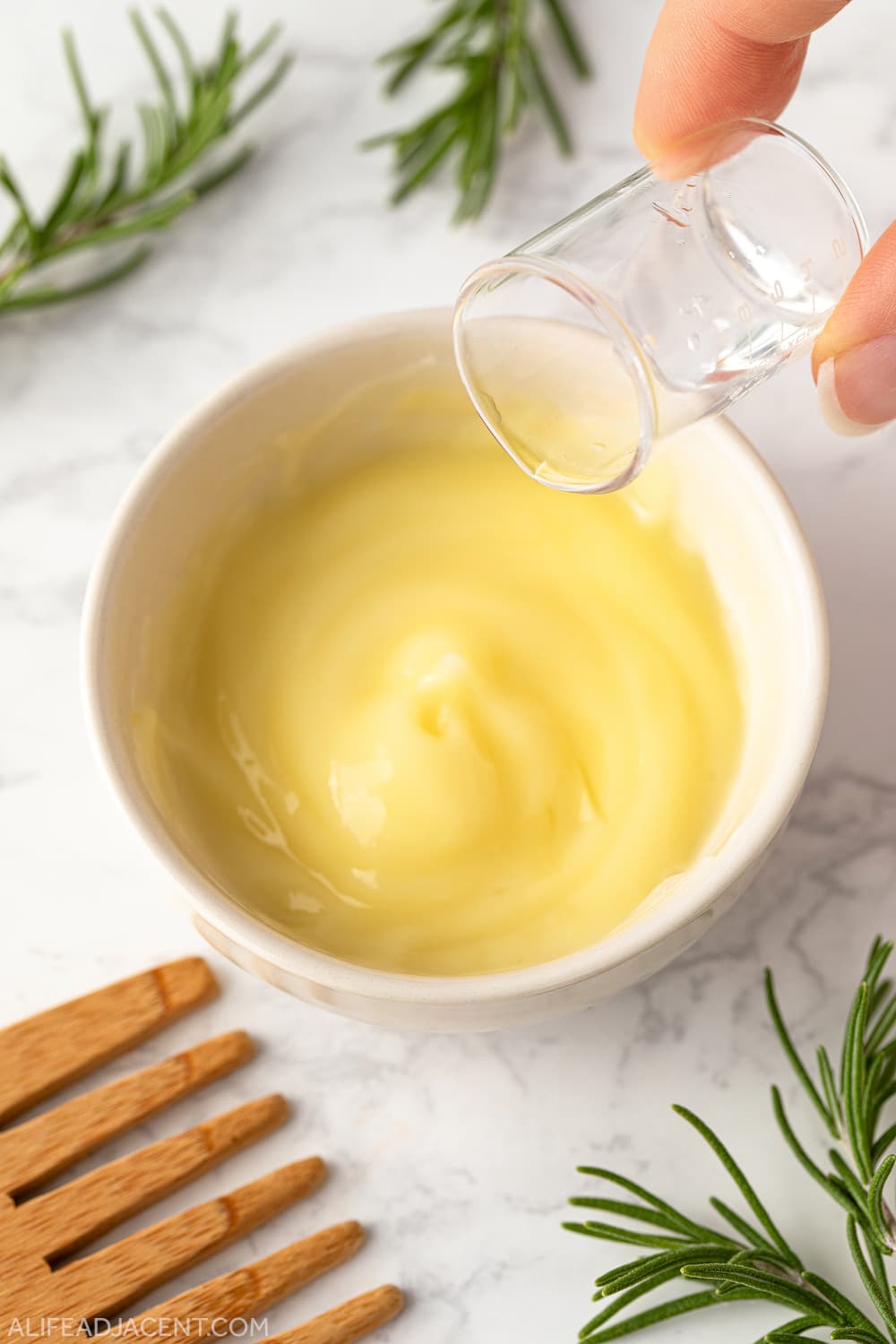
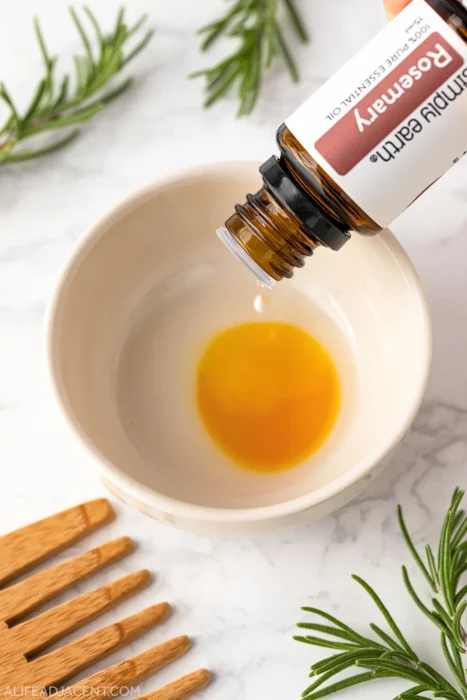
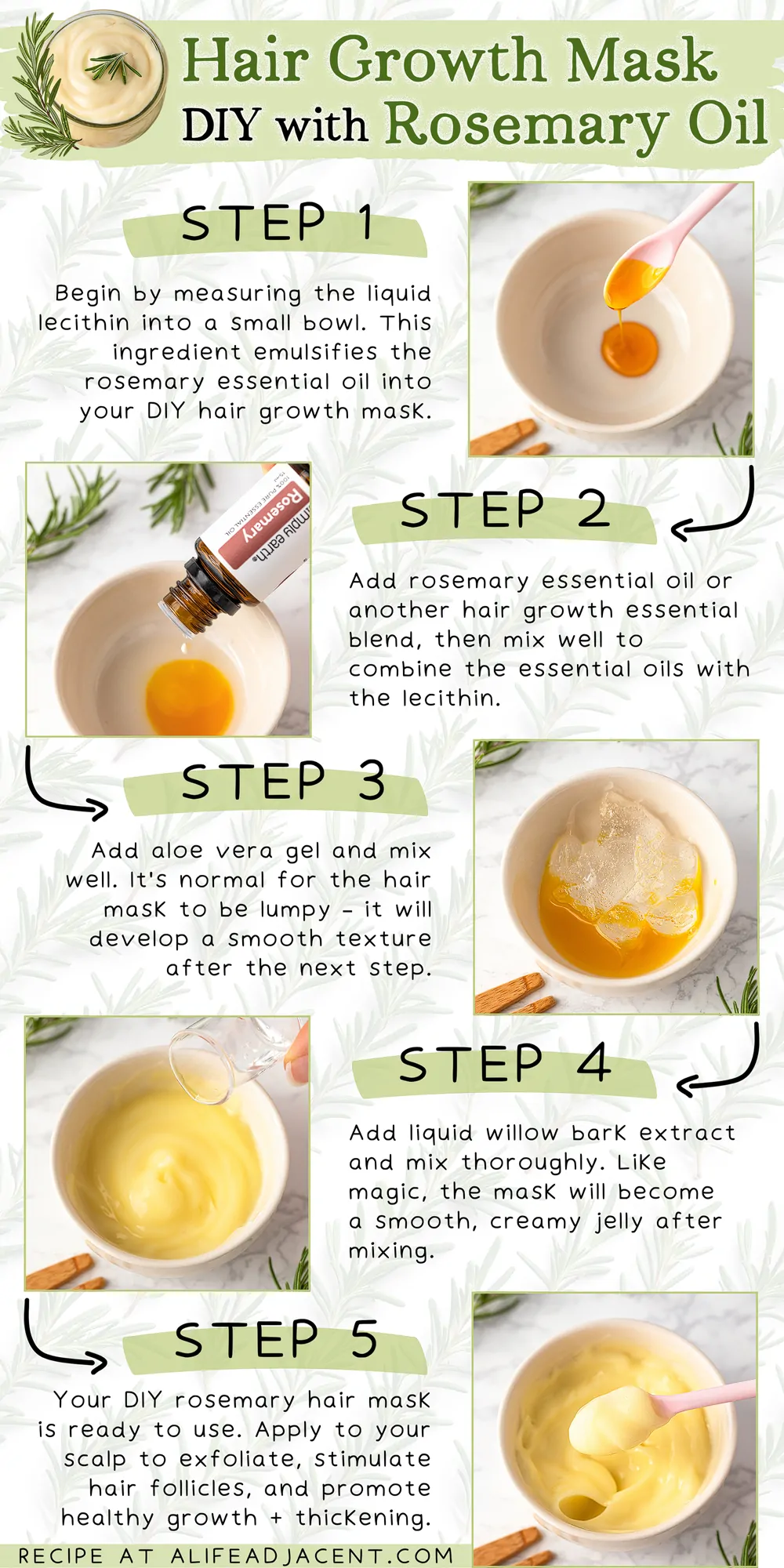
- Emulsify rosemary oil. Begin by combining liquid lecithin and rosemary essential oil. Mix well until liquefied. Tip: you can mix your ingredients in a small pinch bowl if you intend to use the entire hair mask immediately, or use a small jar with a lid to store any leftover.
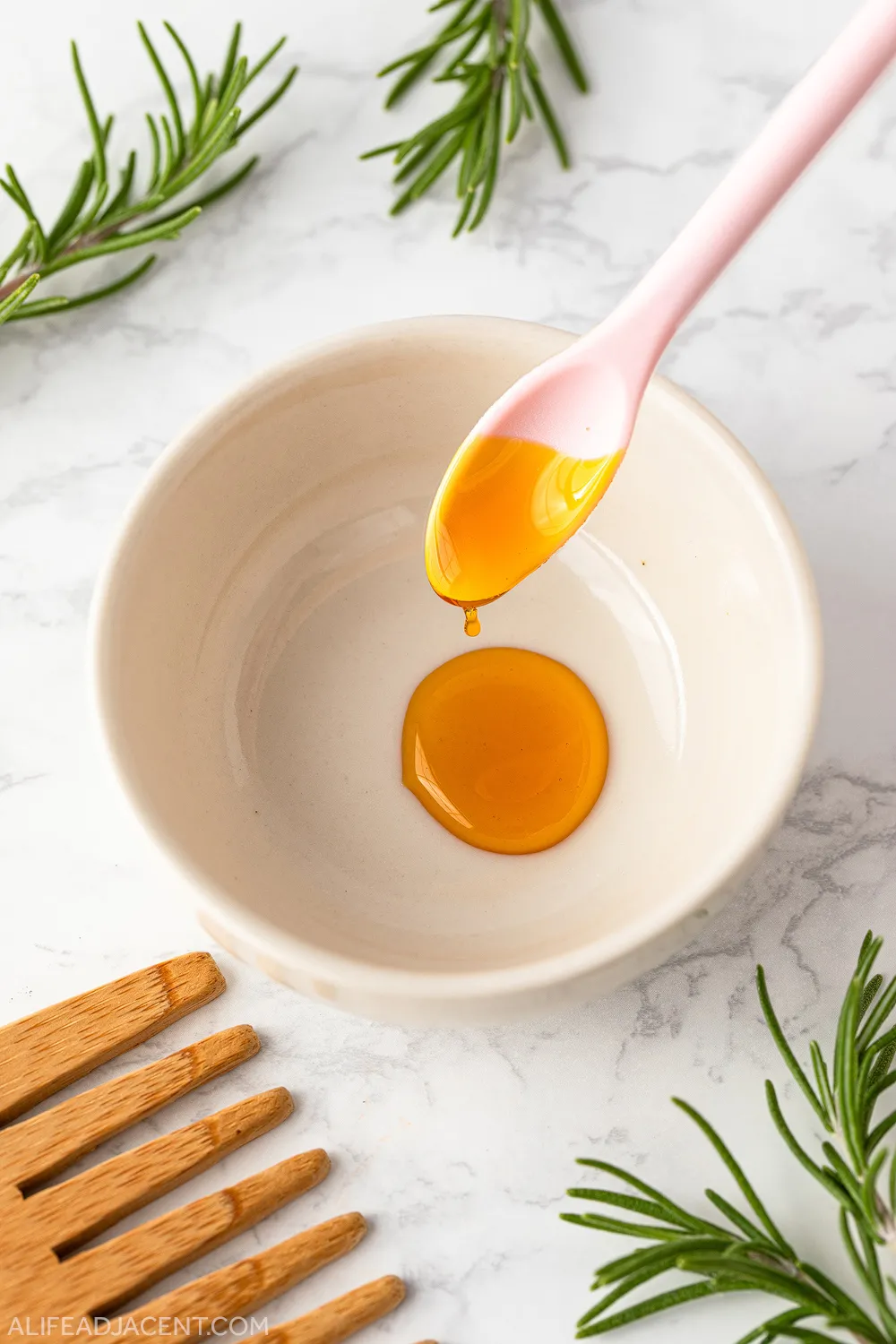
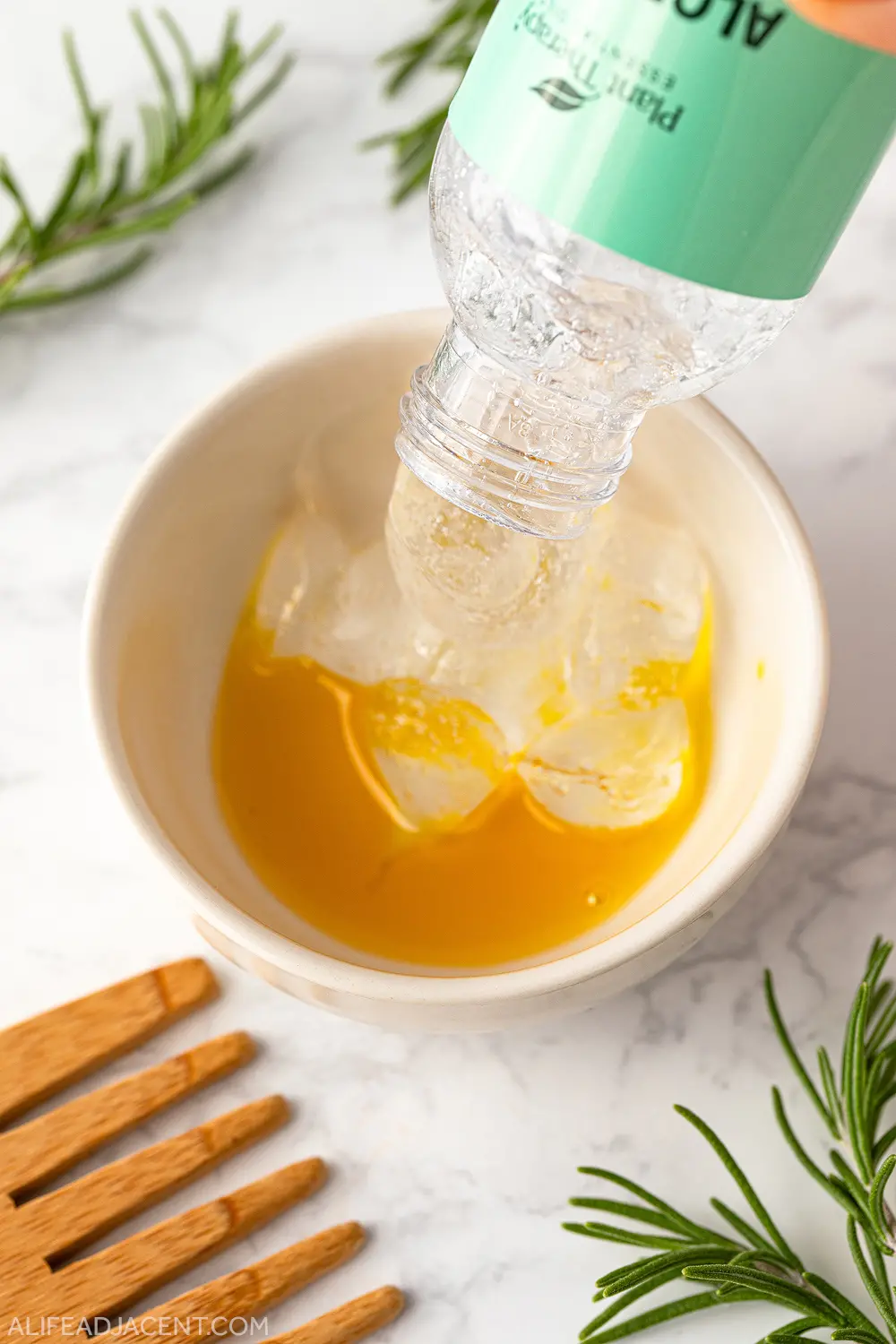
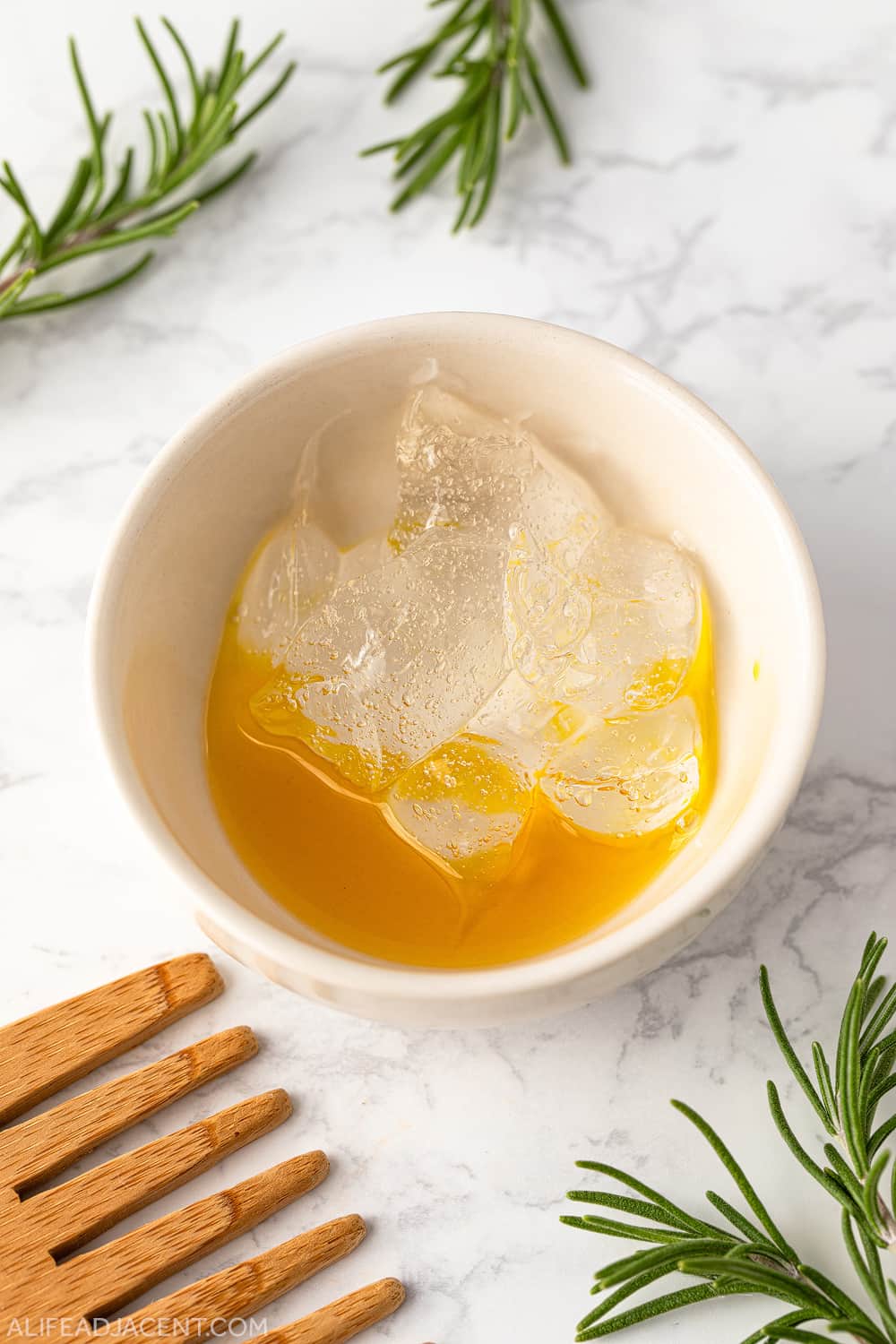
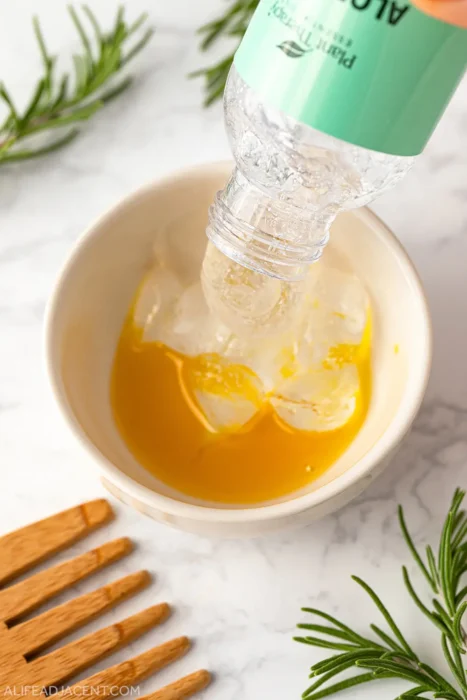
- Add aloe gel. Add the aloe vera gel to the emulsified rosemary oil mixture and mix well to combine. At this point, it’s normal for the mixture to be lumpy – it will take on a luxuriously creamy, jelly-like consistency once you add the willow bark.
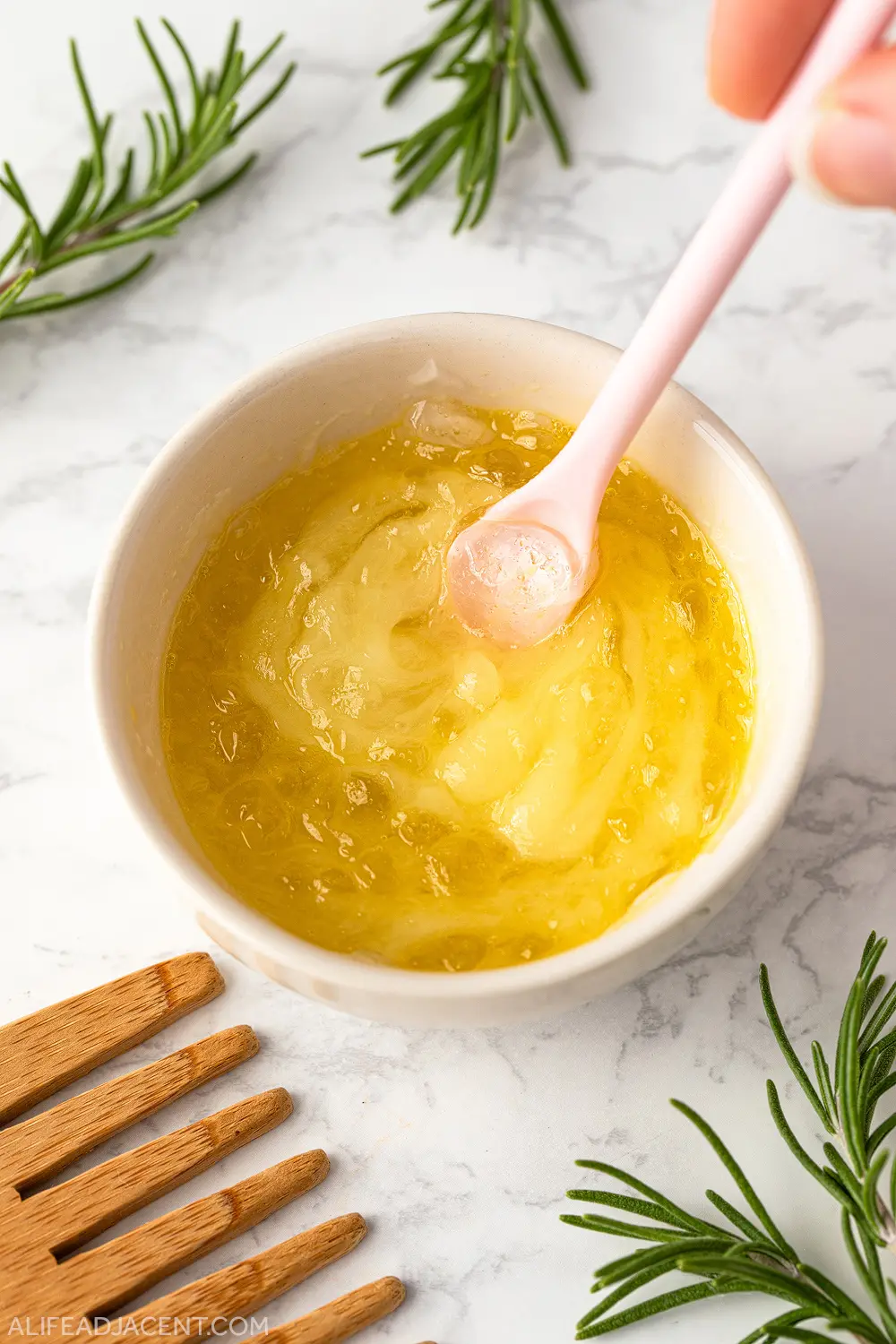
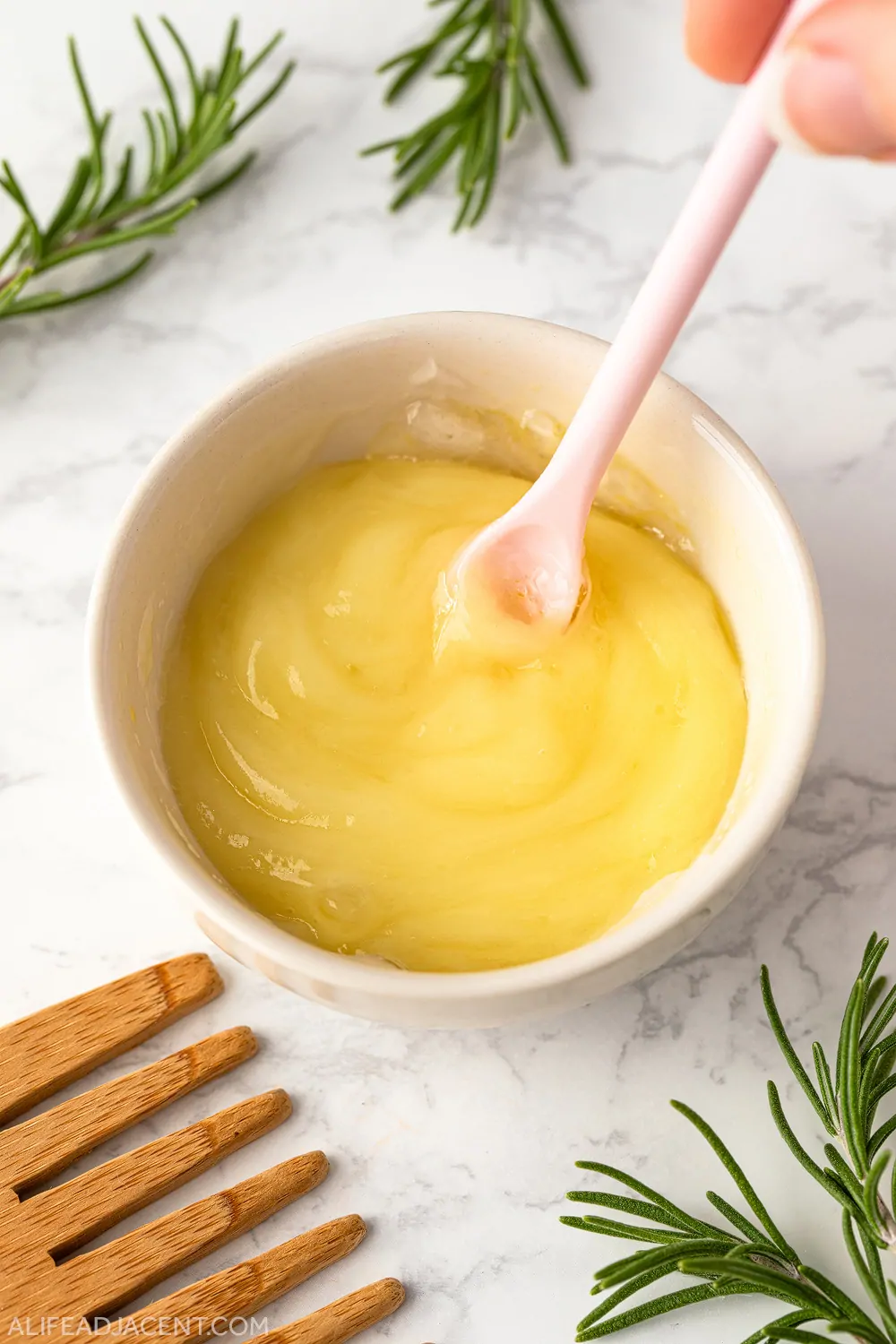
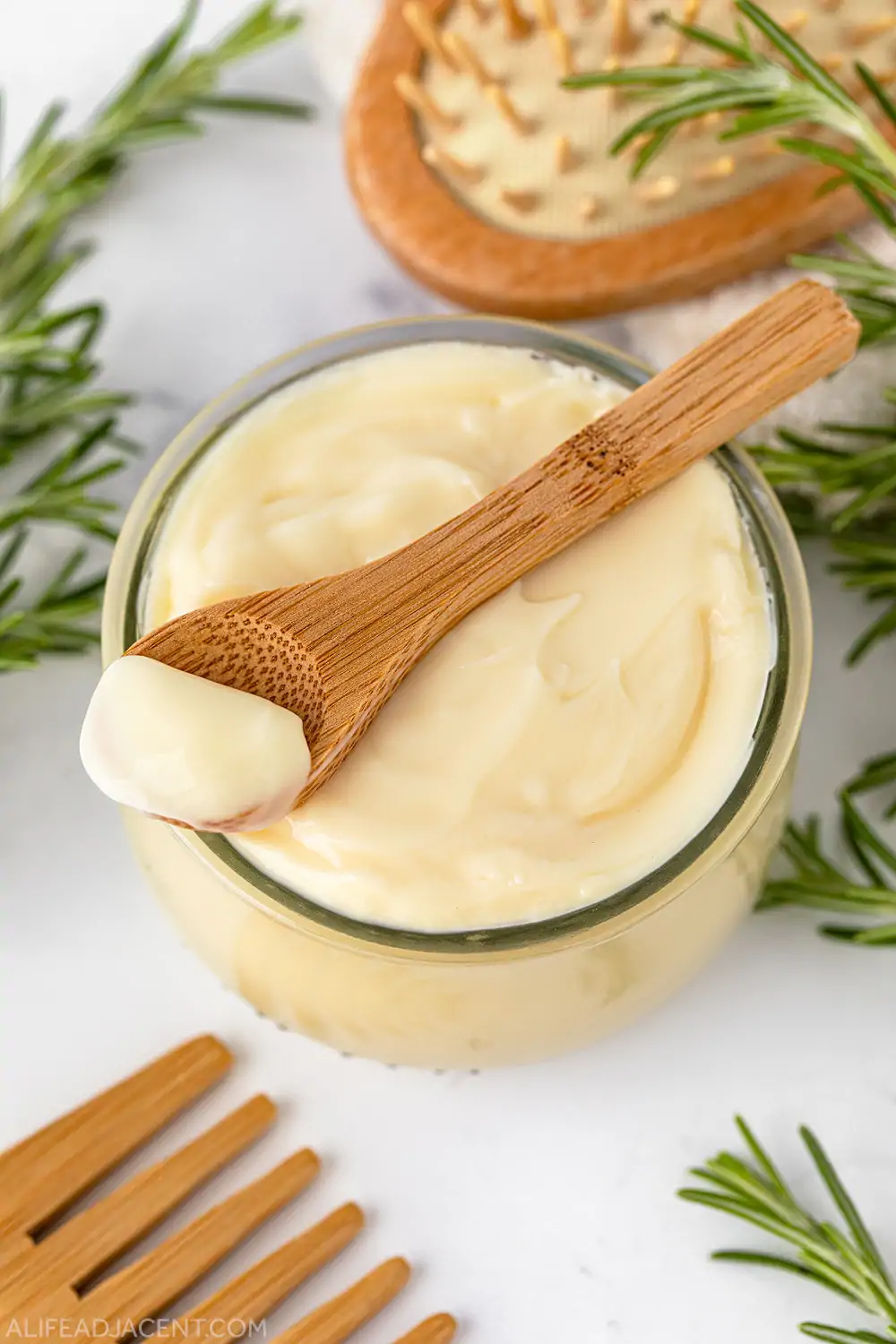
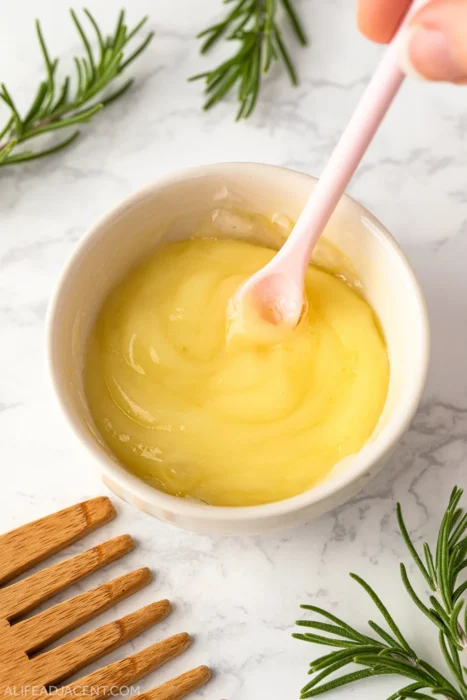
- Add willow bark. Add the liquid willow bark extract, and mix until the mask takes on the texture of a smooth, viscous jelly. Your DIY hair growth mask is now ready to use and apply to your scalp.

Formula Notes
- This recipe yields 30g of rosemary hair mask, or enough for 1 generous application. If you use less, store any leftover mask in the refrigerator and use within 1 week.
- If desired, you can double the recipe to have extra for future use, but for best results, this mask is best used quickly.
- For longer term storage in the fridge, I recommend adding a preservative such as Leucidal Liquid SF at 2%. Just keep in mind adding a preservative will thin out the mask to a serum-like consistency.
- You can also add extra willow bark extract for even more scalp soothing and exfoliation (just note that this will also thin out the mask). Please do not exceed the maximum usage rate on your bottle.
- Plant Therapy aloe gel has the best, thick consistency for this mask, and it’s also preserved for safety.
- It’s fine to use another brand of aloe vera, but please note you may not achieve the same thick jelly texture. I also like NaturSens aloe, which has a very clean ingredients list (albeit a much thinner texture).
- If desired, you can also substitute rosemary oil for your favorite essential oil blend for growth.
How to use your DIY hair mask for growth
1. Apply to scalp
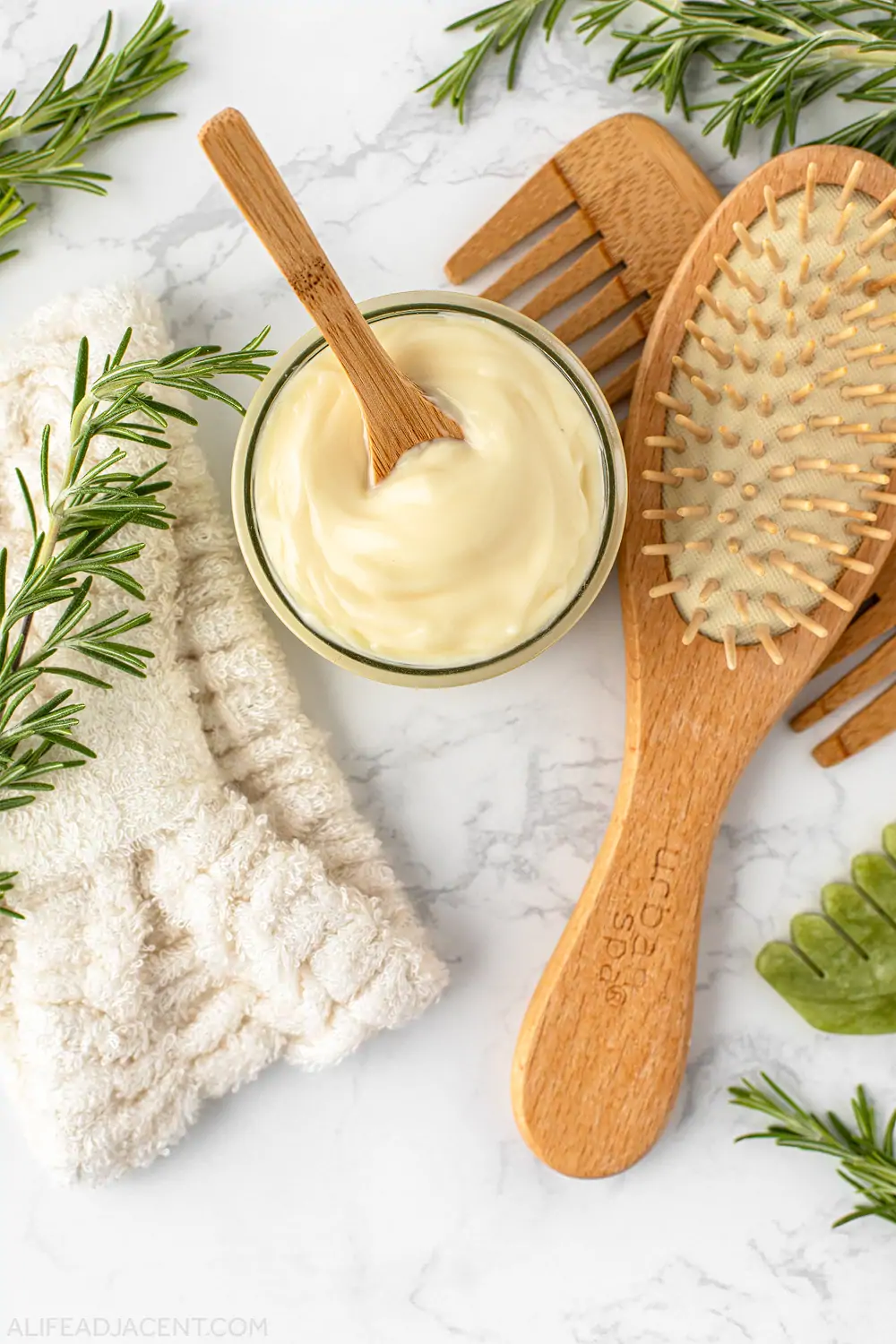
Using clean fingertips or a sanitized utensil, scoop out a generous amount of hair mask and apply to your entire scalp.
You should begin feeling the cooling, soothing tingle of willow bark and the invigorating, warming sensation of rosemary essential oil immediately.
Keep in mind that you want to apply the mask to the scalp, not the hair itself. The scalp is where the hair follicles are, and where the mask will get to work encouraging your hair to grow and thicken.
For this reason, it’s best to work in sections. You can comb your hair over to reveal your scalp, apply thoroughly to that area, and continue until you have saturated your entire head.
2. Massage
Gently massage the mask into your scalp using your fingertips to help it penetrate into your hair follicles. This also helps emulsify any excess oil on your scalp, making it easier for the rosemary oil to reach the follicles and get to work.
Tip: you can also use a gemstone gua sha comb for a more thorough scalp massage, but please take care and be gentle, as overly aggressive massage can worsen hair fall.
3. Leave in
Leave the mask on for as long as you like, for a minimum of 1 hour, to allow the hair growth ingredients ample time to work on growing.
However, keep in mind that the aloe gel will eventually dry and become crunchy, a sensation some may find uncomfortable. To combat this, you can periodically mist your scalp with water (or rosemary water) to keep the mask hydrated.

4. Rinse
To remove, simply wash your hair and continue with the rest of your styling routine as normal. For an extra growth boost, consider finishing with a rosemary rinse or scalp spray!

Tips + Tricks
- This recipe is a pre-wash treatment designed to be used before you wash your hair. Use it as often as you like, whenever it fits into your hair washing routine.
- While I’ve called it a “hair mask”, this recipe actually focuses on the scalp for the purpose of growing hair, not the hair shaft.
- I don’t recommend applying the mask to the length of your hair, as this will only waste product. If desired, you can apply an oil treatment or strengthening mask to your ends to multitask hair treatments – ideas include a mayo mask or castor oil mask.
- You can also alternate this mask with other homemade remedies for hair growth, such as:
Rosemary Hair Mask Ingredients Information
As mentioned, you only need a few simple, natural ingredients for this recipe, and here are just some of their benefits.
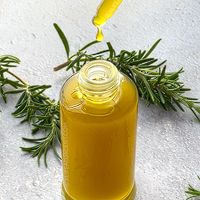
Rosemary essential oil
When it comes to growing and thickening hair, studies show rosemary is just as effective as the hair loss drug minodixil1 – only, rosemary oil comes from nature, with far less side effects.
Used in a hair mask, rosemary oil facilitates blood flow to hair follicles, promoting hair growth and thickness over time. It can also help suppress hair loss hormones2 while inhibiting yeast3 and bad bacteria, which are known causes of hair fall4.
Aloe vera gel
Lightweight, hydrating aloe vera jelly makes an excellent hair mask base. Not only is it deeply moisturizing, but there’s also evidence aloe helps support hair growth by reducing scalp inflammation5. It’s also non-greasy, which is a bonus if you don’t like oily hair treatments.
Willow bark extract
Oil-busting, anti-inflammatory willow bark extract helps hair grow in a few ways. For one, it contains natural BHA in the form of salicin, which converts to salicylic acid in the skin.
Salicylic acid scalp treatments (such as the Act + Acre Salicylic Scalp Exfoliator) are popular for their ability to gently exfoliate the scalp and help promote growth6. Since BHAs are oil-soluble, they can get right down into pores and oily hair follicles, helping remove buildup that may contribute to hair loss7 or prevent hair from achieving healthy growth.
As a bonus, willow bark’s cooling sensation feels incredibly soothing on the scalp – whenever my scalp feels itchy, I simply apply this mask for instant cooling relief.
Sunflower lecithin
For safety, it’s very important to dilute rosemary oil (or any essential oil) before using it on your scalp, which is why I’ve included naturally-derived liquid sunflower lecithin in this hair mask recipe.
You only need a small amount to emulsify and evenly distribute the rosemary oil. As a bonus, it’s rich in fatty acids and phospholipids that help nourish dry hair8.
Equipment
- Small bowl
- Small mixing utensil
- Small jar for storage
Ingredients
Instructions
- Begin by combining liquid lecithin and rosemary essential oil. Mix well until liquefied.Tip: you can mix your ingredients in a small pinch bowl if you intend to use the entire hair mask immediately, or use a small jar with a lid to store any leftover.
- Add the aloe vera gel to the emulsified rosemary oil mixture and mix well to combine. At this point, it's normal for the mixture to be lumpy – it will take on a luxuriously creamy, jelly-like consistency once you add the willow bark.
- Add the liquid willow bark extract, and mix until the mask takes on the texture of a smooth, viscous jelly. Your DIY hair growth mask is now ready to use and apply to your scalp.
Notes
- This recipe yields 30g of rosemary hair mask, or enough for 1 generous application. If you use less, store any leftover mask in the refrigerator and use within 1 week.
- If desired, you can double the recipe to have extra for future use, but for best results, this mask is best used quickly.
- For longer term storage in the fridge, I recommend adding a preservative such as Leucidal Liquid SF at 2%. Just keep in mind adding a preservative will thin out the mask to a serum-like consistency.
- You can also add extra willow bark extract for even more scalp soothing and exfoliation (just note that this will also thin out the mask). Please do not exceed the maximum usage rate on your bottle.
- Plant Therapy aloe gel has the best, thick consistency for this mask, and it’s also preserved for safety. It’s fine to use another brand of aloe vera, but please note you may not get the same results or thick texture. I also like NaturSens aloe, which has a very clean ingredients list (albeit a much thinner texture).
- If desired, you can also substitute rosemary oil with another essential oil blend, such as Hair Therapy or Beauty Within.

More hair care recipes
You might also like these other recipes for natural hair care:
- 4 Essential Oil Hair Mask Recipes
- DIY Vinegar Rinse to pH-Balance Your Hair
- DIY Dry Shampoo Spray with Rosemary Oil
- Rose Petal Vinegar for Hair & Skin
- DIY Micellar Water for Hair
For even more recipes, follow us on Pinterest, Instagram, YouTube, Facebook, TikTok, and Twitter.
📌 Pin it for later

- Panahi, Y., et al. “Rosemary Oil vs Minoxidil 2% for the Treatment of Androgenetic Alopecia: A Randomized Comparative Trial.: Semantic Scholar.” Skinmed, 1 Jan. 1970, https://www.semanticscholar.org/paper/Rosemary-oil-vs-minoxidil-2-for-the-treatment-of-a-Panahi-Taghizadeh/ce0063f1a3c69976833b9daa37deadcba6e71ce8.
- Murata, Kazuya et al. “Promotion of hair growth by Rosmarinus officinalis leaf extract.” Phytotherapy research : PTR vol. 27,2 (2013): 212-7. doi:10.1002/ptr.4712
- Lee MY, Na EY, Yun SJ, Lee SC, Won YH, Lee JB. In vitro Study and Clinical Trial of Natural Essential Oils and Extract Against Malassezia Species. Korean J Med Mycol. 2018;23(4):91-98.
- Barquero-Orias, D., et al. “Alopecia and the Microbiome: A Future Therapeutic Target?” Actas Dermo-Sifiliográficas (English Edition), vol. 112, no. 6, Elsevier BV, June 2021, pp. 495–502. Crossref, doi:10.1016/j.adengl.2021.03.011.
- Umar, Sanushi & Noreen, Sana. (2020). A Close Look at Aloe Vera Barbadensis and It’s Effect on Hair Health.
- Kim, HT., Park, HS., Kim, YM. et al. Double-blind randomized placebo-controlled study of the efficacy and safety of hair loss prevention shampoo containing salicylic acid, panthenol, and niacinamide in alopecia patients. Toxicol. Environ. Health Sci. 14, 173–185 (2022). https://doi.org/10.1007/s13530-022-00126-9
- Cirino, Erica. “Scalp Buildup: Symptoms, Causes, Treatment, and Prevention.” Healthline, Healthline Media, 11 Sept. 2019, www.healthline.com/health/scalp-build-up.
- Sawarkar, Neha. “Sunflower Lecithin in Hair Care Products.” Periodical by Knowde, 30 Oct. 2023, periodical.knowde.com/sunflower-lecithin-in-hair-care-products/.
ذوقك عندي
Monday 19th of May 2025
شكرا لكي على المعلومات القيمه
ruu
Thursday 27th of March 2025
would it be possible to make it without the liquid sunflower lecithin? i'm not sure if they sell that in my country, or are there be any alternatives i can use??
Ruu
Thursday 3rd of April 2025
@Kyla, oh yes they do have it here! Thankyou so much ^^
Kyla
Saturday 29th of March 2025
Hi Ruu, are you able to find liquid soy lecithin in your country instead? It's often used in food and baking.
Let me know, and if not, I'll do my best to come up with an alternative for you. An egg yolk might also work to emulsify the rosemary oil as it contains natural lecithin, but I'd like to test it myself first before I recommend this to you. I just want to ensure the rosemary oil in the hair mask is properly diluted so it doesn't irritate your scalp!