
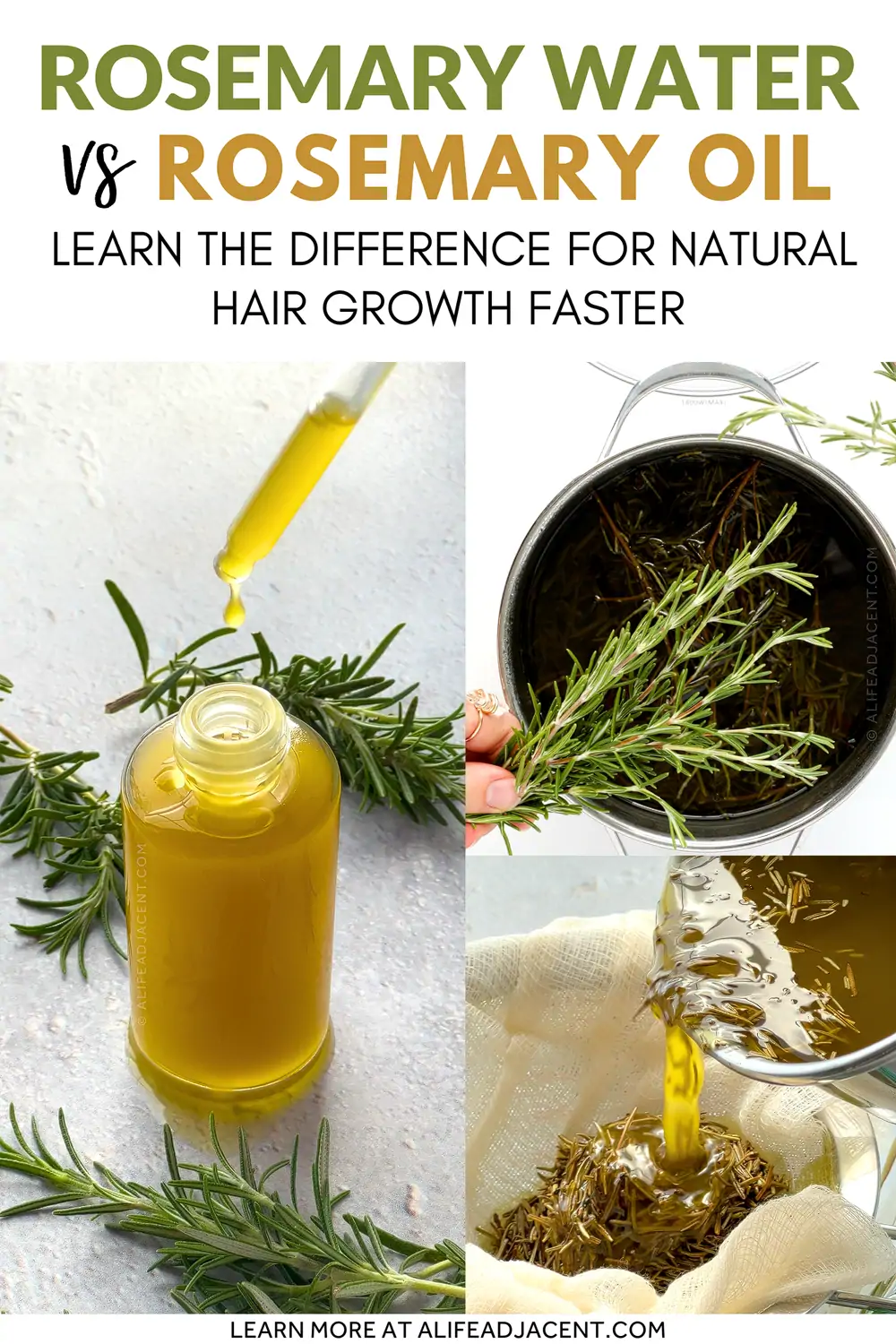
Rosemary water vs rosemary oil – do they truly work, and which one is better for natural hair growth? Find out with my deep dive into the science behind rosemary’s hair benefits. I also compare the difference between rosemary oil, essential oil, and rosemary water, and explain how to use them in your hair care routine.
You’ve likely noticed that using rosemary for hair growth has become extremely popular. Whether this was caused by a renewed interest in natural hair care, or a sudden increase in hair loss, I’m not sure – but what I do know is that homemade remedies with rosemary really do help your hair grow.
I know this because years ago, a stressful situation led me to experience a bout of rapid, significant hair loss, and rosemary was incredibly helpful in my regrowth journey.
But don’t just take my word for it. Though this guide was born out of my own personal experience of using rosemary to grow and thicken my hair, I also have the science and evidence to back it up.
So if you’re wondering whether this hair trend is worth your time, let me show you why it is!
Rosemary for Hair Deep Dive: What You’ll Learn
In this article, we’ll dive into:
- Benefits of rosemary for hair growth and scalp health
- Scientific evidence behind how it works to grow hair
- The difference between rosemary water and rosemary oil (and essential oil)
- How to use them in your hair care routine
I don’t like to waste time on ineffective beauty recipes, so you can trust my DIYs are well-researched. In fact, I got a little carried away with this one – so much so that my articles on rosemary oil and rosemary water became much too long in my attempt to thoroughly back up their benefits.
So, this article contains information that originally appeared in both those posts, combined into a more cohesive summary.
I hope you find this information helpful, and once you’re convinced of the benefits, check out my hair growth recipes:
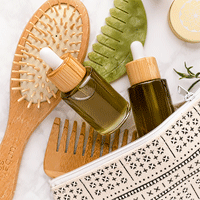
What does rosemary do for your hair?
Let’s get right into it: there’s a reason this aromatic herb is called nature’s minoxidil. Far more than just a DIY beauty myth, rosemary really does help you grow longer, thicker hair.
When applied to the scalp, rosemary has been shown to help stimulate hair growth, stop hair fall, and even increase the size and number of hair follicles1. Studies have shown it increases both hair count and density, quite literally thickening the hair.
There are many mechanisms by which rosemary promotes hair growth: by stimulating scalp blood flow1, decreasing inflammation2, downregulating hair loss hormones3, controlling yeast and dandruff4, and protecting the hair and scalp’s lipids from oxidative damage5.
I’ll get into more detail about each of these benefits later on. But for now, let’s take a look at the difference between the most popular rosemary hair growth remedies.
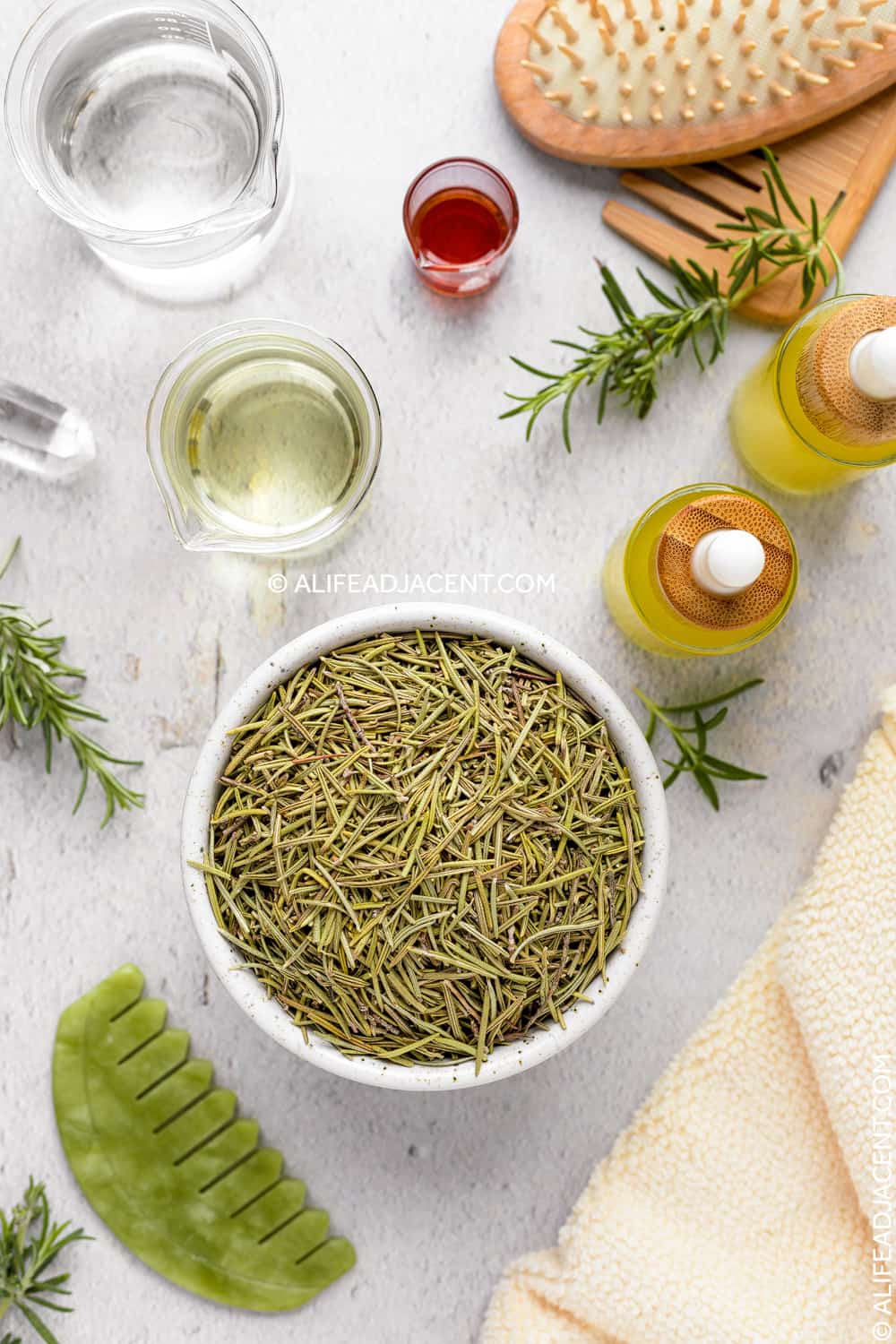
What’s the difference between rosemary water, oil, and essential oil?
First thing’s first – rosemary oil may refer to two different things, and here’s what sets them apart:
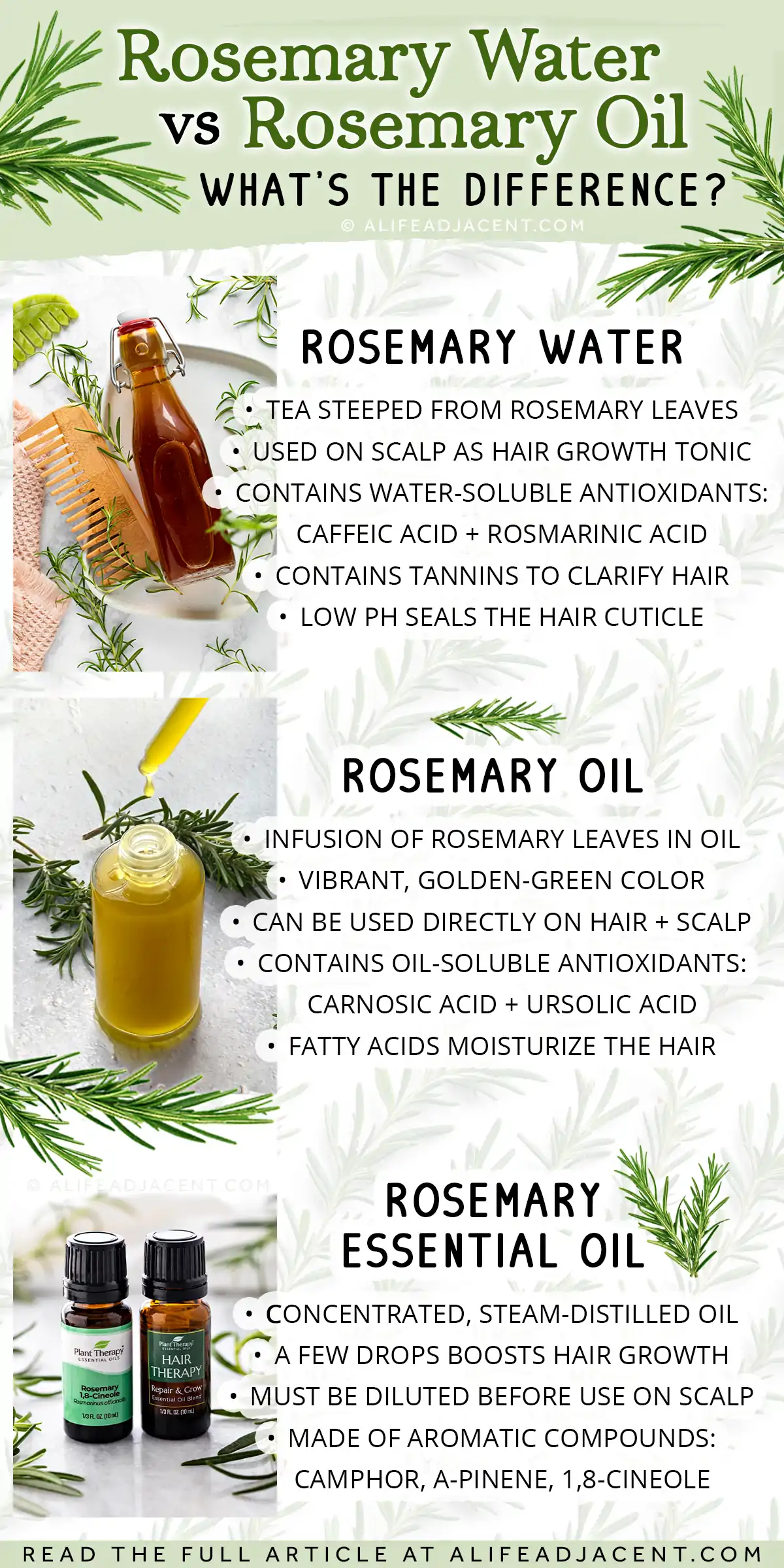
- Rosemary essential oil: A highly concentrated, steam-distilled oil from rosemary leaves that must be diluted before use, as it’s made of potent volatile aromatic compounds such as camphor and a-pinene6
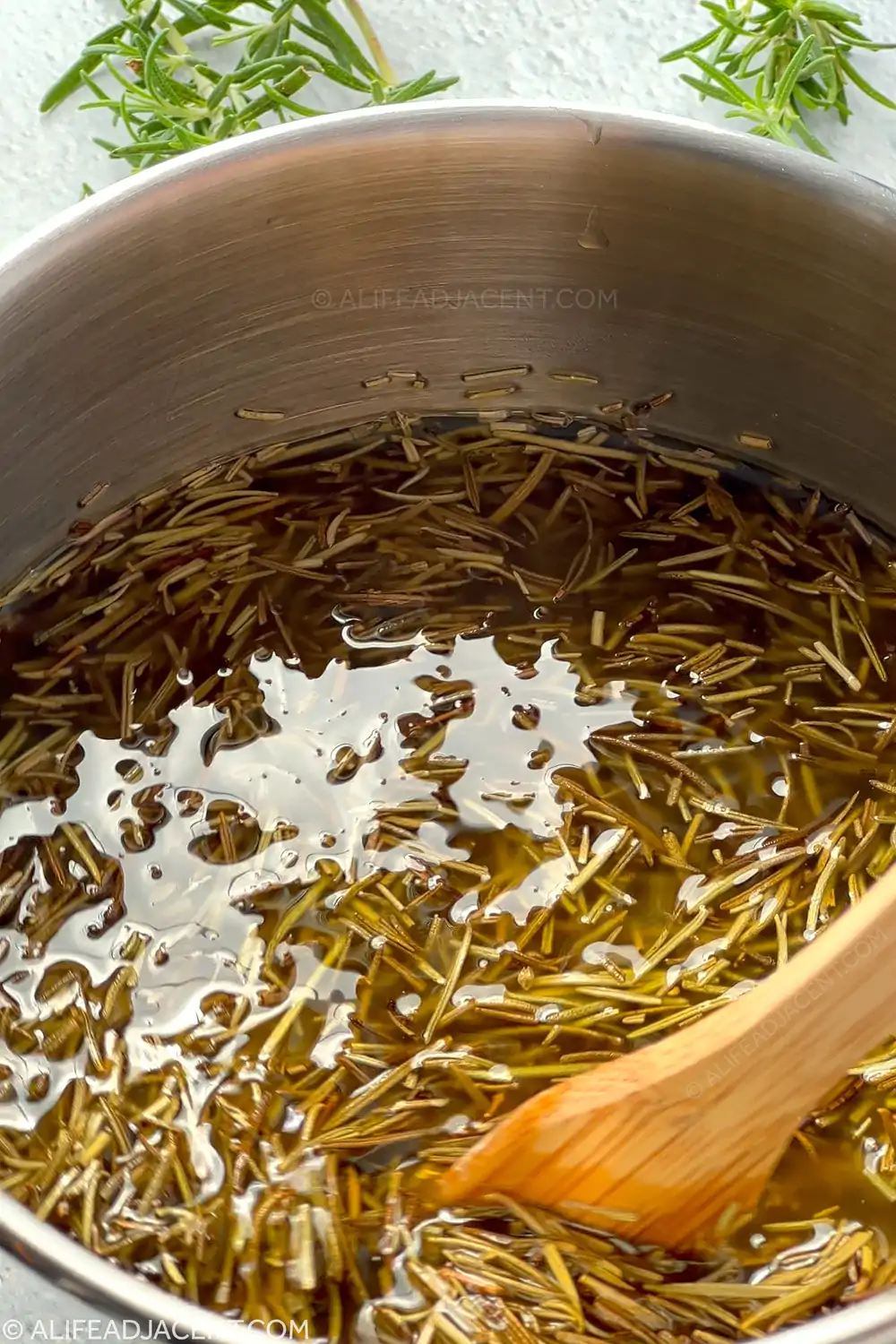
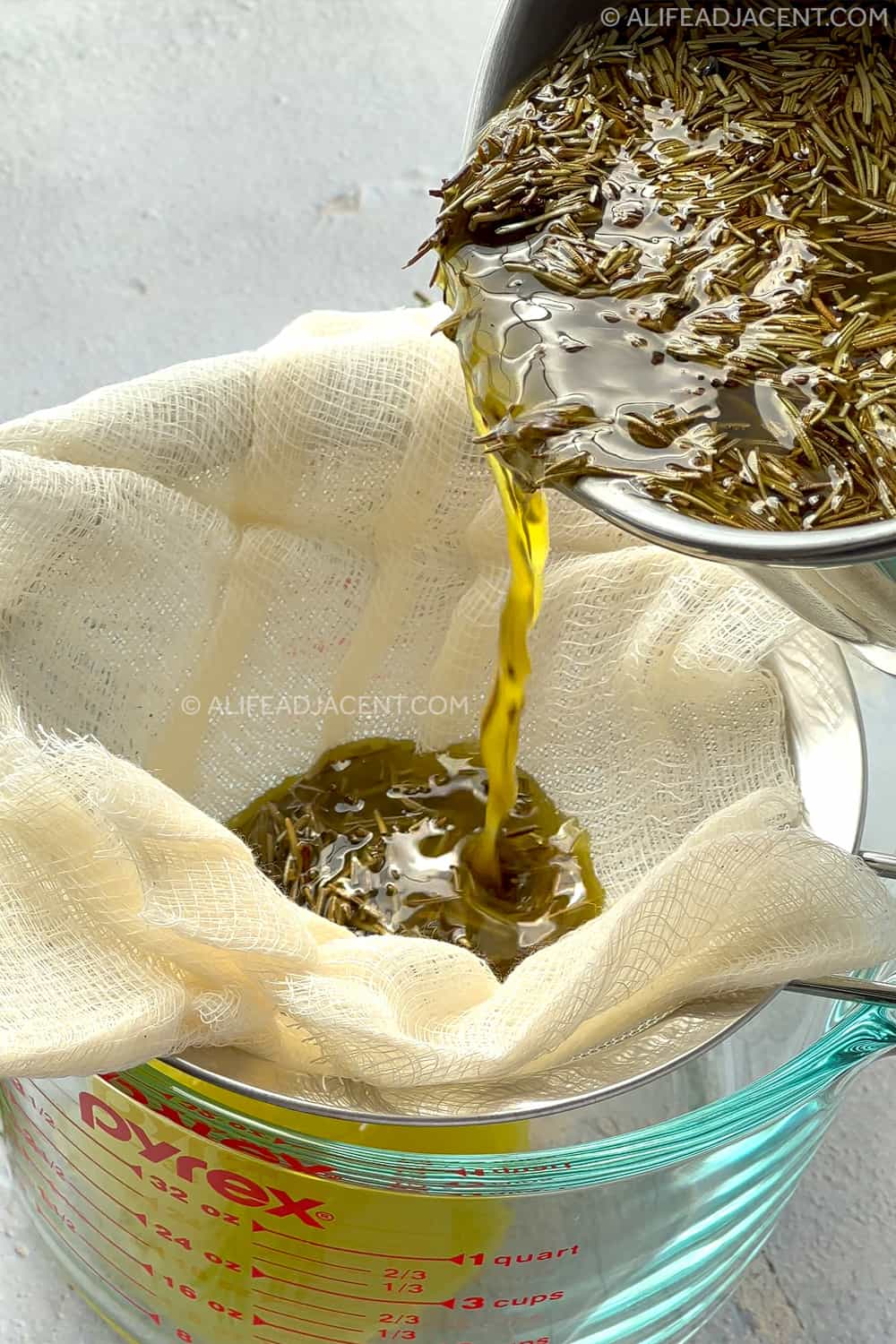
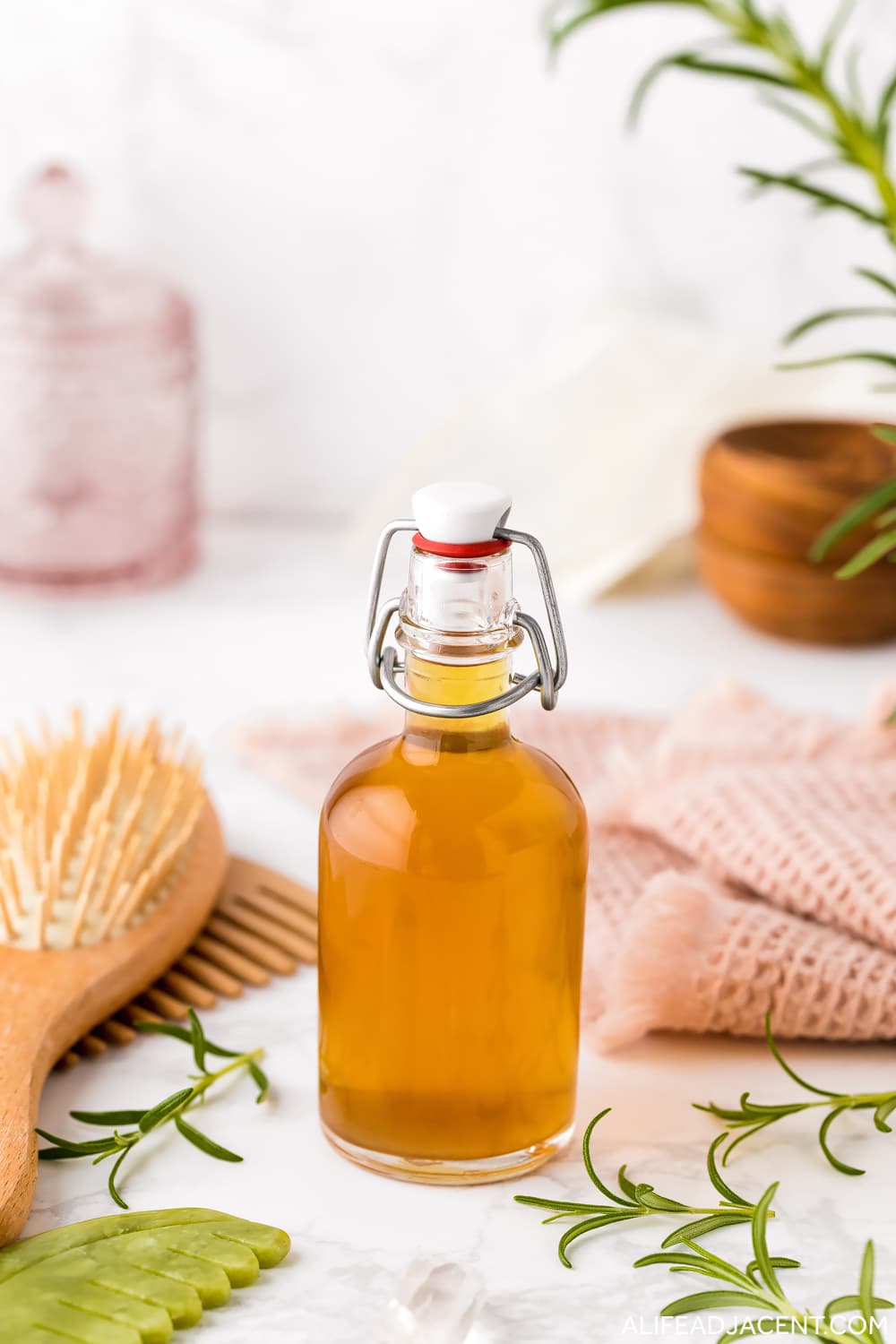
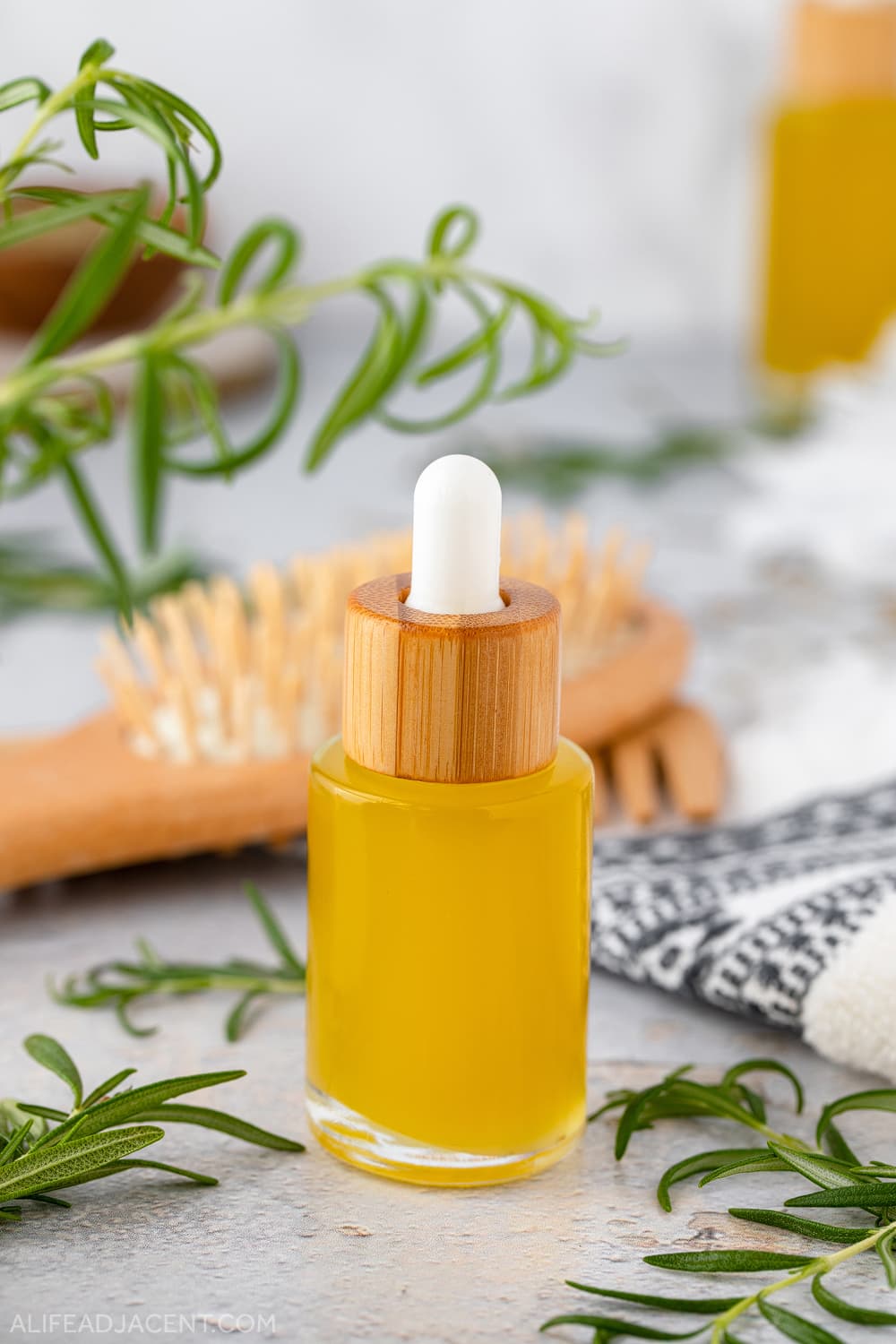
- Rosemary infused oil: An infusion of rosemary leaves in a carrier oil, which creates a vibrant, golden-green oil that can be used directly on the hair and scalp
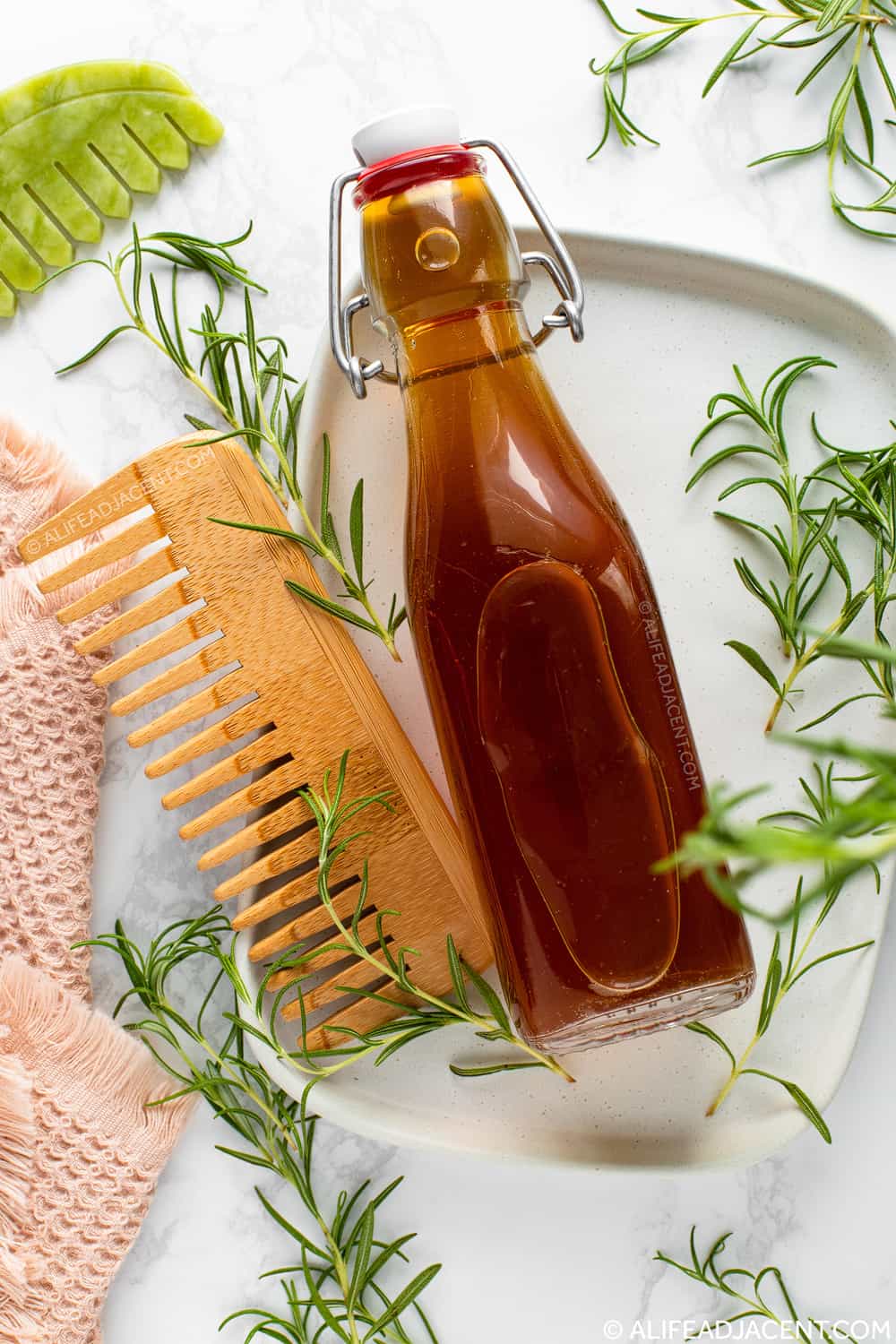
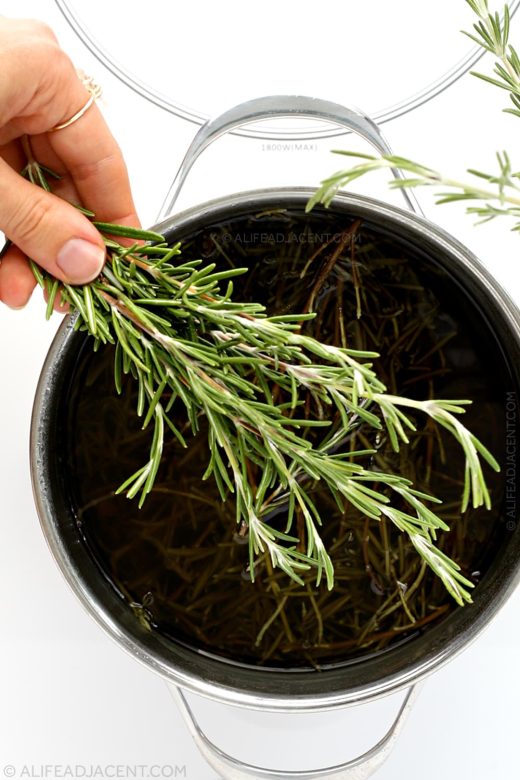
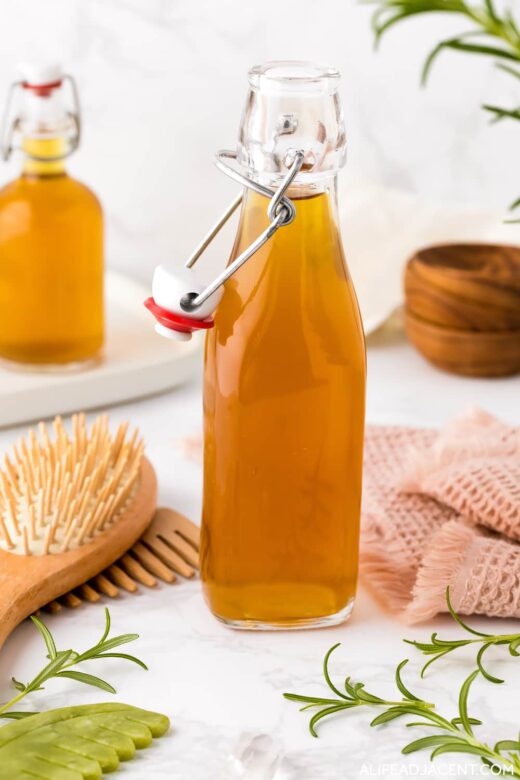
As for rosemary water, it’s simply a steeped hair tea of rosemary leaves in water.
Rosemary’s oils and its tea share many benefits for hair regrowth and scalp health, but there are still a few other unique characteristics that set them apart, which I’ll get into in more detail in a moment. For a quicker explanation, you can read the infographic below.
Rosemary Oil Benefits
Rosemary leaves (and the resulting rosemary infused oil) contain an array of beneficial oil-based compounds that help promote soft, silky hair. These include phospholipids, glycolipids7, and moisturizing fatty acids such as oleic acid and palmitic acid8.
These oily substances help nourish, condition, and lubricate the hair shaft, preventing breakage and keeping strands strong9. This is important, considering that another facet of growing longer, thicker hair is keeping the hair you already have in good condition.
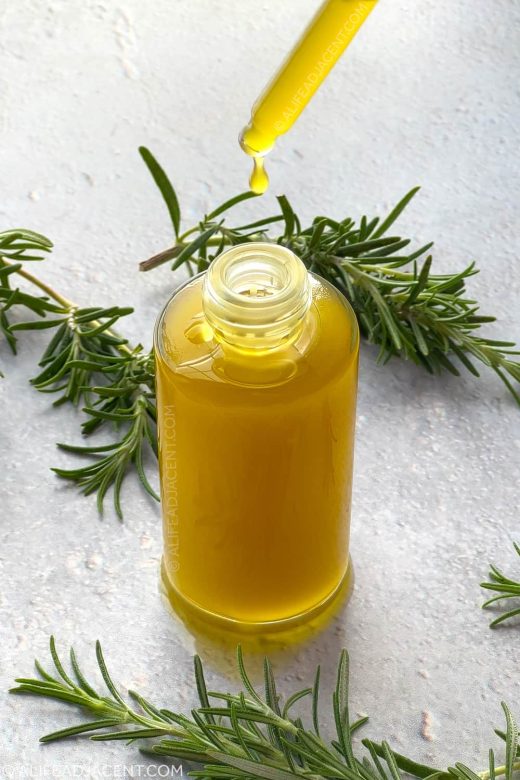
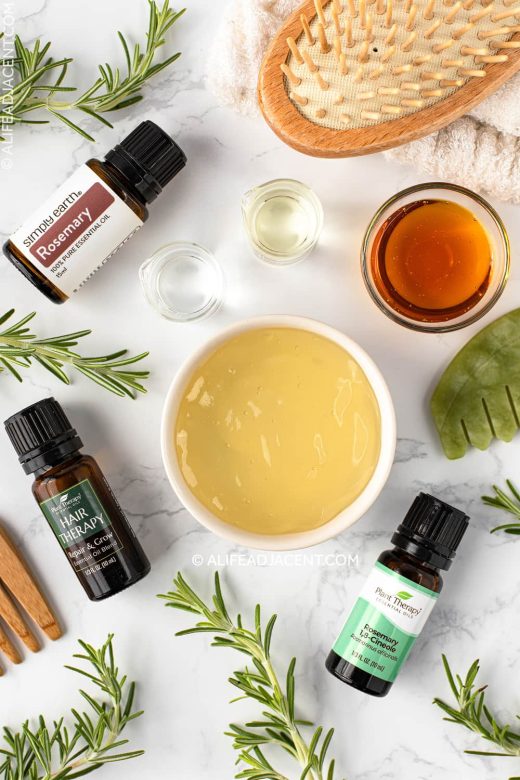
But aside from its moisturizing properties, rosemary oil also contains unique fat-soluble antioxidants and flavonoids. For instance, carnosic acid, ursolic acid, and oleanolic acid are only soluble in oil, meaning you will only be able to reap their benefits by using rosemary oil, not rosemary water.
What’s the main takeaway of rosemary essential oil vs rosemary oil? Rosemary EO is great for using on the scalp to promote growth, but it doesn’t contain fatty acids, doesn’t moisturize the hair, and must be mixed with a carrier oil before use. (Find out how to dilute rosemary EO for hair here.)
Rosemary Water Benefits
Not only does rosemary water contain water-soluble compounds that you can’t get from rosemary oil, but it also possess its own unique benefits:
- Tannins: Rosemary water contains tannins, a class of polyphenols with astringent and hair-smoothing properties. In fact, tannin-based treatments are offered as natural alternatives to keratin treatments, helping to smooth, protect, and repair the hair10,11. Whether your hair is straight, wavy, or naturally curly, using rosemary tea can help enhance your natural texture to help your hair look its best.
- Saponins: Also found in soap nuts, these naturally foamy compounds found in rosemary leaves12 act like natural “soap,” helping to gently cleanse and clarify the hair and scalp without shampoo. If your hair looks dull or lifeless, or if your scalp feels gunky or greasy, a rosemary hair rinse makes an excellent DIY clarifying treatment.
- Acidic pH: I tested homemade rosemary water with a pH meter and found it to be slightly acidic (5.3-5.4), which offers similar benefits to a vinegar rinse13. A low pH helps close the hair’s cuticle and reduce static electricity on its surface, improving slip, reducing frizz, and boosting shine. Personally, it helps my wavy hair dry smooth and silky with more defined waves.
- Natural dye: Often used as a natural hair dye or herbal hair toner, rosemary helps darken and enhance golden tones in any hair color. I’ve used it to stain my hair a darker, more golden blonde, but it may also increase brassy tones in your hair. If that’s an issue for you, you may want to avoid rosemary water or at least combine it with a purple toning shampoo.
- Clarifying: Rosemary tea helps remove buildup, leaving your scalp clean and your strands shiny and full of volume. The astringent tannins in rosemary bind to fats and oils14, reducing oiliness. In fact, you can spritz rosemary water directly on an oily scalp to help hair appear less greasy. As we’ll discuss later, keeping your scalp clean also directly benefits hair growth.
Rosemary Oil vs Rosemary Water for Hair Growth
So, which hair growth recipe is best for you – rosemary oil or rosemary water?
It depends on your particular needs. If your goal is to grow long, thick hair, mitigate hair loss, or reduce dandruff, you can use any of them, or better yet, all of them. I use them all as part of a rosemary-infused natural hair care routine.
Here’s how to choose:
- If you want the full spectrum of rosemary benefits, including length, strength, and moisturizing your hair and scalp, you can make rosemary infused hair oil.
- If you’re only interested in growth, thickening, and dandruff reduction, and want something quick and easy, you can use rosemary essential oil. Mix a few drops with a carrier oil (instructions here), or make my hair mask or rosemary oil serum recipes.
- If you don’t like the feeling of an oily scalp, or if your hair goals also include clarifying, reducing frizz, or darkening, you may prefer to make rosemary tea. You can also make my non-greasy hair growth serum recipe with rosemary water or rosemary extract.
My tutorials are very simple, but what if you don’t want to DIY? Bottled products are available, such as this rosemary and rice water spray or hair oil with clean ingredients.
Rosemary Benefits for Hair: How Rosemary Helps Hair Grow
Now, let’s get into the deep dive behind rosemary’s potent, well-documented benefits for hair growth and thickening. The full scope of research is too broad for one article, so the following is just a summary.
1. Improves scalp blood flow
One of the main ways rosemary helps grow hair is by stimulating scalp circulation, which is crucial for healthy hair growth15. That’s because blood flow delivers vital nutrients to the hair follicles, and well-nourished follicles grow longer, thicker hair.
Not only that, but effective circulation also encourages new follicles to grow, and also increases their size. So if you have thin or fine hair, using rosemary on your scalp can help increase your hair’s thickness.
2. Prevents hair loss + helps regrowth
Sometimes it’s not just about growth, but regrowth, and rosemary oil has been found to be just as effective as minoxidil for regrowing lost hair.
But when it comes to hair fall, rosemary was found to decrease hair loss even more so than the popular hair loss medication – only without any of its side effects1.
That’s not all: a more recent study found that a herbal hair lotion containing only 1% rosemary extract also promoted also better hair growth and thickening than minoxidil16. Another win for rosemary (and natural hair growth solutions).
3. Blocks hair loss hormones
You may have heard of DHT or DHT blockers – put simply, DHT is an androgen associated with hair loss and hair follicle shrinkage, and DHT blockers such as finasteride are often used to keep it in check.
But as it turns out, rosemary can do the same thing, making it a natural herbal alternative to DHT blockers17 . Specifically, the carnosic acid3, rosmarinic acid18, and ursolic acid19 in rosemary all inhibit 5a-reductase, which is the enzyme that converts testosterone into hair loss-causing DHT.
In short, rosemary helps reduce hair loss hormones on the scalp, tipping the hormonal balance towards favoring hair growth instead. This is just another way using a rosemary hair oil or rinse can help your hair grow long, thick, and strong.
4. Reduces dandruff + itchy scalp
If you struggle with dandruff or other scalp woes, rosemary can help. There’s plenty of anecdotal evidence that it helps reduce flaking and soothe itching, and personally, I’ve also found it very helpful for these same issues.
But dandruff isn’t always just a cosmetic issue, as it’s also linked to hair loss. This is why, if your goal is to grow your hair, it’s also important to keep dandruff under control. More on this below!
5. Anti-inflammatory + antioxidant benefits
You likely already know that antioxidants are vital for overall health and beauty, and the same goes for the hair and scalp. In fact, low scalp antioxidant levels are associated with hair loss and alopecia20.
However, the good news is that topical treatments can help. Applying antioxidants to the scalp has been shown to help stop hair shedding21 – and rosemary is full of them.
Rosemary contains a wide spectrum of potent growth-boosting antioxidants, including carnosic acid (carnosol)5, rosmarinic acid, ursolic acid, caffeic acid, oleanolic acid, micromeric acid22, and betulinic acid23.
Each one’s benefits are too numerous for one article, but the main way these powerful antioxidants help hair grow is by suppressing scalp inflammation20. Just as one example, caffeic acid alone has been shown to help mitigate chemo-induced hair loss24.
6. Fights yeast + bacterial overgrowth
Dandruff or itchy scalp? This can be caused by a yeast or bacterial overgrowth. Left unchecked, these pathogens can work against your best efforts, and may even contribute to hair fall20.
Luckily, keeping your scalp healthy is yet another way in which rosemary benefits hair growth. Rosemary’s potent antibacterial and anti-fungal properties help keep the scalp biome in check, maintaining the optimal conditions to grow long, healthy hair.
In particular, rosemary helps suppress Malassezia, a species of scalp yeast linked to dandruff, seborrheic dermatitis, itching, and hair loss when it’s allowed to grow out of control4,20.
That’s not all: rosemary also helps control acne-causing bacteria, helping keep pesky scalp pimples and the associated inflammation at bay25.
7. Prevents lipid peroxidation
Aside from quelling inflammation, rosemary’s potent antioxidants also help prevent lipid peroxidation on the hair and scalp. In other words: they help keep your scalp’s sebum from going rancid. (Yes, this can happen!)
Rancid oils (and rancid sebum) create free radicals and oxidative stress on the scalp. This stresses and ages our hair follicles26, leading to dry, brittle strands.
As well, rancid scalp squalene (a component of sebum) has been linked to dandruff and Malasezzia overgrowth (and as we just learned, both cause hair loss)27.
Once again, this ties everything back to the theme of keeping your scalp healthy to make your hair grow.
Supplying your scalp with antioxidants, and protecting its delicate oils, is another key to keeping hair healthy, beautiful, and growing. One way to do this? By making your own antioxidant-rich rosemary oil or rosemary water.
8. Helps strengthen + protect hair from damage
Speaking of oxidative stress, it’s not just our scalp and skin that’s affected by rancid oils. The hair shaft itself is also very susceptible to free radicals, which are prime causes of hair damage28.
But rosemary’s potent antioxidants can help strengthen the hair, offering a protective shield against heat, pollution, UV damage, and other damaging environmental factors29.
Of course, this isn’t to say that applying rosemary water or oil replaces a heat protectant – and please do not use hot styling tools on wet or oiled hair (unless you quite literally want to fry it)!
But, it certainly can’t hurt to infuse your hair with extra antioxidants, which is another good reason to incorporate rosemary into a hair spray, for instance.
More ways to reap rosemary’s hair benefits
If you enjoyed this benefits breakdown, you might also like these rosemary-infused hair DIYs:
- Rosemary Oil Hair Serum
- Rosemary Hair Mask for Growth
- Herbal Hair Growth Oil Recipe
- DIY Eyebrow Growth Serum
- Dry Shampoo Spray Recipe
- Micellar Water Hair Hack DIY
For more natural haircare ideas, follow us on Pinterest, Instagram, YouTube, Facebook, TikTok, and Twitter.
- Panahi, Y., et al. “Rosemary Oil vs Minoxidil 2% for the Treatment of Androgenetic Alopecia: A Randomized Comparative Trial.: Semantic Scholar.” Skinmed, 1 Jan. 1970, https://www.semanticscholar.org/paper/Rosemary-oil-vs-minoxidil-2-for-the-treatment-of-a-Panahi-Taghizadeh/ce0063f1a3c69976833b9daa37deadcba6e71ce8.
- Habtemariam, Solomon. “Anti-Inflammatory Therapeutic Mechanisms of Natural Products: Insight from Rosemary Diterpenes, Carnosic Acid and Carnosol.” Biomedicines vol. 11,2 545. 13 Feb. 2023, doi:10.3390/biomedicines11020545
- Murata, Kazuya et al. “Promotion of hair growth by Rosmarinus officinalis leaf extract.” Phytotherapy research : PTR vol. 27,2 (2013): 212-7. doi:10.1002/ptr.4712
- Lee MY, Na EY, Yun SJ, Lee SC, Won YH, Lee JB. In vitro Study and Clinical Trial of Natural Essential Oils and Extract Against Malassezia Species. Korean J Med Mycol. 2018;23(4):91-98.
- Loussouarn, Margot et al. “Carnosic Acid and Carnosol, Two Major Antioxidants of Rosemary, Act through Different Mechanisms.” Plant physiology vol. 175,3 (2017): 1381-1394. doi:10.1104/pp.17.01183
- The Potential of Use Basil and Rosemary Essential Oils as Effective Antibacterial Agents – Scientific Figure on ResearchGate. Available from: https://www.researchgate.net/figure/Constituents-of-rosemary-oil_tbl2_255694831 [accessed 13 Apr 2025]
- Elbanna, Khaled, et al. “Rosemary (Rosmarinus Officinalis) Oil: Composition and Functionality of the Cold-Pressed Extract.” Rosemary (Rosmarinus Officinalis) Oil: Composition and Functionality of the Cold-Pressed Extract, 1 Jan. 1970, https://pubag.nal.usda.gov/catalog/6061975.
- Kravić, Snežana Ž., et al. “Fatty Acid Composition of Rosemary (Rosmarinus Officinalis L.) Leaves.” AGRIS, Institute of Food Technology, Novi Sad (Serbia), 1 Jan. 1970, https://agris.fao.org/agris-search/search.do?recordID=RS2013060075.
- Mysore, Venkataram, and Arpita Arghya. “Hair Oils: Indigenous Knowledge Revisited.” International journal of trichology vol. 14,3 (2022): 84-90. doi:10.4103/ijt.ijt_189_20
- Cosmeticsdesign-Europe.com. “Powerful Protection and Repair for Hair.” Cosmeticsdesign, William Reed Ltd, 12 Mar. 2018, https://www.cosmeticsdesign-europe.com/Headlines/Promotional-Features/Powerful-protection-and-repair-for-hair.
- https://stylespeak.com/products/brand-reviews/tanino-protein-botox-is-the-next-leap-forwards-in-the-hair-treatment-segment/
- Damyanova, Stanka & Tasheva, Stanislava & Stoyanova, Albena & Damianov, Dancho. (2013). Investigation of Extracts from Rosemary (Rosmarinus officinalis L.) for Application in Cosmetics. Journal of Essential Oil Bearing Plants. 13. 1-11. 10.1080/0972060X.2010.10643784.
- Gavazzoni Dias, Maria Fernanda Reis et al. “The Shampoo pH can Affect the Hair: Myth or Reality?.” International journal of trichology vol. 6,3 (2014): 95-9. doi:10.4103/0974-7753.139078
- Furlan, Aurélien L et al. “Red wine tannins fluidify and precipitate lipid liposomes and bicelles. A role for lipids in wine tasting?.” Langmuir : the ACS journal of surfaces and colloids vol. 30,19 (2014): 5518-26. doi:10.1021/la5005006
- Murphrey MB, Agarwal S, Zito PM. Anatomy, Hair. [Updated 2022 Aug 8]. In: StatPearls [Internet]. Treasure Island (FL): StatPearls Publishing; 2023 Jan-. Available from: https://www.ncbi.nlm.nih.gov/books/NBK513312/
- Begum, Asia et al. “Evaluation of Herbal Hair Lotion loaded with Rosemary for Possible Hair Growth in C57BL/6 Mice.” Advanced biomedical research vol. 12 60. 21 Mar. 2023, doi:10.4103/abr.abr_306_21
- Dhariwala, MY, Ravikumar, P. An overview of herbal alternatives in androgenetic alopecia. J Cosmet Dermatol. 2019; 18: 966– 975. https://doi.org/10.1111/jocd.12930
- Li, Jing-Jie et al. “The promotion of hair regrowth by topical application of a Perilla frutescens extract through increased cell viability and antagonism of testosterone and dihydrotestosterone.” Journal of natural medicines vol. 72,1 (2018): 96-105. doi:10.1007/s11418-017-1116-3
- Huang, Bo et al. “Melandrium firmum Extract Promotes Hair Growth by Modulating 5α-Reductase Activity and Gene Expression in C57BL/6J Mice.” Annals of dermatology vol. 31,5 (2019): 502-510. doi:10.5021/ad.2019.31.5.502
- Trüeb, Ralph M et al. “Scalp Condition Impacts Hair Growth and Retention via Oxidative Stress.” International journal of trichology vol. 10,6 (2018): 262-270. doi:10.4103/ijt.ijt_57_18
- Davis, M.G., Piliang, M.P., Bergfeld, W.F., Caterino, T.L., Fisher, B.K., Sacha, J.P., Carr, G.J., Moulton, L.T., Whittenbarger, D.J., Schwartz, J.R., Scalp application of antioxidants improves scalp condition and reduces hair shedding in a 24-week randomized, double-blind, placebo-controlled clinical trial. Int. J. Cosmet. Sci. 43, S14– S25(2021). https://doi.org/10.1111/ics.12734
- de Macedo, Lucas Malvezzi et al. “Rosemary (Rosmarinus officinalis L., syn Salvia rosmarinus Spenn.) and Its Topical Applications: A Review.” Plants (Basel, Switzerland) vol. 9,5 651. 21 May. 2020, doi:10.3390/plants9050651
- Ghasemzadeh Rahbardar, Mahboobeh, and Hossein Hosseinzadeh. “Therapeutic effects of rosemary (Rosmarinus officinalis L.) and its active constituents on nervous system disorders.” Iranian journal of basic medical sciences vol. 23,9 (2020): 1100-1112. doi:10.22038/ijbms.2020.45269.10541
- Choi, June et al. “Effects of caffeic acid on cisplatin-induced hair cell damage in HEI-OC1 auditory cells.” International journal of pediatric otorhinolaryngology vol. 78,12 (2014): 2198-204. doi:10.1016/j.ijporl.2014.10.013
- Tsai, Tsung-Hsien et al. “Rosmarinus officinalis extract suppresses Propionibacterium acnes-induced inflammatory responses.” Journal of medicinal food vol. 16,4 (2013): 324-33. doi:10.1089/jmf.2012.2577
- Trüeb, R.M., Oxidative stress and its impact on skin, scalp and hair. Int. J. Cosmet. Sci. 43, S9– S13(2021). https://doi.org/10.1111/ics.12736
- Jourdain, Roland et al. “Exploration of scalp surface lipids reveals squalene peroxide as a potential actor in dandruff condition.” Archives of dermatological research vol. 308,3 (2016): 153-63. doi:10.1007/s00403-016-1623-1
- Trüeb, Ralph M. “Oxidative stress in ageing of hair.” International journal of trichology vol. 1,1 (2009): 6-14. doi:10.4103/0974-7753.51923
- Fernández, Estibalitz et al. “Efficacy of antioxidants in human hair.” Journal of photochemistry and photobiology. B, Biology vol. 117 (2012): 146-56. doi:10.1016/j.jphotobiol.2012.09.009
ذوقك عندي
Saturday 17th of May 2025
شكرا لكي على المعلومات القيمه
Kyla
Monday 19th of May 2025
You're welcome, and thank you for leaving a nice comment!