
Learn how to make an oil-based DIY vitamin C face serum for glowing skin. This simple homemade skincare recipe is an easy-to-make, more stable alternative to water-based vitamin C serums (which often have short shelf lives). No preservative or refrigeration needed!
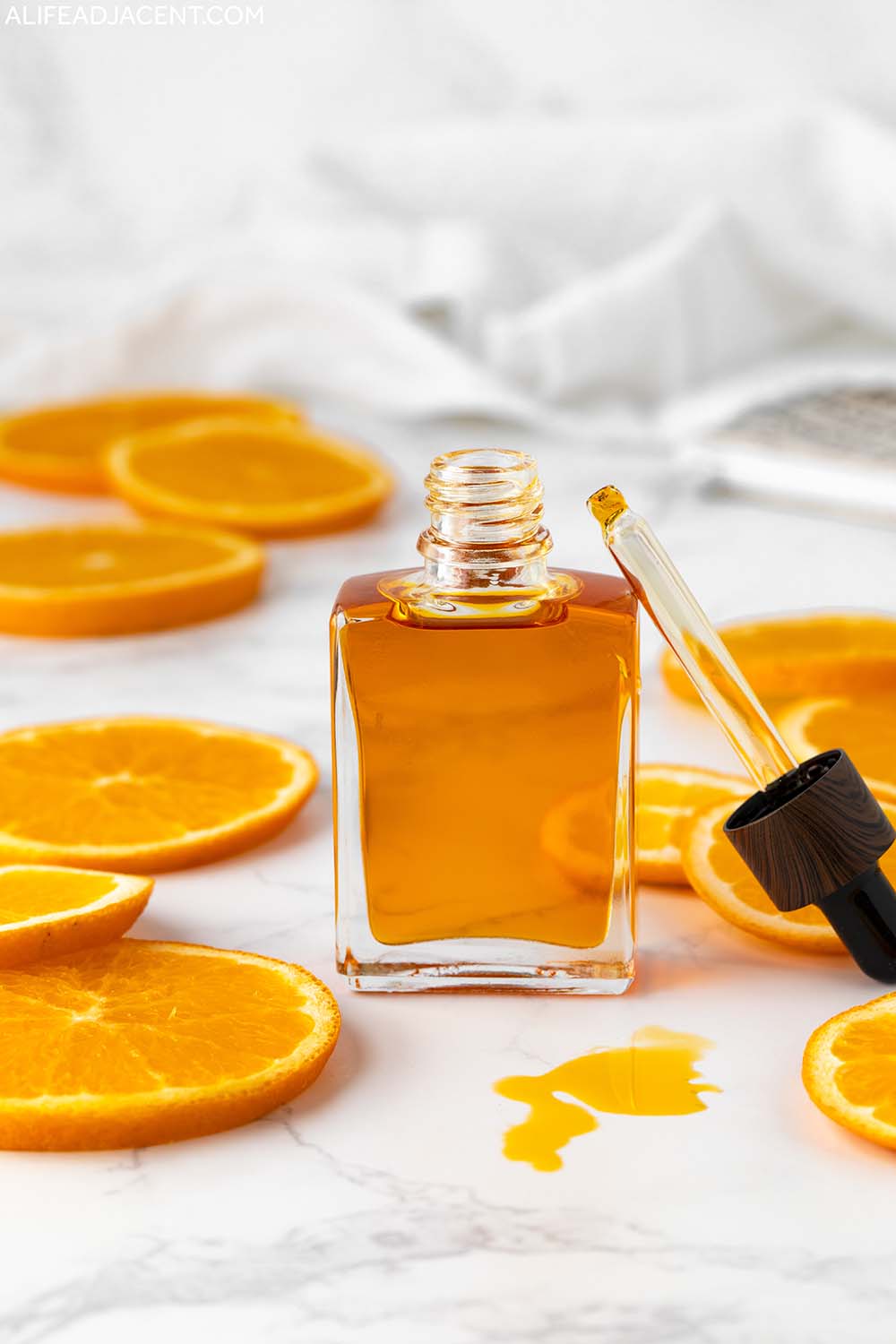
It’s no secret that Vitamin C (ascorbic acid) is essential for skin health. While oranges are better eaten than used on your face, a vitamin C serum is one of the next best options.
After all, this potent antioxidant is well-known for its ability to support collagen integrity, slow skin aging, as well as defend skin against blue light, UV damage, and pollution, to name just a few benefits1.
In theory, vitamin C face serums are also simple to make at home. But the problem is that they’re also notoriously delicate and prone to oxidizing, often turning orange or brown before you’ve had a chance to use them up.
And considering that this change of color, or oxidation, is a sign of the vitamin C no longer being viable, why would you want to waste your time and money on a useless DIY skin care product?
That’s why I made this simple, beginner-friendly oil serum formula. With only 3 main ingredients and a more stable form of vitamin C, this recipe avoids some of the common pitfalls of homemade serums by resisting oxidation and spoilage.
Read on to learn how to reap the benefits of vitamin C in a simple, 3-ingredient DIY face serum for your natural skincare routine.
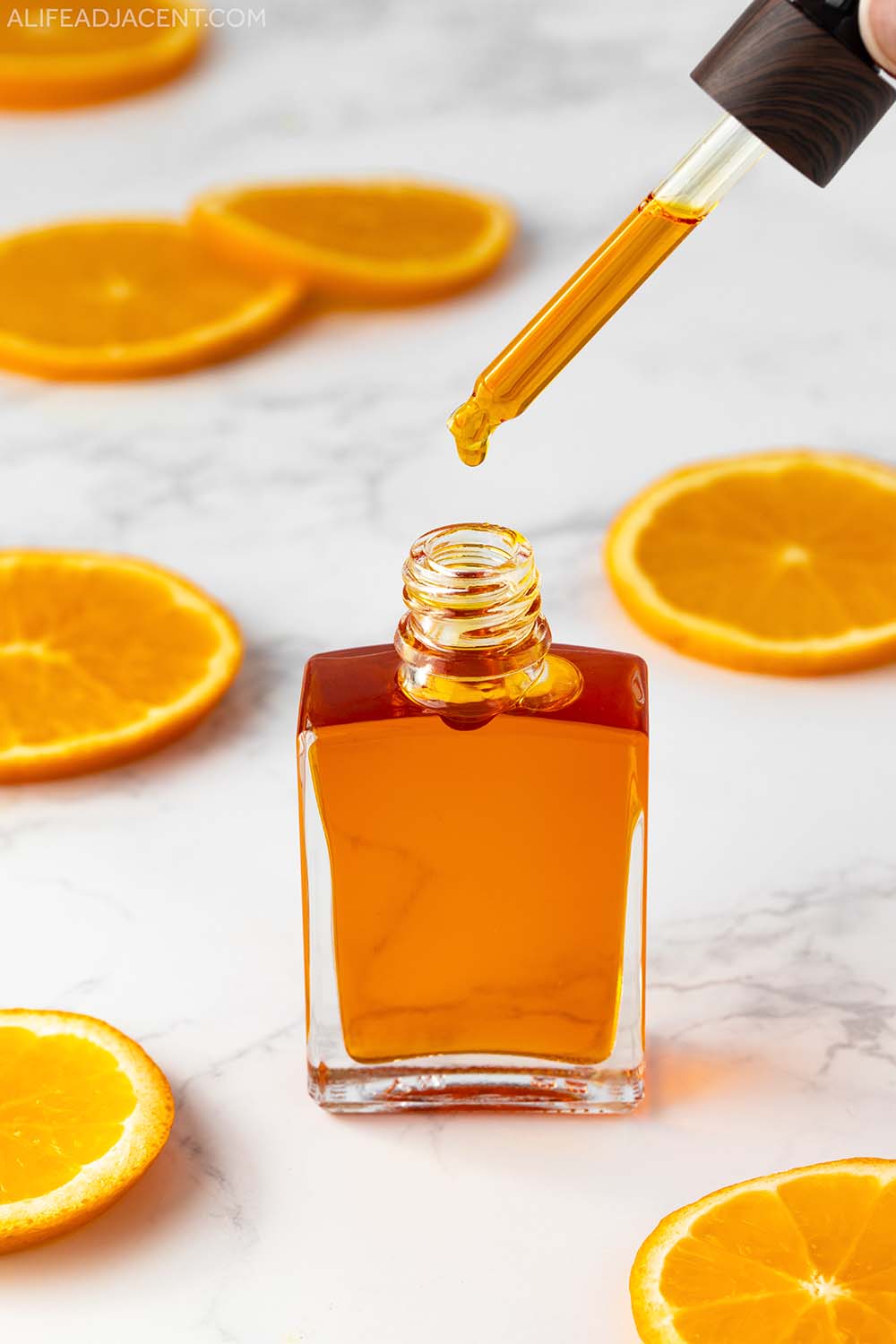
The problem with DIY vitamin C serums
Homemade vitamin C serums are often made with L-ascorbic acid (LAA), the main water-soluble form of vitamin C. Though well-studied and highly effective for scavenging and neutralizing free radicals2, LAA degrades quickly when exposed to light, heat, and oxygen.
You’ll recognize spoiled vitamin C by its orange or brown color. This happens when ascorbic acid degrades into glycation products such as dehydroascorbic acid (DHA) and erythrulose3, one of the browning agents in self-tanners.
But since tanning agents such as erythrulose are now associated with skin aging4, this should help illuminate why you don’t want to use oxidized vitamin C on your skin.
That said, there are proven ways to make L-ascorbic acid serums more stable. Companies often formulate with added antioxidants such as ferulic acid, or they may opt for more stable forms of vitamin C such as magnesium ascorbyl phosphate or 3-glyceryl ascorbate.
But when it comes to DIYing your vitamin C, it’s much easier to make a facial oil over a water-based formula. Enter tetrahexyldecyl ascorbate (THDA or THD ascorbate), the oil-soluble, easy-to-use form of vitamin C we’ll be using in this serum recipe.
Vitamin C facial oil ingredients
This homemade antioxidant face serum requires only 3 main ingredients (and an optional 4th).
Eager to get to the DIY? You’ll find the ingredients and recipe immediately below. But for those who are interested in further information on tetrahexyldecyl ascorbate, you can read more after the tutorial.
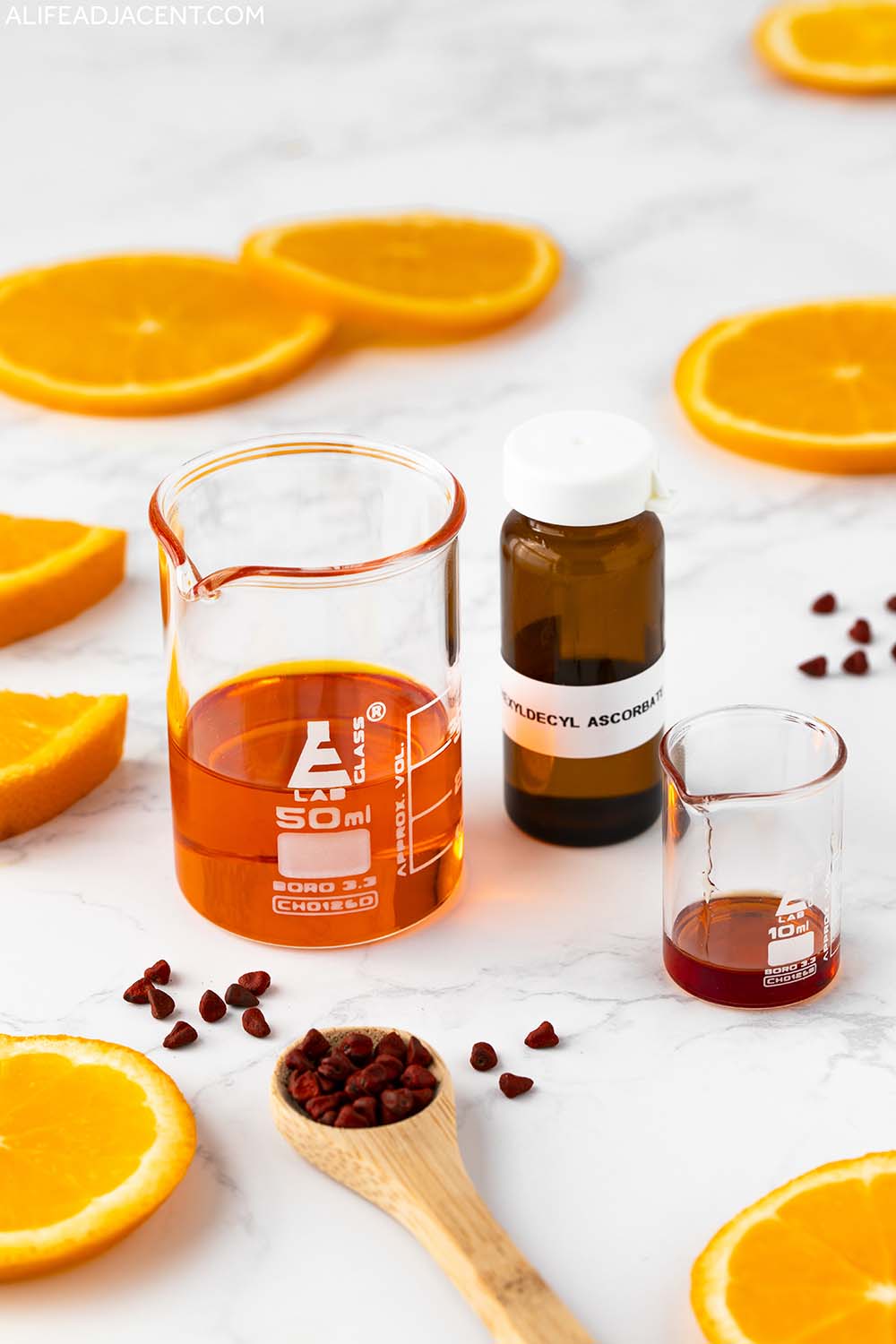
Making this DIY serum is as simple as combining vitamin C and vitamin E with MCT oil. You’ll need:
- MCT oil (capric/caprylic triglycerides): Comprised of non-comedogenic saturated fatty acids, this lightweight, minimally greasy carrier oil won’t clog pores. It’s also PUFA free, so it’s devoid of unstable fatty acids that could oxidize the vitamin C. (Those familiar with Dr. Ray Peat’s work know it’s recommended to avoid PUFA and drink fresh orange juice for vitamin C – see more Ray Peat-inspired skincare recipes.)
- Tetrahexyldecyl ascorbate (vitamin C oil): This lipid-soluble vitamin C derivative converts to ascorbic acid in the skin2, supporting skin health and supplying potent antioxidant protection. (More on this later)
- Vitamin E: When it comes to skincare, vitamin C works best in a synergistic conjunction with Vitamin E5. Vitamin C regenerates vitamin E6, and vitamin E considerably lengthens vitamin C’s shelf life in skincare formulations7. As a bonus, these antioxidants also work together to prevent lipid peroxidation8 and mitigate UV damage6 (in other words, they protect your skin’s fatty acids). Use code ALIFEADJACENT for 20% off PUFA free vitamin E at Health Natura.
- Annatto seeds (optional): If desired, you can also infuse your vitamin C face oil with annatto seeds (achiote). Annatto is rich in the carotenoids bixin and norbixin, which provide extra antioxidant stability (and a fun pop of orange peel color). Annatto has also been studied for its UV-protective, skin-reparative effects, making it a natural colorant with skin benefits9.
More skincare recipes with annatto:
More skincare recipes with tetrahexyldecyl ascorbate:
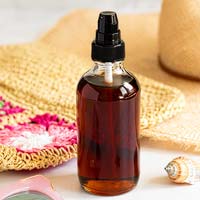
DIY Vitamin C Serum Recipe
26.7g MCT oil or capric/caprylic triglycerides (substitute squalane or fractionated coconut oil)
3g tetrahexydecyl ascorbate (vitamin C oil)
0.3g pure vitamin E oil
~1/8 tsp annatto seeds (optional)
Supplies + Equipment
Glass lab beaker for mixing
Cosmetic scale to measure ingredients
Dark glass dropper bottle for storage
Lab spatula or stirrer
How to make vitamin C serum at home
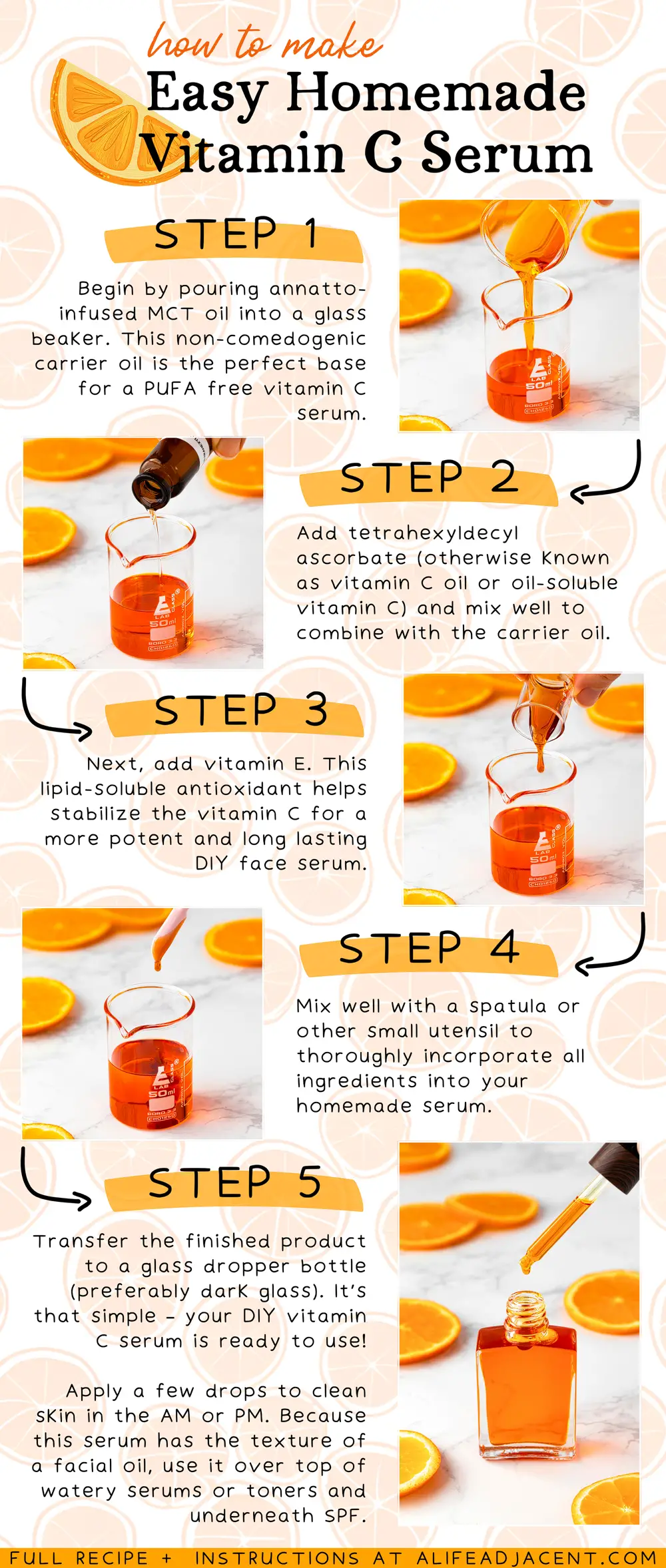
- Measure oil. Pour MCT oil or carrier oil of choice into a clean glass lab beaker (or directly into your DIY serum bottle). Note: see instructions for annatto infused oil below.
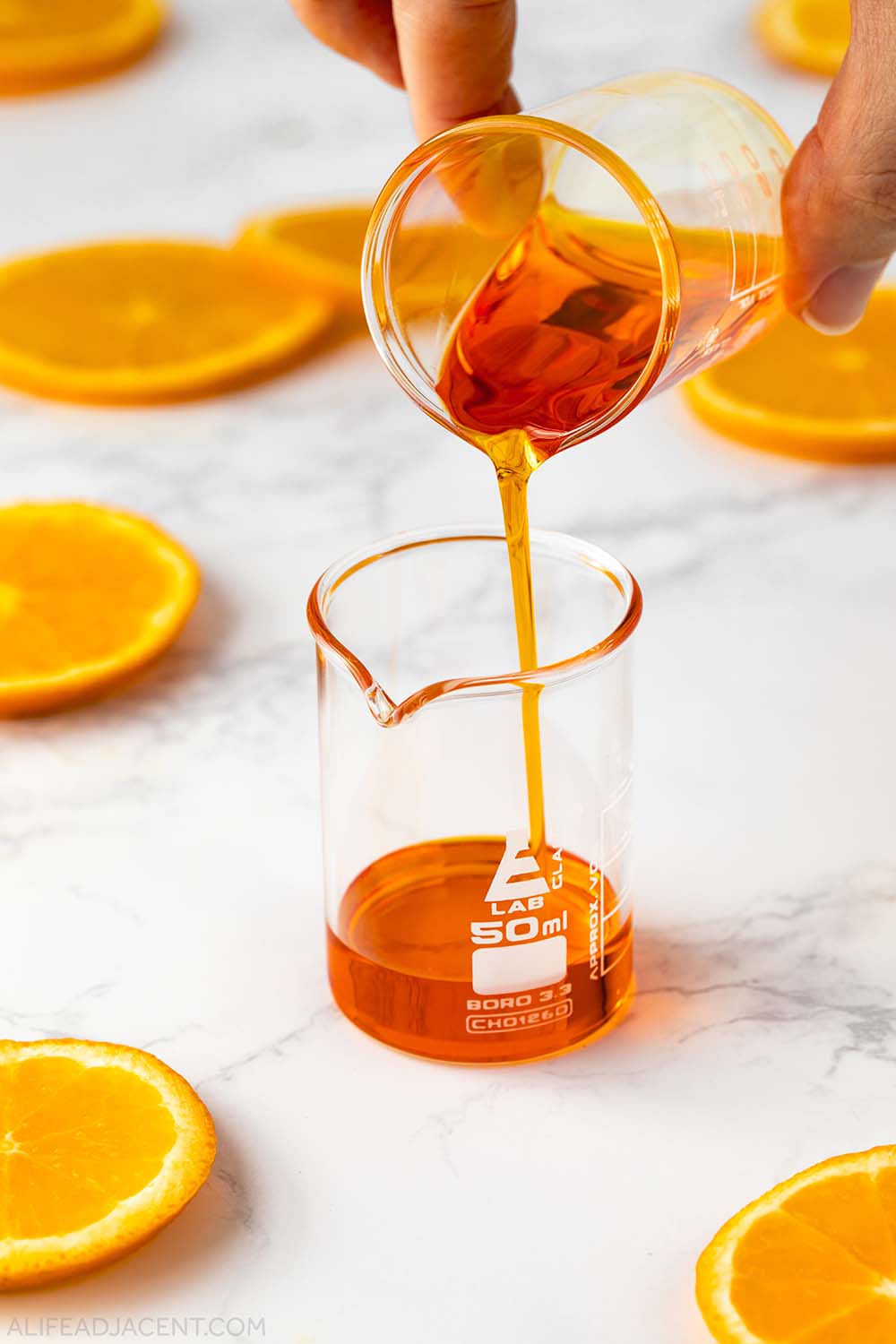
- Add vitamin C. Carefully weigh the correct amount of tetrahexyldecyl ascorbate into the carrier oil. Mix well to combine, or shake your bottle to disperse.
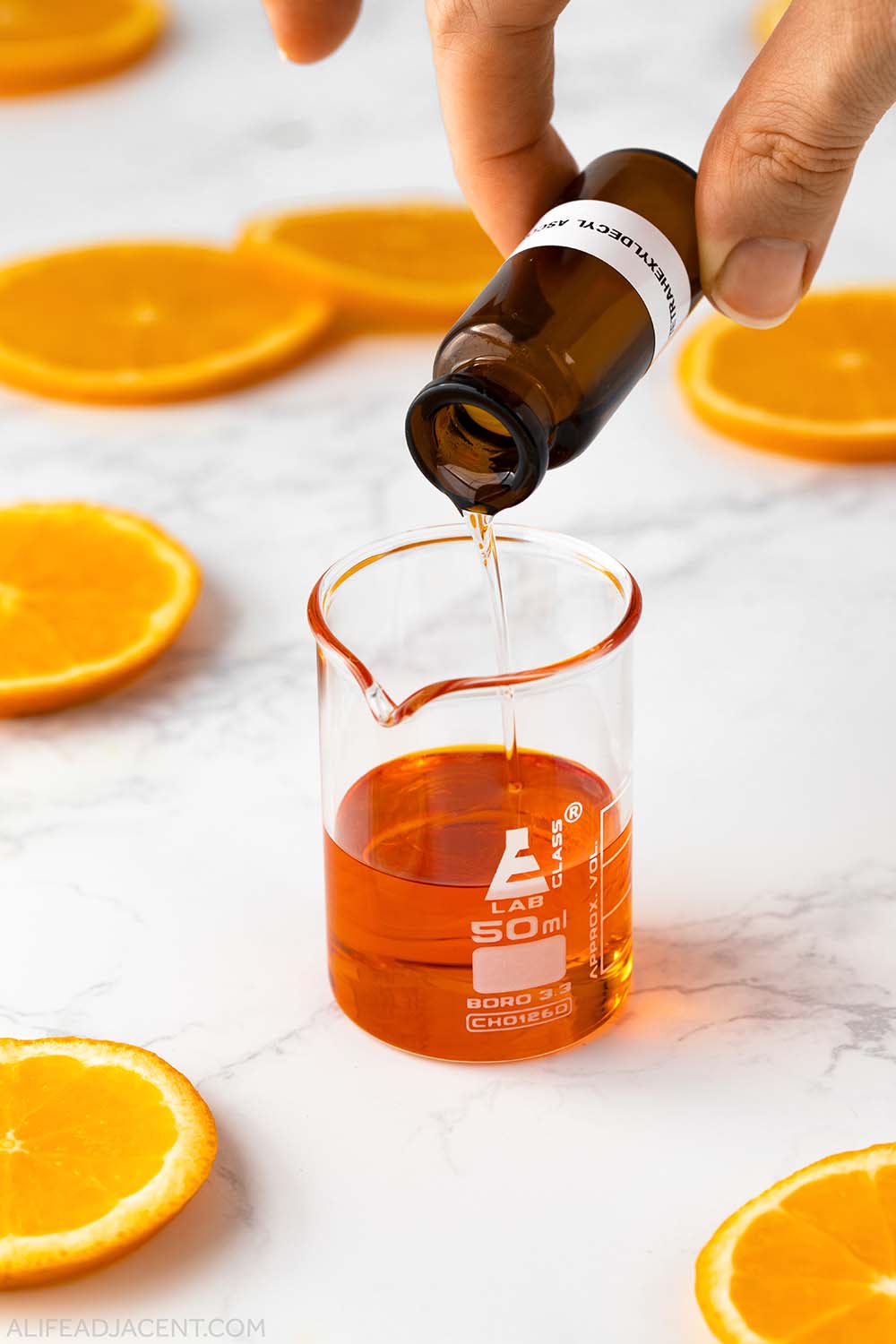
- Add vitamin E. Add vitamin E oil to stabilize your formula and mix well to incorporate the viscous oil.
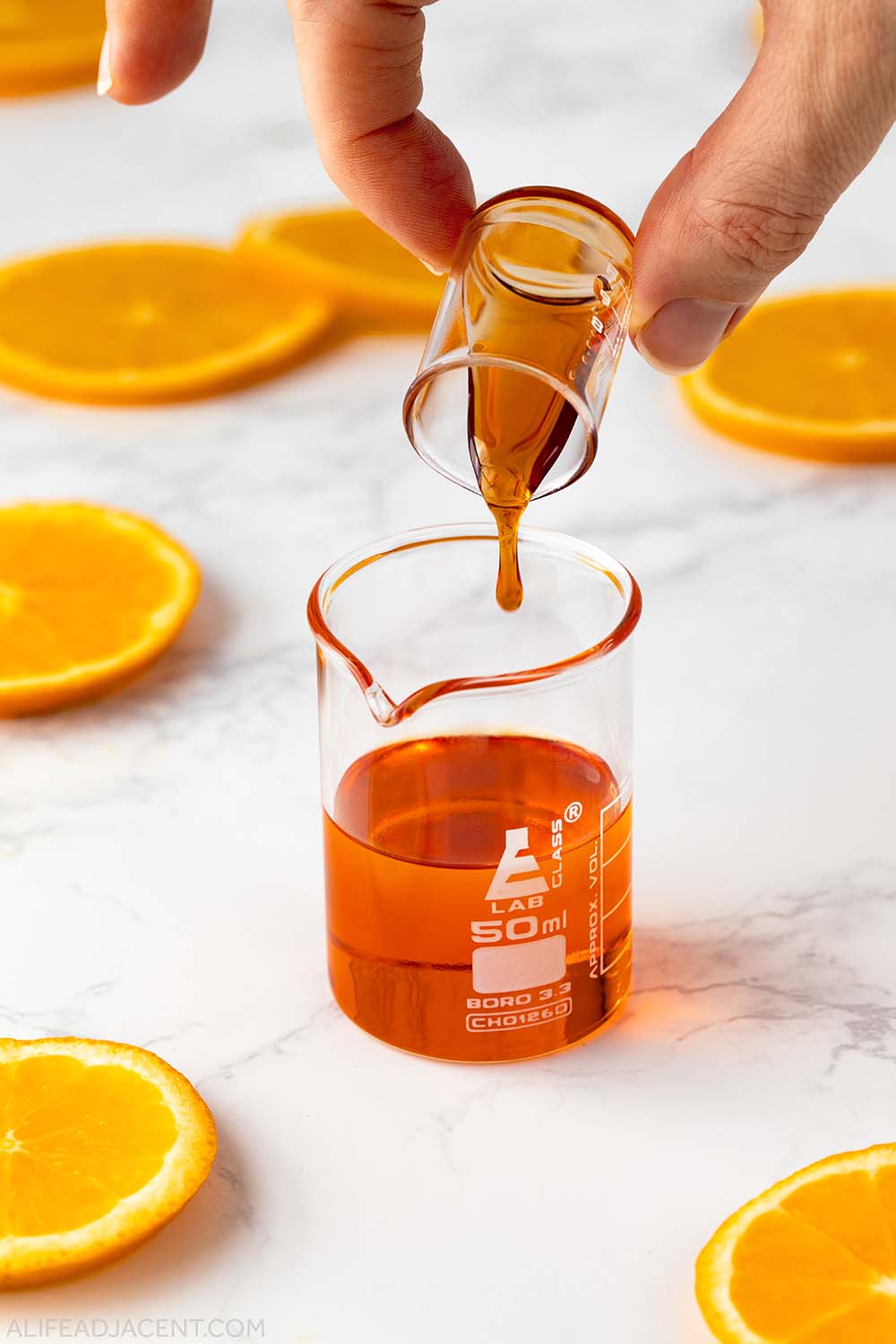
- Transfer to bottle. Pour the finished product into a dropper bottle. It’s that simple – your vitamin C oil serum is ready to use.
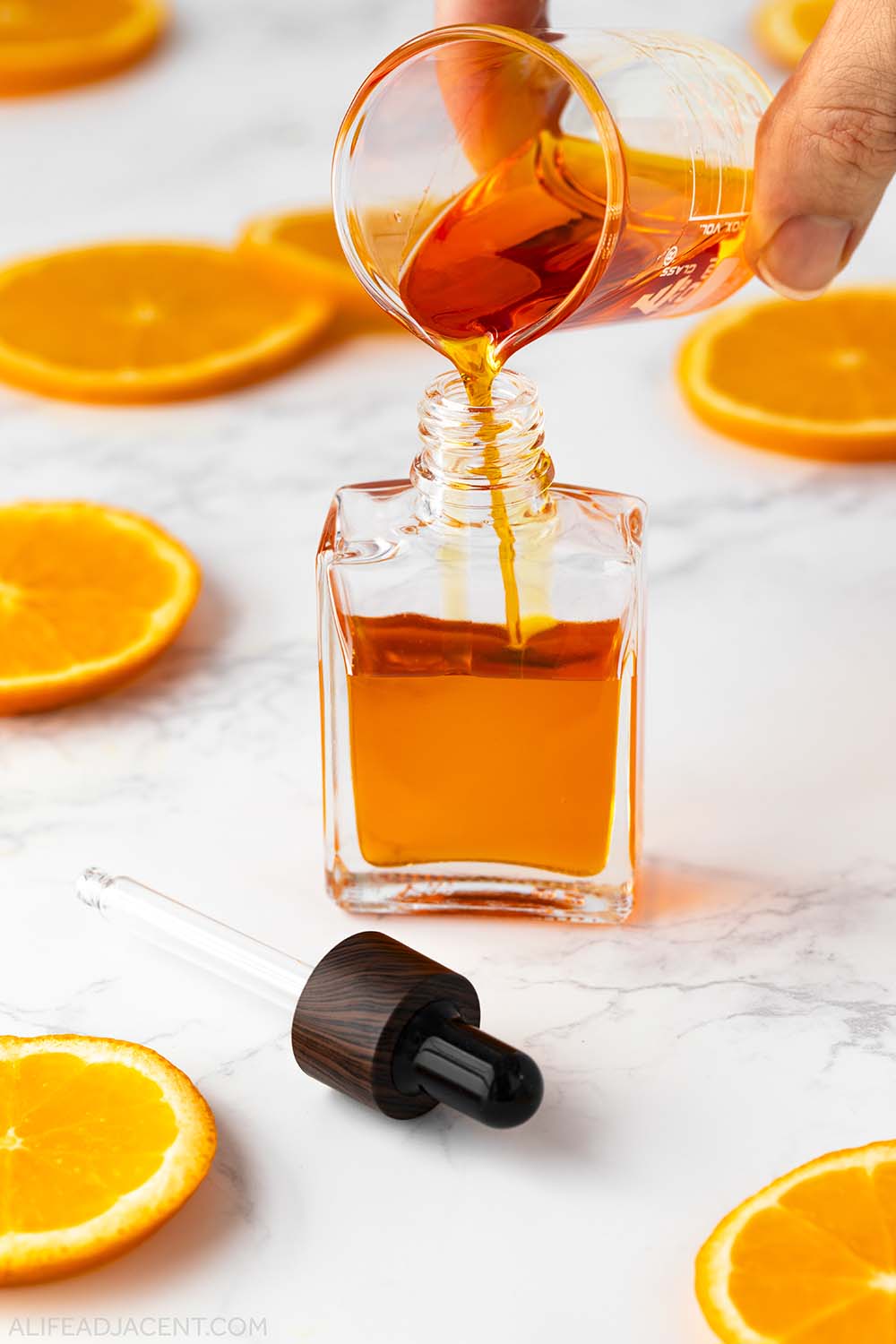
Formula Notes
- This recipe yields a 1oz (30g) bottle of homemade vitamin C face serum.
- The formula contains 10% vitamin C, which is within the range for an effective vitamin C product10, and 1% vitamin E to increase THDA’s stability7.
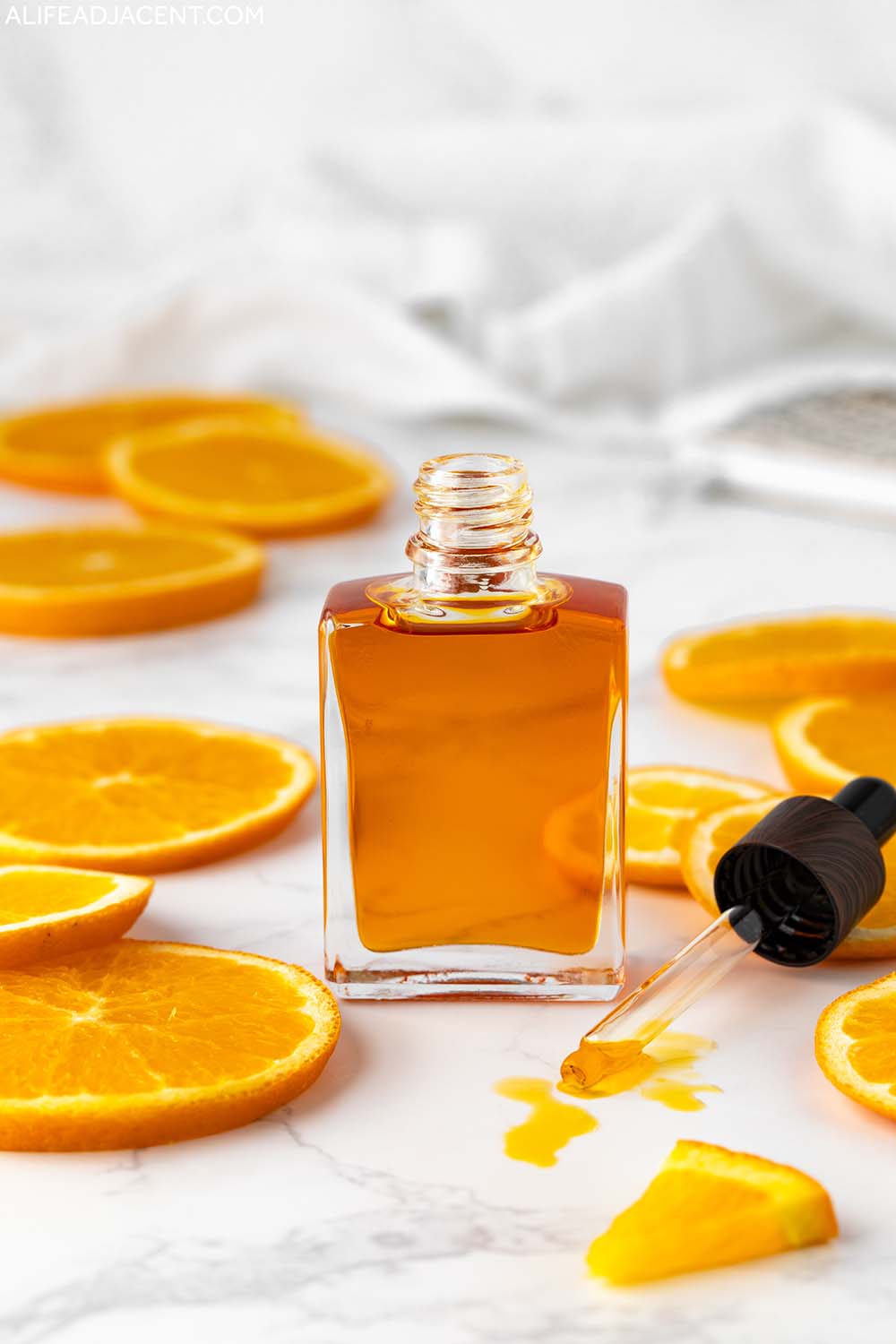
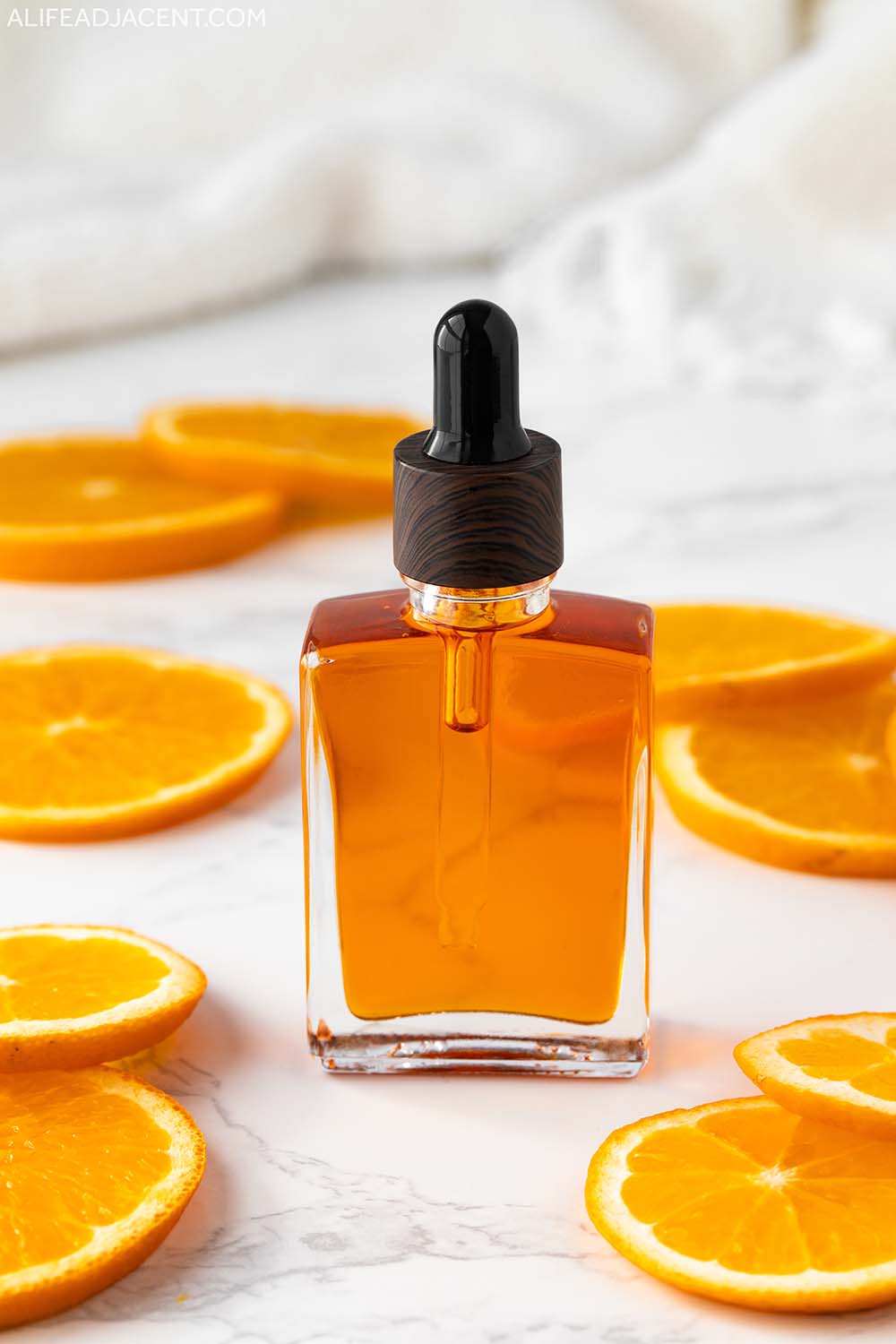
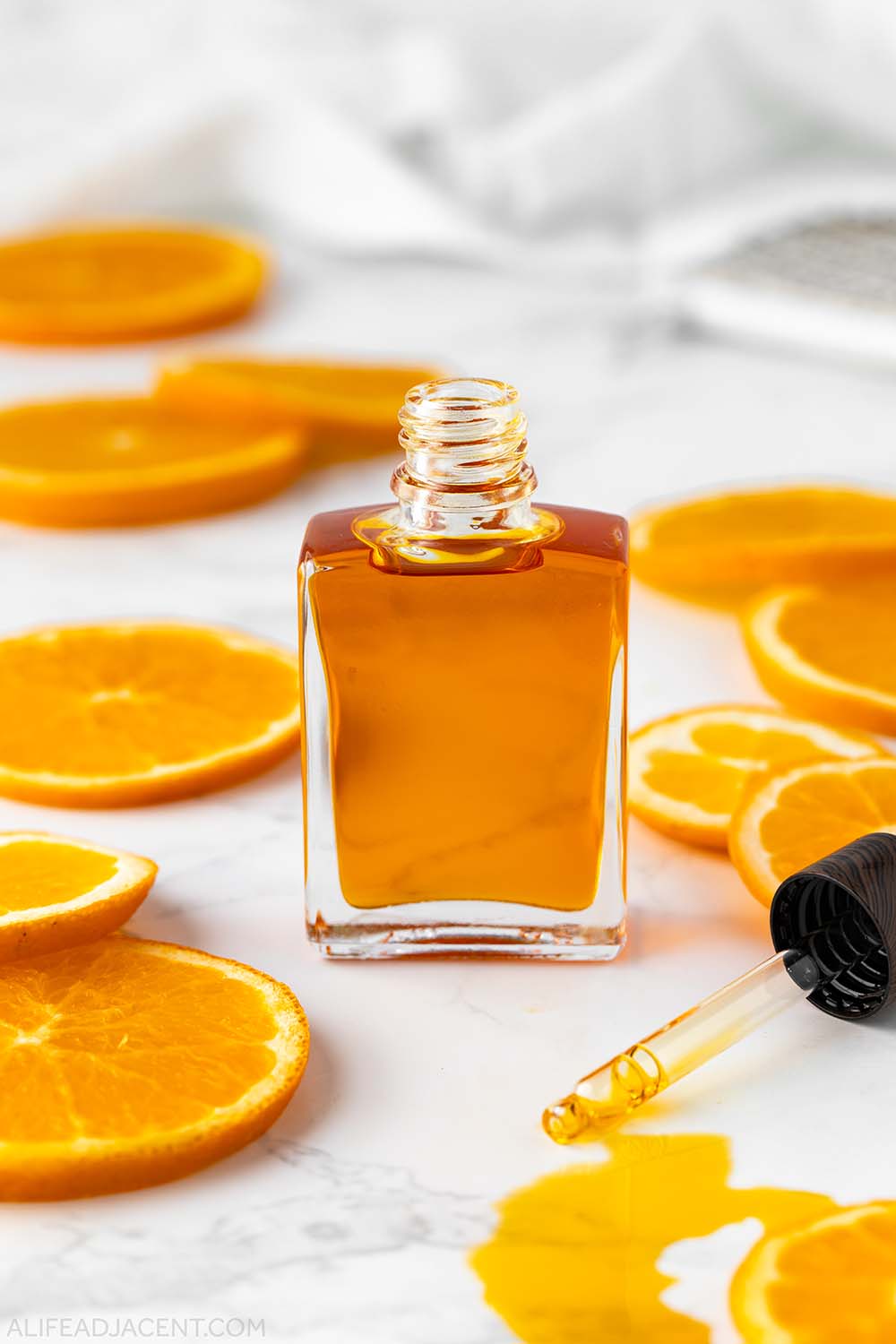
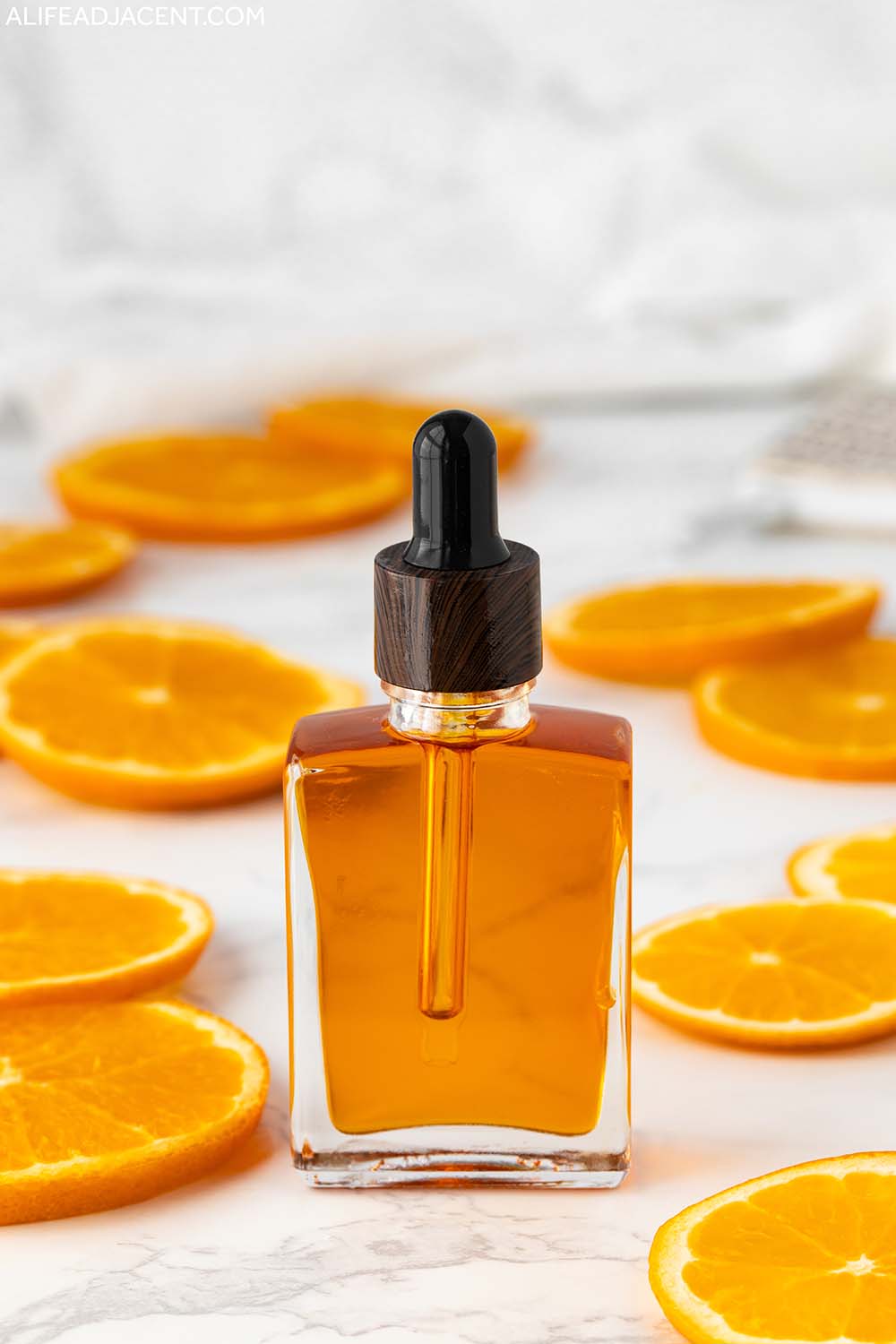
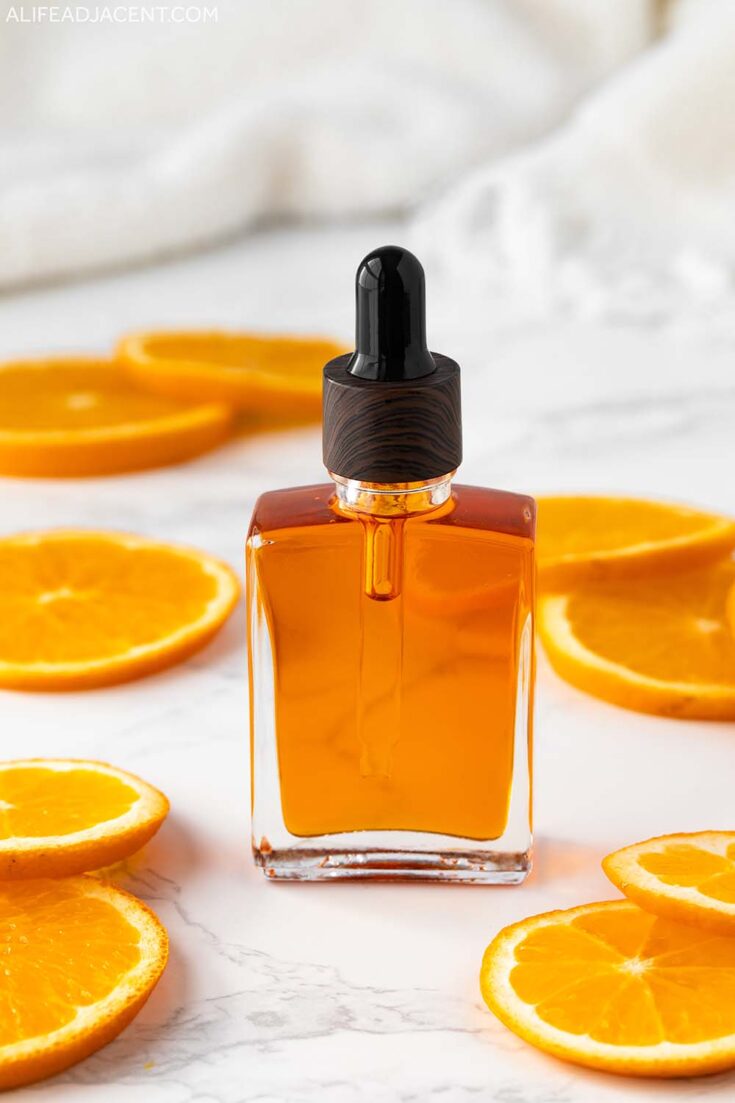
- Keep your serum in a cool, dark place protected from light. Though clear glass bottles like the ones pictured are pretty, they are for display only, and dark amber glass is recommended to protect the fragile vitamin C.
- THDA combined with vitamin E is said to have a shelf life of 12 months7, so use your serum within that timeframe.
- As an optional step, you can infuse your serum with annatto seeds. Simply place your carrier oil into a small, heat-safe mason jar, add annatto seeds, and heat gently in a shallow water bath until the oil turns orange. Be very careful to seal the jar and do not allow any water to get inside. Once cool, strain out the seeds and use the annatto infused oil to make your face serum.
- Please note that annatto stains, so take caution with light colored clothing and bedding, and skip the annatto if you are at all concerned.
How to use your homemade face serum
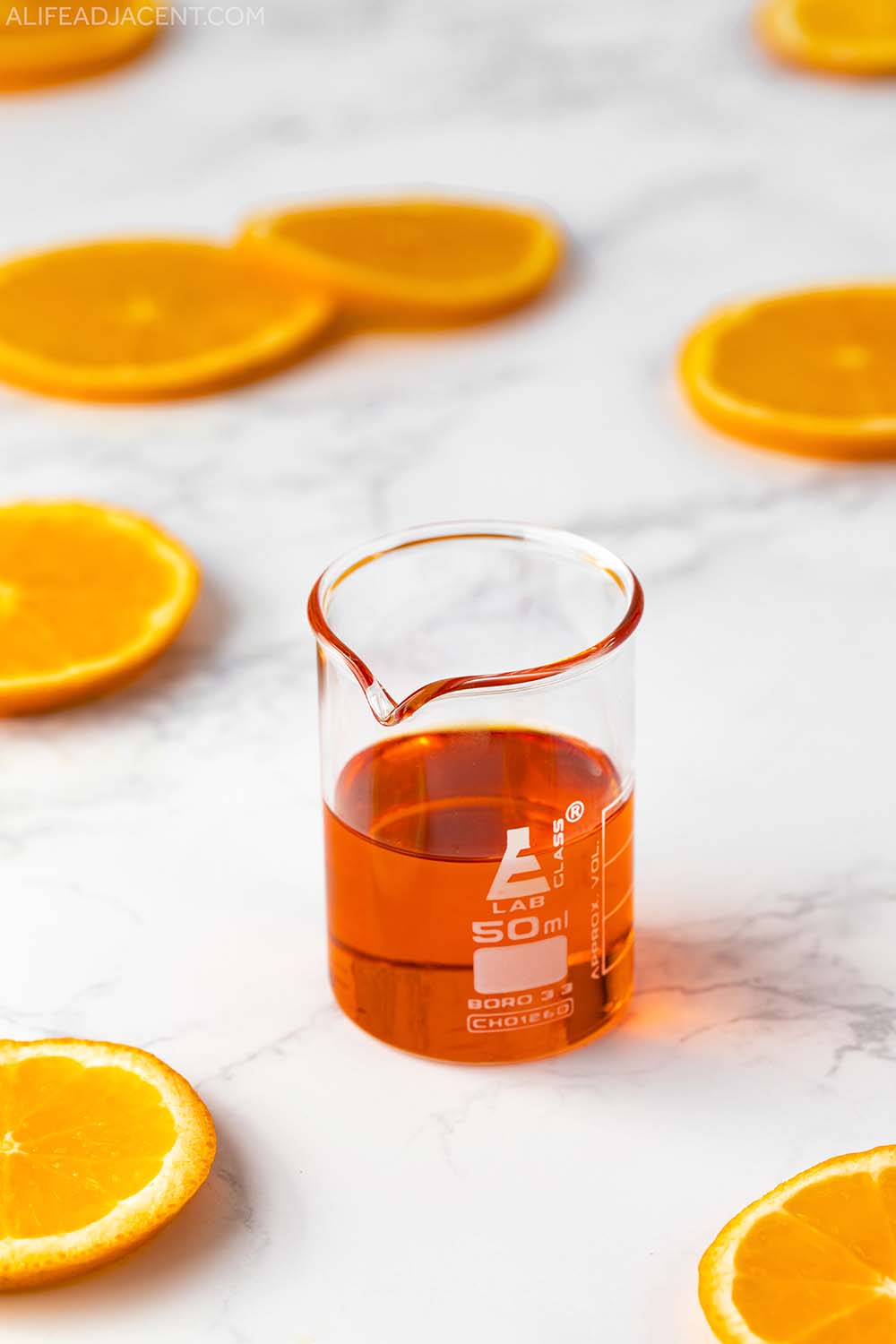
To use your face serum, apply a few drops to clean skin during your morning or nighttime skincare routine to provide antioxidant protection, boost collagen, and support glowing skin.
Since this product’s consistency makes it more of a vitamin C facial oil or oil serum, it should be applied after lighter, water-based treatments or toners to seal in moisture. If using this serum in conjunction with a natural sunscreen, be sure to apply it under your SPF.
How often? The general consensus is that vitamin C skincare products can be safely used daily, as well as in conjunction with sunscreen, retinoids, other antioxidants and exfoliants such as glycolic acid5.
Vitamin C has also been shown to pair well with bakuchiol2. (I love Bakuchiol Building Blocks, a potent treatment that also contains THD ascorbate.)
Finally, as always, you should do a patch test before using a new skincare product, and discontinue use if you experience any irritation. If you have particularly sensitive skin, you can also further dilute the serum with more MCT oil to make the vitamin C less potent.
Other uses: though this is a vitamin C serum for face, you can also use it on your body! Some enjoy vitamin C’s ability to even or brighten the skin tone and fade dark spots (not to be confused with lightening, which I am not condoning). Simply apply the vitamin C oil like you would any other moisturizing body oil.
Tetrahexyldecyl ascorbate for skin care
As mentioned, tetrahexyldecyl ascorbate (shortened to THD ascorbate or THDA) is a lipophilic form of vitamin C and precursor to ascorbic acid11. Other names for tetrahexyldecyl ascorbate include vitamin C-isopalmityl tetraester (VC-IP), tetra-isopalmitoyl ascorbic acid (IPAA) and ascorbyl tetraisopalmitate (ATIP)12.
THDA and other liposoluble vitamin C derivatives are often used in skincare products due to their high stability and beneficial effects on the skin7. With its silky, viscous texture and excellent moisturizing properties, THDA is easy to use and an excellent ingredient for oil-based skincare products.
I was first introduced to tetrahexyldecyl ascorbate in a product called Bakuchiol Building Blocks by The Sunscreen Company, a unique formula combining THDA, bakuchiol and oil-soluble salicylic acid for a powerhouse of skin-smoothing, antioxidant properties. So if you’re not inclined to DIY, you might also enjoy trying out a product with THDA.
More skincare products with tetrahexyldecyl ascorbate:
- Biossance Squalane + Vitamin C Rose Oil
- The Ordinary Ascorbyl Tetraisopalmitate Solution 20% In Vitamin F
- Paula’s Choice 25% Vitamin C + Glutathione Clinical Serum
Tetrahexyldecyl ascorbate benefits
Tetrahexyldecyl ascorbate’s benefits for skin include:
- Excellent absorption. THDA has the ability to penetrate the stratum corneum to deliver vitamin C below the epidermis13. It also penetrates the skin barrier 4 times better than magnesium ascorbyl phosphate, and delivers vitamin C to the skin 50 times better than ascorbic acid14.
- Increases collagen synthesis. THDA promotes collagen production and enhances the structural integrity of the skin. In other words, it helps slow down the normal process of skin aging2.
- Sun protection. THD helps offer protection against sun damage, especially when combined with vitamin E. It defends against both UVA15 and UVB radiation, and has been shown to protect again UVB better than other types of vitamin C14.
- Antioxidant protection. Our skin is constantly exposed to an onslaught of oxidative stress from environmental factors, such as UV light, electronic devices, and air pollution. THD helps defend skin against these attacks by quenching free radicals and reducing oxidative stress2.
- Improves sun damage. THD ascorbate has been clinically proven to improve sun damage and hyperpigmentation13. It also reduces melanin synthesis, which helps even out skin tone and lighten dark spots14.
- Reduces acne. Antioxidants such as THD may help reduce acne14 in some people, especially if the type of acne is caused by inflammation.
Note on THD ascorbate stability
While a multitude of studies have demonstrated THDA’s effectiveness and superior stability16, another study found that THDA was only effective for improving skin appearance when combined with another antioxidant (acetyl zingerone)11.
One study isn’t conclusive, and it’s important to consider all sides of a topic. But, like all vitamin C derivatives, it does appear it’s best to combine THDA with other antioxidants for improved stability.
Acetyl zingerone is both water soluble and very expensive, so it wouldn’t work for an oil-based vitamin C serum. For this recipe, I opted to combine THD ascorbate with vitamin E and carotenoid-rich annatto.
As previously mentioned, not only do vitamin C and vitamin E stabilize one another, but vitamin E was specifically found to increase tetrahexyldecyl ascorbate’s shelf life in skincare formulas7. This combination of oil-soluble antioxidants helps provide extra insurance to stabilize the serum formula.
DIY Vitamin C Face Serum Recipe
Learn how to make a natural DIY vitamin C face serum for glowing skin. This simple homemade skincare recipe is an easy-to-make, more stable alternative to water-based vitamin C serums. No preservative or refrigeration needed!
Materials
Tools
- Glass lab beaker for mixing
- Cosmetic scale to measure ingredients
- Dark glass dropper bottle for storage
- Lab spatula or stirrer
Instructions
- Measure oil. Pour MCT oil or carrier oil of choice into a clean glass lab beaker (or directly into your DIY serum bottle). Note: see instructions for annatto infused oil below.
- Add vitamin C. Carefully weigh the correct amount of tetrahexyldecyl ascorbate into the carrier oil. Mix well to combine, or shake your bottle to disperse.
- Add vitamin E. Add vitamin E oil to stabilize your formula and mix well to incorporate the viscous oil.
- Transfer to bottle. Pour the finished product into a dropper bottle. It's that simple – your vitamin C oil serum is ready to use.
Notes
- This recipe yields a 1oz (30g) bottle of homemade vitamin C face serum.
- The formula contains 10% vitamin C, which is within the range for an effective vitamin C product, and 1% vitamin E to increase THDA's stability.
- Keep your serum in a cool, dark place protected from light. Though clear glass bottles like the ones pictured are pretty, they are for display only, and dark amber glass is recommended to protect the fragile vitamin C.
- THDA combined with vitamin E is said to have a shelf life of 12 months, so use your serum within that timeframe.
- As an optional step, you can infuse your serum with annatto seeds. Simply place your carrier oil into a small, heat-safe mason jar, add annatto seeds, and heat gently in a shallow water bath until the oil turns orange. Be very careful to seal the jar and do not allow any water to get inside. Once cool, strain out the seeds and use the annatto infused oil to make your face serum.
- Please note that annatto stains, so take caution with light colored clothing and bedding, and skip the annatto if you are at all concerned.
Recommended Products
As an Amazon Associate and member of other affiliate programs, we earn from qualifying purchases.



For even more natural DIY beauty ideas, follow us on Pinterest! You can also find us on Instagram, Facebook, TikTok, and Twitter.
📌 Pin it for later
- “Vitamin C and Skin Health.” Oregon State University, Linus Pauling Institute, 2 Jan. 2024, lpi.oregonstate.edu/mic/health-disease/skin-health/vitamin-C.
- Hooper, Deirdre et al. “Antioxidant Skincare Treatment for Hyperpigmented and Photodamaged Skin: Multi-Center, Open-Label, Cross-Seasonal Case Study.” The Journal of clinical and aesthetic dermatology vol. 16,10 (2023): 31-38.
- Nemet, Ina, and Vincent M Monnier. “Vitamin C degradation products and pathways in the human lens.” The Journal of biological chemistry vol. 286,43 (2011): 37128-36. doi:10.1074/jbc.M111.245100
- Perer, Jessica et al. “The sunless tanning agent dihydroxyacetone induces stress response gene expression and signaling in cultured human keratinocytes and reconstructed epidermis.” Redox biology vol. 36 (2020): 101594. doi:10.1016/j.redox.2020.101594
- Telang, Pumori Saokar. “Vitamin C in dermatology.” Indian dermatology online journal vol. 4,2 (2013): 143-6. doi:10.4103/2229-5178.110593
- Burke, Karen E. “Interaction of vitamins C and E as better cosmeceuticals.” Dermatologic therapy vol. 20,5 (2007): 314-21. doi:10.1111/j.1529-8019.2007.00145.x
- Patrícia M.B.G. Maia Campos, Mirela D. Gianeti, Flávio B. Camargo, Lorena R. Gaspar, Application of tetra-isopalmitoyl ascorbic acid in cosmetic formulations: Stability studies and in vivo efficacy, European Journal of Pharmaceutics and Biopharmaceutics, Volume 82, Issue 3, 2012, Pages 580-586, ISSN 0939-6411, https://doi.org/10.1016/j.ejpb.2012.08.009.
- Moison, Ralf M W, and Gerard M J Beijersbergen van Henegouwen. “Topical antioxidant vitamins C and E prevent UVB-radiation-induced peroxidation of eicosapentaenoic acid in pig skin.” Radiation research vol. 157,4 (2002): 402-9. doi:10.1667/0033-7587(2002)157[0402:tavcae]2.0.co;2
- Rojo de la Vega, Montserrat et al. “Targeting NRF2 for Improved Skin Barrier Function and Photoprotection: Focus on the Achiote-Derived Apocarotenoid Bixin.” Nutrients vol. 9,12 1371. 18 Dec. 2017, doi:10.3390/nu9121371
- Al-Niaimi, Firas, and Nicole Yi Zhen Chiang. “Topical Vitamin C and the Skin: Mechanisms of Action and Clinical Applications.” The Journal of clinical and aesthetic dermatology vol. 10,7 (2017): 14-17.
- Afzal N, Nguyen N, Min M, et al. Prospective randomized double-blind comparative study of topical acetyl zingerone with tetrahexyldecyl ascorbate versus tetrahexyldecyl ascorbate alone on facial photoaging. J Cosmet Dermatol. 2024; 23: 2467-2477. doi:10.1111/jocd.16292
- “Ascorbyl Tetraisopalmitate (CAS 183476-82-6).” Caymanchem.com, www.caymanchem.com/product/36275/ascorbyl-tetraisopalmitate. Accessed 3 Nov. 2024.
- Ochiai, Yasunobu et al. “A new lipophilic pro-vitamin C, tetra-isopalmitoyl ascorbic acid (VC-IP), prevents UV-induced skin pigmentation through its anti-oxidative properties.” Journal of dermatological science vol. 44,1 (2006): 37-44. doi:10.1016/j.jdermsci.2006.07.001
- “BV-OSC Factsheet.” Barnet Products, irp-cdn.multiscreensite.com/2d058be6/files/uploaded/POD-BV-OSC%20-%20profile%20%281%29.pdf. Accessed 3 Nov. 2024.
- Xiao, Li et al. “Cytoprotective effects of the lipoidic-liquiform pro-vitamin C tetra-isopalmitoyl-ascorbate (VC-IP) against ultraviolet-A ray-induced injuries in human skin cells together with collagen retention, MMP inhibition and p53 gene repression.” Journal of cellular biochemistry vol. 106,4 (2009): 589-98. doi:10.1002/jcb.22032
16 FITZPATRICK, RICHARD E. MD*; ROSTAN, ELIZABETH F. MD*,†. Double-Blind, Half-Face Study Comparing Topical Vitamin C and Vehicle for Rejuvenation of Photodamage. Dermatologic Surgery 28(3):p 231-236, March 2002. - FITZPATRICK, RICHARD E. MD*; ROSTAN, ELIZABETH F. MD*,†. Double-Blind, Half-Face Study Comparing Topical Vitamin C and Vehicle for Rejuvenation of Photodamage. Dermatologic Surgery 28(3):p 231-236, March 2002.
Yang ruosong
Tuesday 4th of August 2026
Really appreciate the depth here on THD ascorbate stability — the point about THDA degrading without a co-antioxidant (the acetyl zingerone study) is one most DIY bloggers skip entirely.
One thing worth noting for readers considering the water-soluble route instead: the ferulic acid + L-ascorbic acid + vitamin E combination isn't just additive — ferulic acid actually regenerates the tocopheroxyl radical back to active tocopherol, which in turn regenerates dehydroascorbic acid back to ascorbic acid. It's a closed-loop radical recycling network rather than three separate antioxidants working in parallel. The original Duke patent (US 2005/0154054) demonstrated this extends photoprotection from roughly 4-fold to 8-fold versus C+E alone.
For an oil-based formula like yours, the limitation is that ferulic acid is poorly soluble in lipids at meaningful concentrations — which is exactly why your vitamin E + carotenoid (annatto) approach makes more practical sense in an anhydrous system. I wrote a detailed breakdown of how the C+E+ferulic network functions at the radical chemistry level here: https://onerchem.com/knowledge/antioxidants/ferulic-acid-vitamin-c-e-synergy-guide/ — it covers the mechanistic differences between the water-soluble and oil-soluble stabilization pathways that are relevant to formula design choices like yours.
The annatto addition is a smart touch, by the way. Bixin has singlet oxygen quenching capacity that complements vitamin E's peroxyl radical scavenging — different ROS targets, which is the right way to build redundancy into an antioxidant system.
Kyla
Thursday 6th of August 2026
Hi Yang, thank you so much for such a thoughtful and insightful comment. I really appreciate you taking the time to share your knowledge and add this perspective to the discussion.
I also took some time to read through your guide and found it incredibly informative. It's an excellent resource for anyone wanting to dive deeper into the chemistry behind the vitamin C, vitamin E, and ferulic acid antioxidant network, and I think readers who enjoy learning about the science behind cosmetic formulation will find it well worth the read.
I also appreciate your kind words about the annatto extract. My goal was to build an antioxidant system that made sense for an anhydrous THDA formula, so it's especially encouraging to hear that reasoning resonated with someone with your background. I also appreciate you highlighting the distinction between water-based and anhydrous vitamin C systems, as I think that adds some really valuable context for readers interested in the science behind those formulation choices.
Thanks again for taking the time to share your expertise and contribute such a thoughtful discussion!